
- Tungsten carbide is nearly four times harder than titanium.
- Silver's patina is prized by some for its vintage character.
- Plated tungsten can match silver's shine while staying scratch‑resistant.
- Silver rings can be resized easily — tungsten cannot.
- Tungsten's weight gives it a premium, substantial feel on the hand.
- Titanium offers the lightest premium option — ideal for those who want rare materials without the weight of tungsten.
Updated for 2026.
At Foundoria, we have an unusual relationship with silver. Our founder's mother, Elaine, made the transition from interior design to handcrafting silver jewellery from her garage — designing and making each piece by hand in limited quantities, a craft she still practises today. So when we compare tungsten to silver, we're not dismissing one to sell the other. We know both materials intimately, and we respect what each one does. What follows is an honest guide to help you choose the ring that genuinely suits your life.
Two timeless metals, two very different personalities. Here's how tungsten carbide and sterling silver stack up when it comes to your forever ring — whether that's a wedding band, an engagement ring, or a piece you simply want to wear for life.
| Feature | Tungsten Carbide | Sterling Silver |
|---|---|---|
| Hardness & Scratch Resistance | Extremely hard (8.5–9 Mohs), resists everyday scratches, keeps polish for decades. | Soft (2.5–3 Mohs), scratches and dents easily, develops patina over time. |
| Weight & Feel | Dense and heavy, substantial presence on the finger. | Light and comfortable, barely noticeable in daily wear. |
| Colour & Finish | Gunmetal grey; can be polished, brushed, or plated for different looks. | Bright white lustre, warm tone; tarnishes over time. |
| Maintenance | Minimal care — mild soap and water. | Requires regular polishing to remove tarnish. |
| Resilience vs. Flexibility | Hard but brittle — can crack under sharp impact; cannot be resized. | Soft but malleable — bends rather than breaks; easily resized. |
| Price | Affordable luxury; often less expensive than precious metals, though high-quality designs with natural inlays can command a comparable price. | Affordable, but price varies with craftsmanship. |
| Plating Options | Can be plated with rhodium, platinum, gold, rose gold, or silver to expand finish options. | No plating needed — silver is the base metal. |
Interior designers — and Elaine would agree — will tell you that material choice is rarely just functional. It reflects how you want something to feel in everyday life.
Silver is a material with memory. It picks up the story of being worn: small scratches, a gradual patina, the marks of a life lived. Some people find that deeply meaningful in a wedding band. Others find it frustrating.
Tungsten is the opposite. It resists that accumulation of marks entirely. The ring you put on on your wedding day looks the same a decade later. For some, that permanence is exactly the point — a ring that holds its form as steadfastly as the commitment it represents. For others, a ring that never changes can feel impersonal.
Neither answer is wrong. But knowing which kind of person you are is probably the most useful thing we can tell you.
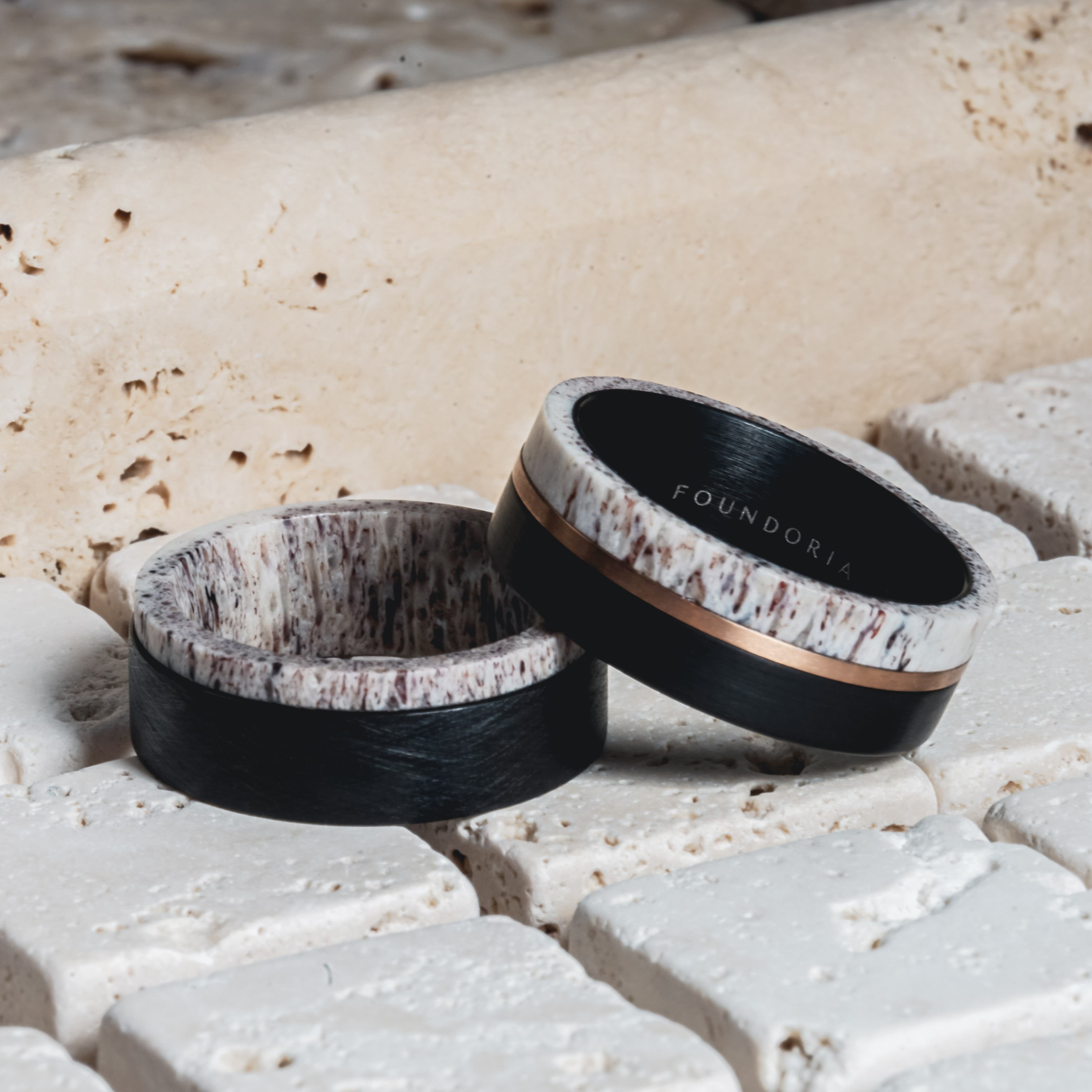
While tungsten's natural gunmetal hue is striking, modern plating technology allows you to customise its look without sacrificing durability. Popular finishes include:
- Rhodium plating – Bright, white finish similar to platinum.
- Silver plating – Mimics sterling silver's lustre while retaining tungsten's scratch resistance.
- Gold or rose gold plating – Adds warmth and contrast for two‑tone designs.
- Black ceramic coating – Sleek, contemporary matte or gloss black finish.
Plating will eventually wear with heavy abrasion, but tungsten's base colour remains attractive. For wedding bands, plated tungsten offers the aesthetic flexibility of precious metals with the resilience of carbide.

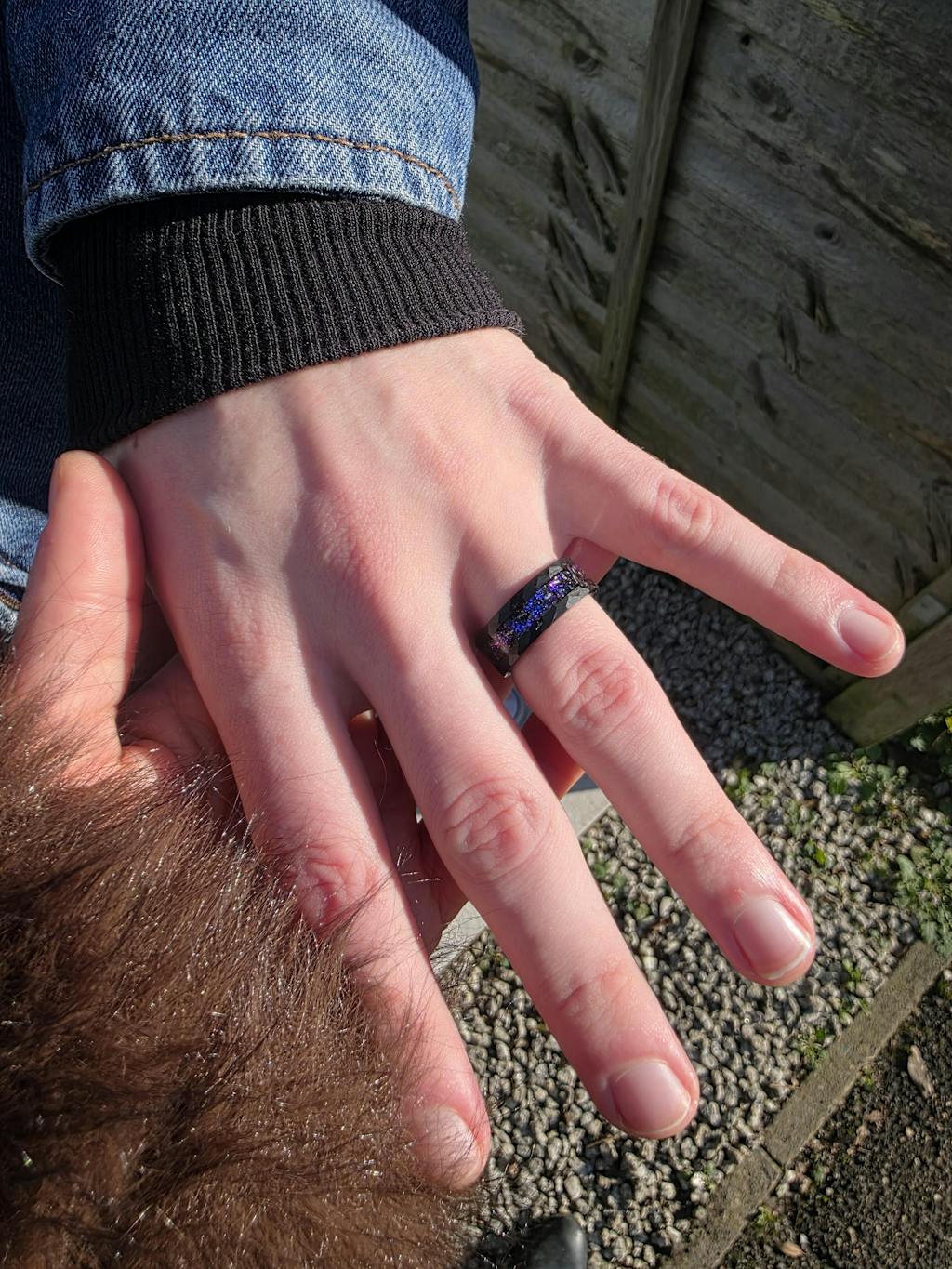
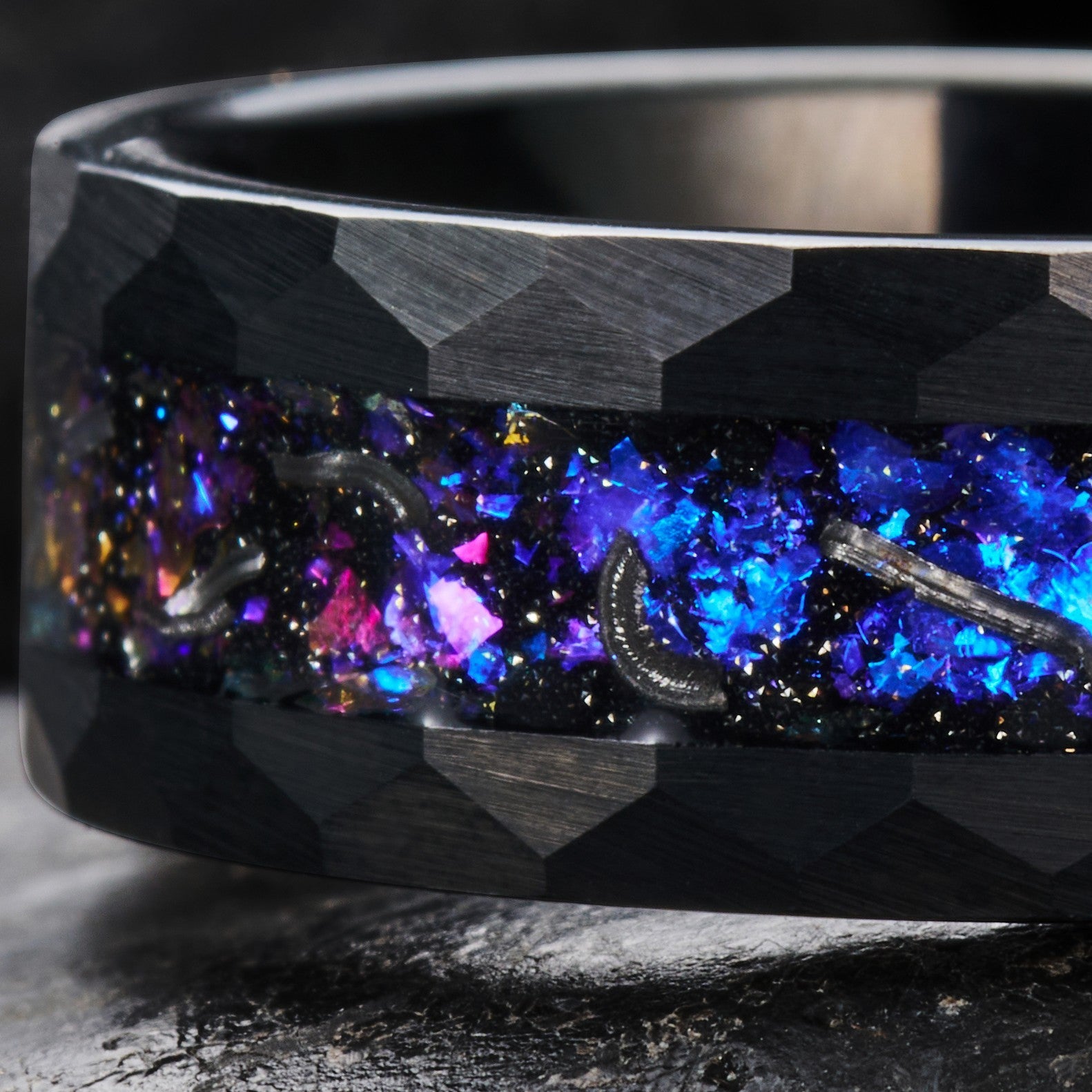
One of the reasons people discover Foundoria is that they're looking for a ring that carries more than just a metal. Our CELESTIUM collection was built around that idea — rings featuring cosmic-inspired and genuine extra-terrestrial materials. Entry designs like Azure use a galaxy-inspired blue sandstone inlay for striking visual impact; others like Cosmos incorporate genuine meteorite suspended within the galaxy inlay; and our mid and premium pieces feature increasingly significant meteorite content, up to solid Gibeon meteorite that is over 4 billion years old. Below are a selection across different budgets.


The price difference in our upper-tier CELESTIUM rings isn't about the metal — tungsten and titanium each have their own strengths and neither is definitively superior. Tungsten is harder and more scratch-resistant; titanium is lighter, sitting closer to silver on the hand. Both are excellent choices for daily wear.
The difference is in the meteorite itself. Mid-range rings like Lunaris and Stellar use genuine crushed meteorite fragments — authentic and extraordinary in their own right. Our premium pieces feature solid Gibeon meteorite: a wide, intact section of 4-billion-year-old extra-terrestrial rock, displaying the characteristic Widmanstätten crystalline pattern that only forms over millions of years of cooling in space. You cannot replicate that. It's rarer, more complex to work with, and it's what justifies the price.
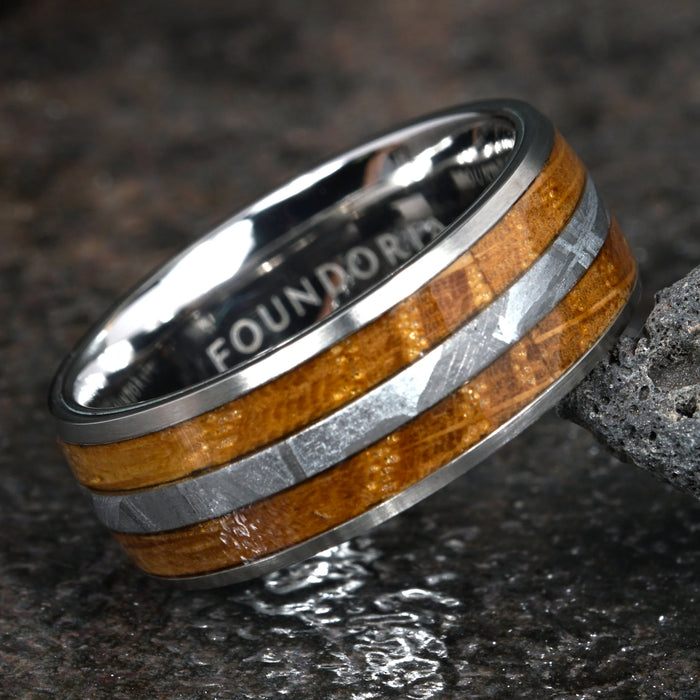

If your priority is durability, scratch resistance, and a modern aesthetic, tungsten is the clear winner — especially with plating options that deliver a silver‑like finish without the maintenance. If you want to carry something genuinely rare and ancient — the kind of material that silver simply can't compete with — our meteorite rings offer that in both tungsten and titanium depending on your budget and how the ring feels on your hand.
If you value tradition, a bright white tone, and the ability to resize or restore over decades, silver remains a beautiful choice — and one we respect deeply given our own history with the material. Just go in with realistic expectations around maintenance and longevity compared to harder metals. If you're still weighing your options, our full men's tungsten wedding bands collection is a good place to see the full range of what's available.
Tungsten is significantly more practical for daily wear — it resists scratches, doesn't tarnish, and requires almost no maintenance. Silver develops surface marks and patina over time, which some people love for its character and others find frustrating. If you work with your hands or lead an active lifestyle, tungsten is the more sensible choice.
No — tungsten carbide cannot be resized due to its extreme hardness. If your finger size changes, the ring would need to be replaced. This is why we include a complimentary ring sizer with every order and offer a free size exchange. Silver rings, by contrast, can be resized by a jeweller relatively easily.
No. Tungsten's natural gunmetal finish does not tarnish or fade over time. Plated finishes can show wear with heavy abrasion, but the base metal itself remains attractive and low-maintenance. Silver, by comparison, will tarnish with exposure to air and moisture and requires regular polishing to restore its original brightness.
Yes — tungsten rings can be safely removed in medical emergencies using standard ring-cracker tools available to paramedics and A&E departments. All Foundoria tungsten rings are independently tested to REACH and GPSR standards, meaning nickel content falls within the limits considered safe for the vast majority of people, including those with common metal sensitivities. If you have a known severe nickel allergy, we'd recommend seeking specific guidance before purchasing any metal jewellery.
Neither is definitively superior — they suit different preferences. Tungsten is denser and heavier, giving it a substantial feel on the finger, and is harder and more scratch-resistant than titanium. Titanium is significantly lighter — closer to silver in how it sits on the hand — and is highly durable in its own right. In our CELESTIUM collection, the price difference between tungsten and titanium rings reflects the meteorite itself: our premium pieces feature solid Gibeon meteorite rather than crushed meteorite fragments, which is rarer and more complex to work with.
As a base metal, tungsten is typically more affordable than silver — and a plain tungsten band will generally cost less than a comparable silver ring. However, premium designs featuring rare natural inlays such as solid Gibeon meteorite can exceed the price of a silver band, not because of the metal itself but because of the rarity and complexity of the material inside it. Foundoria's tungsten rings start from £70, with free UK delivery and a lifetime warranty on every order. Designs featuring solid meteorite inlay start from £398.