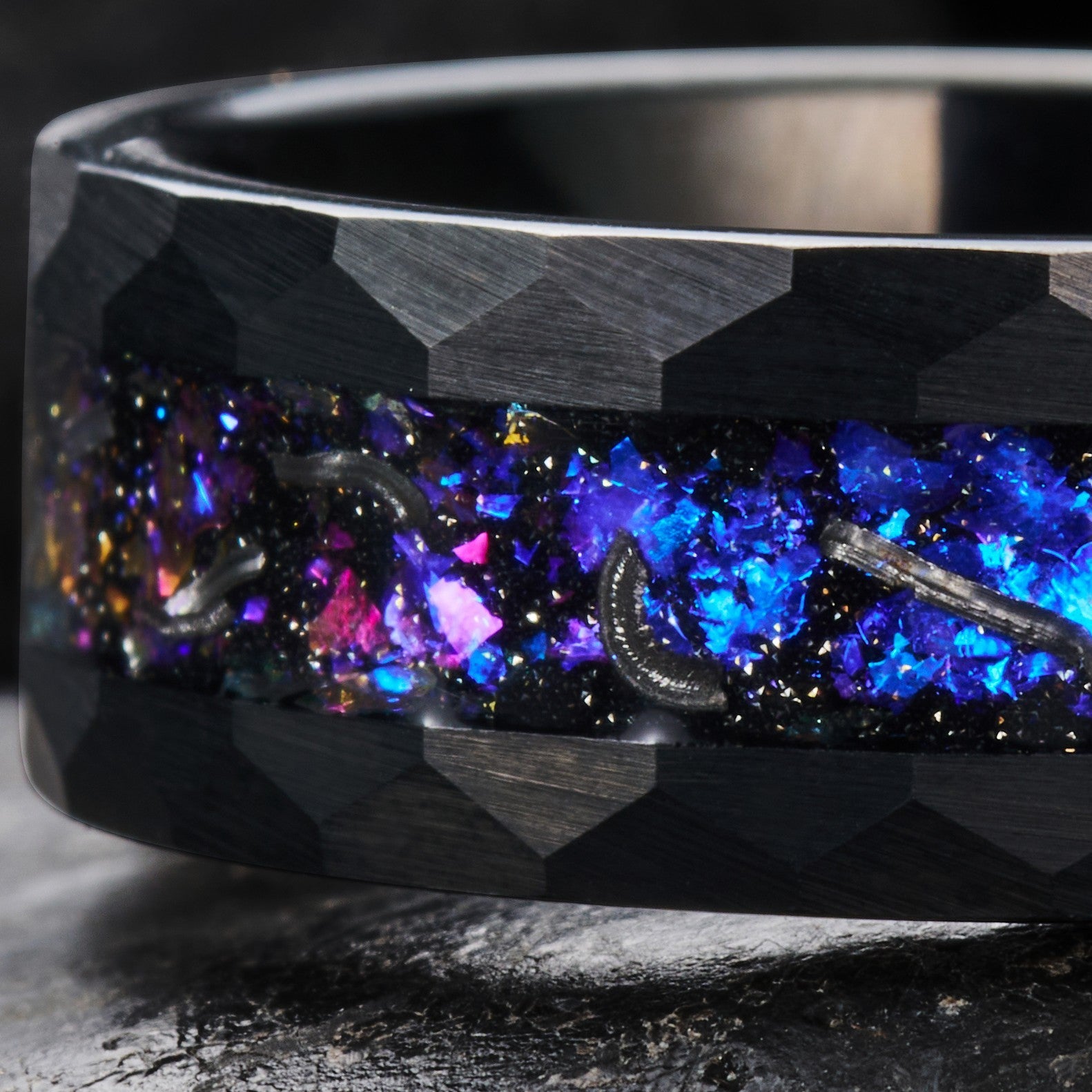
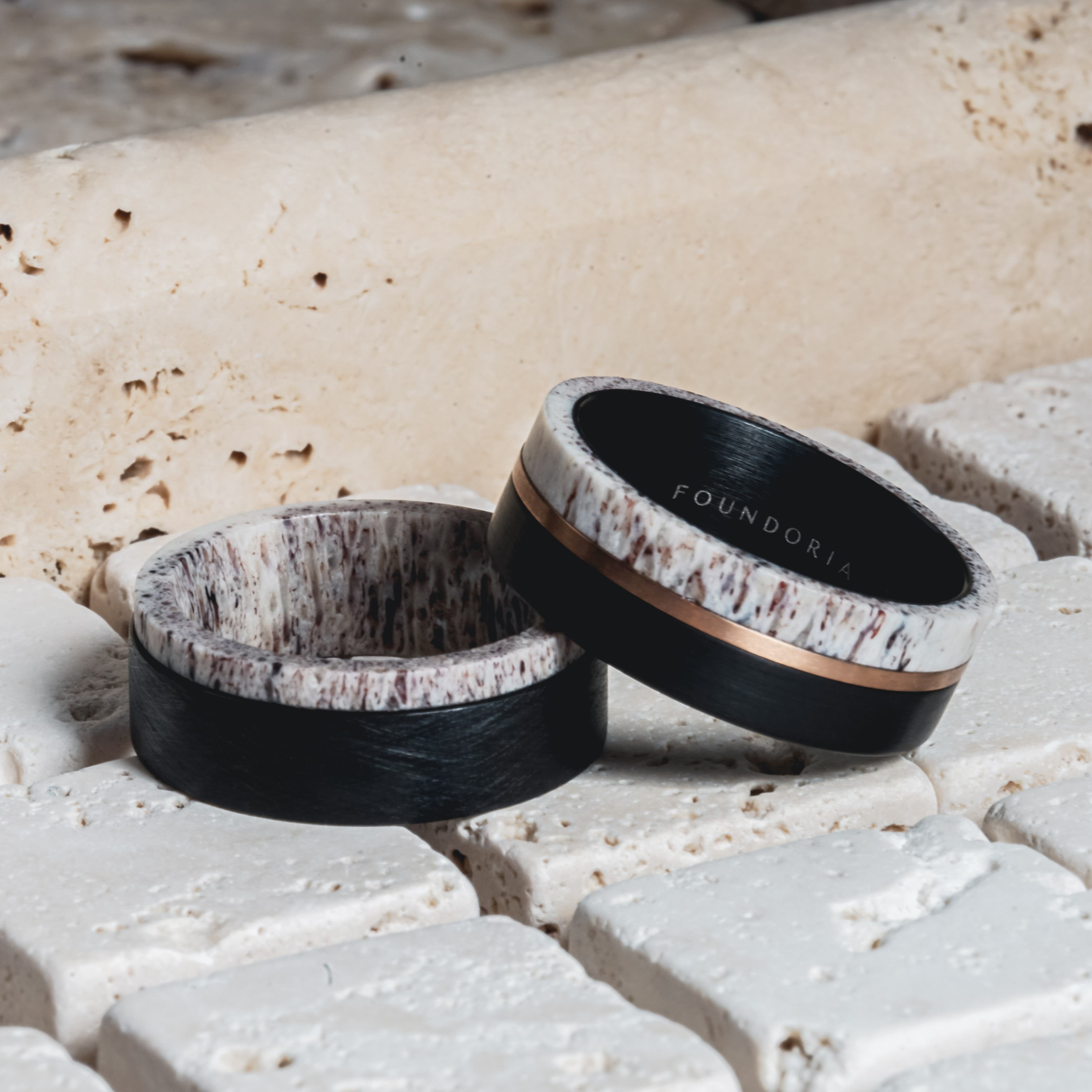
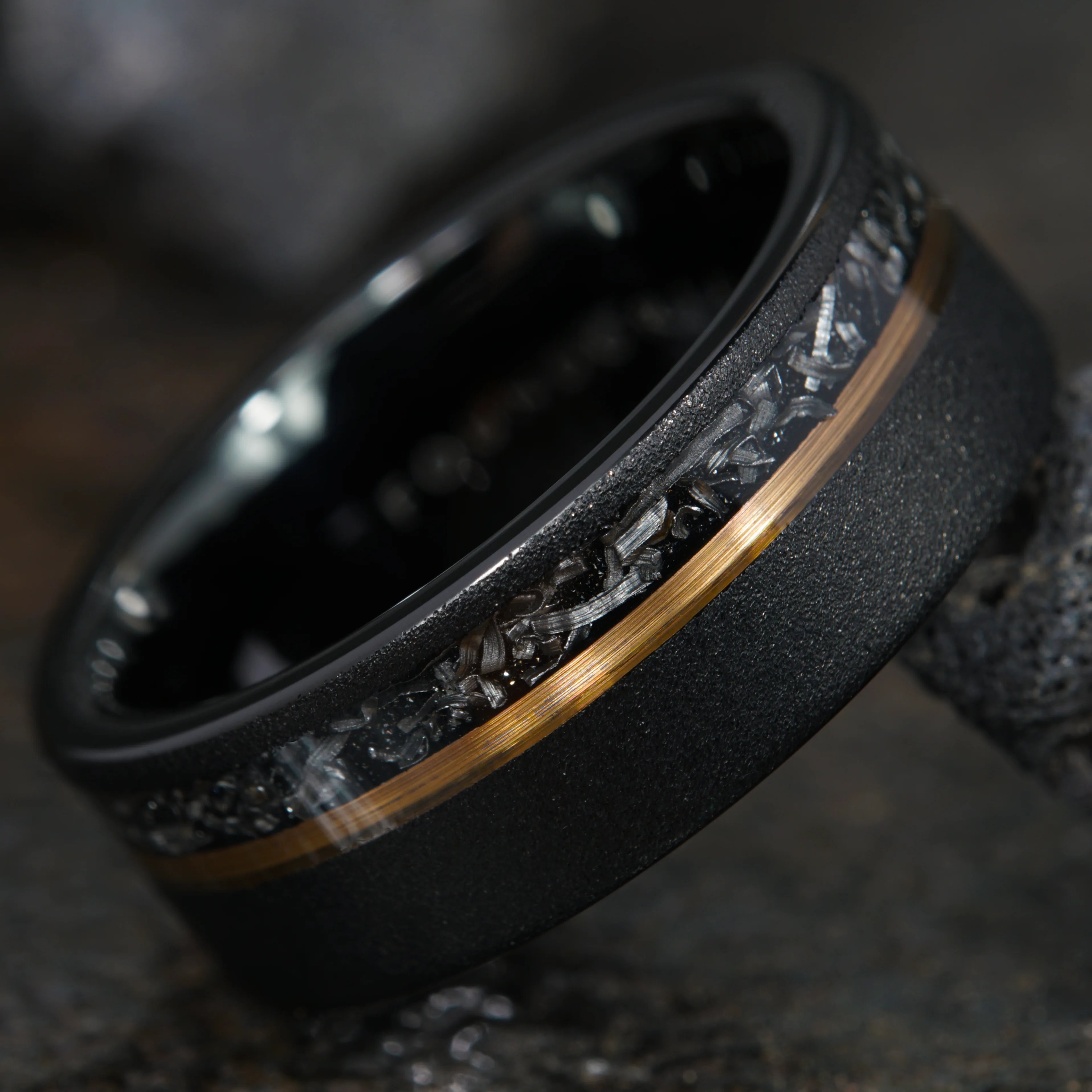
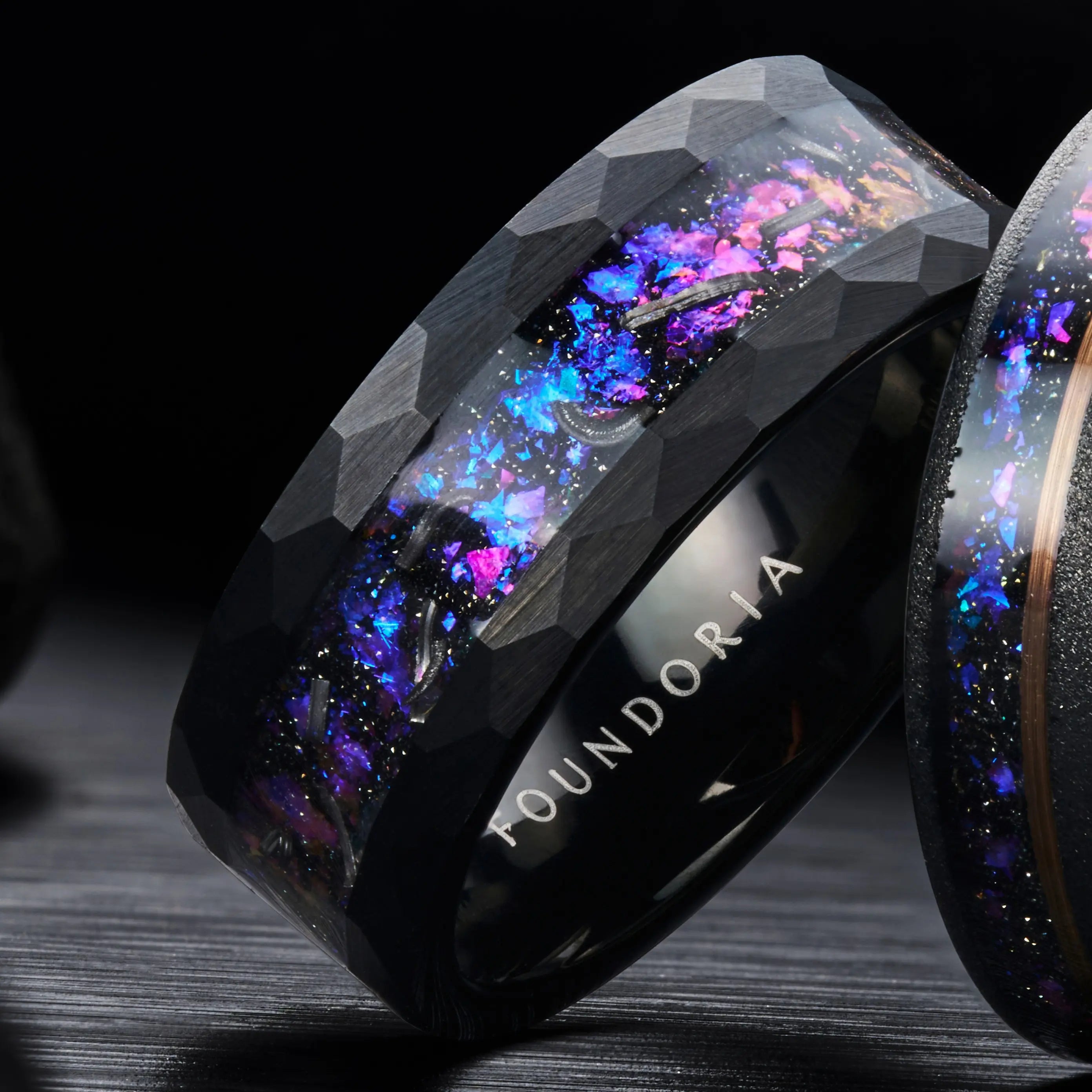
Genuine Meteorite & Galaxy Inspired Rings A piece of the cosmos on your finger.
100%
Authentic Materials Genuine materials, never imitation
Free Express Delivery On all UK orders
Easy Returns & Exchanges Simple, stress-free process
Lifetime Warranty Built to last a lifetime

CELESTIUM

Filters

£
to
£
9 products
Sort by
Sort by
Stellar - Two-Tone Tungsten Ring with Meteorite Stellar - Two-Tone Tungsten Ring with Meteorite
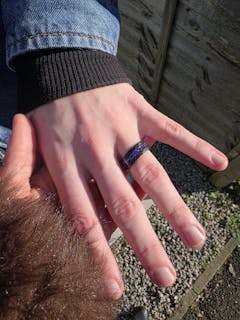
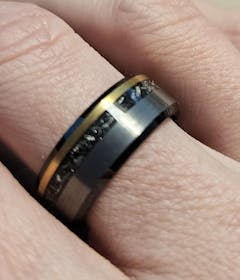
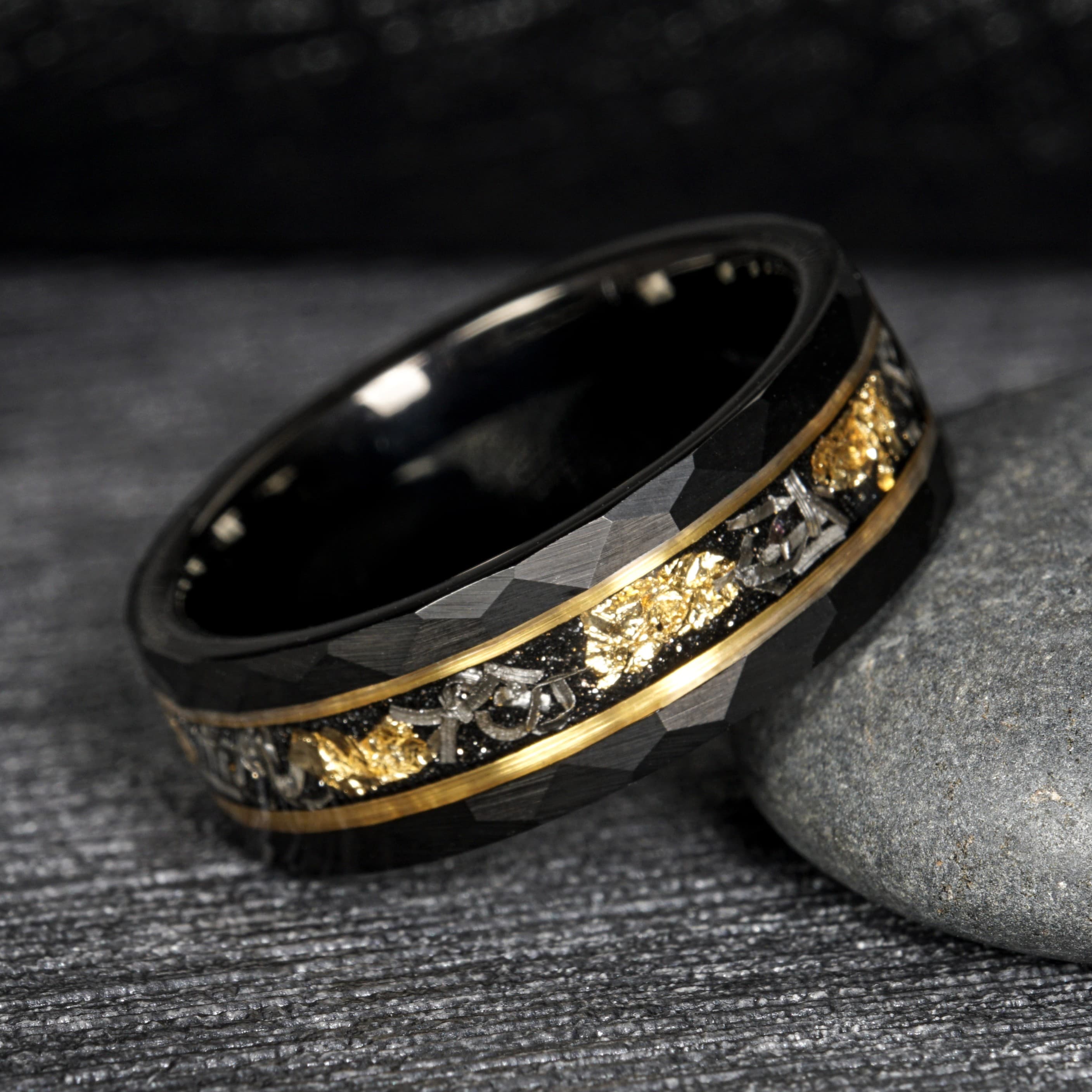
Lunaris - Tungsten Ring with Meteorite & Rose Gold Lunaris - Tungsten Ring with Meteorite & Rose Gold
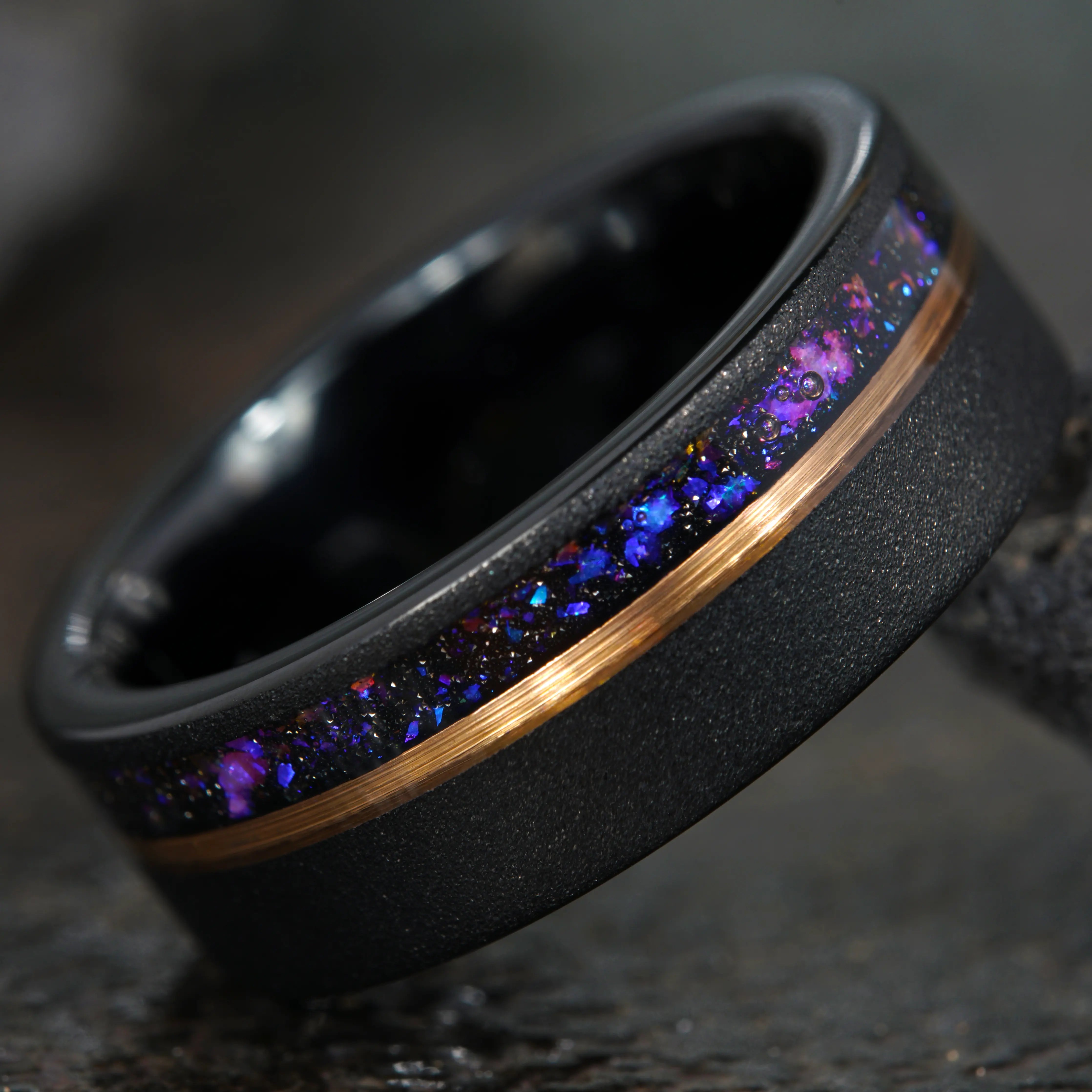
Cosmos - Tungsten Ring with Galaxy & Meteorite Inlay Cosmos - Tungsten Ring with Galaxy & Meteorite Inlay
Astraeus - Titanium Ring with Wide Meteorite Inlay Astraeus - Titanium Ring with Wide Meteorite Inlay
Azure - Tungsten Ring with Blue Sandstone Azure - Tungsten Ring with Blue Sandstone
Nova - Black Tungsten Ring with Meteorite Nova - Black Tungsten Ring with Meteorite
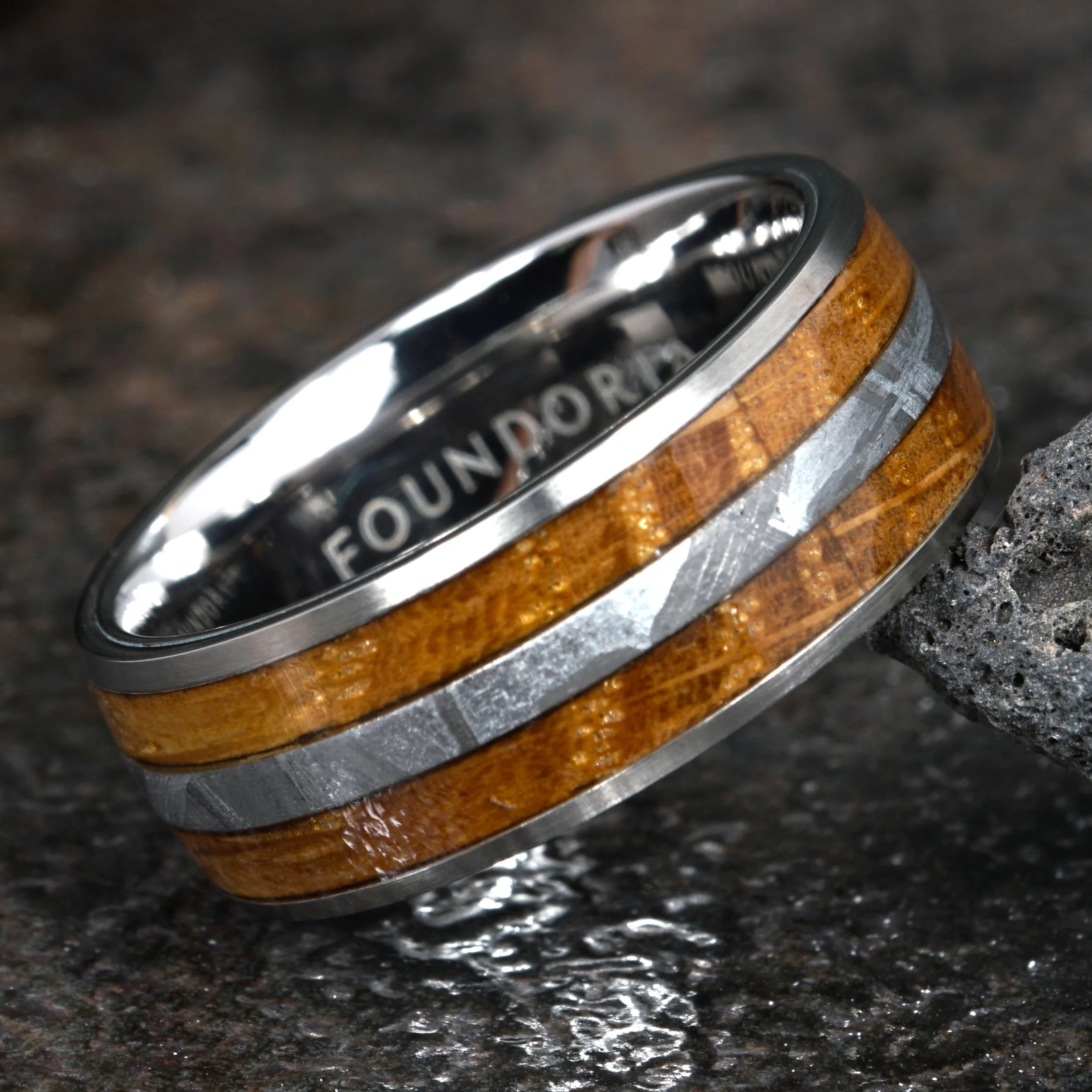
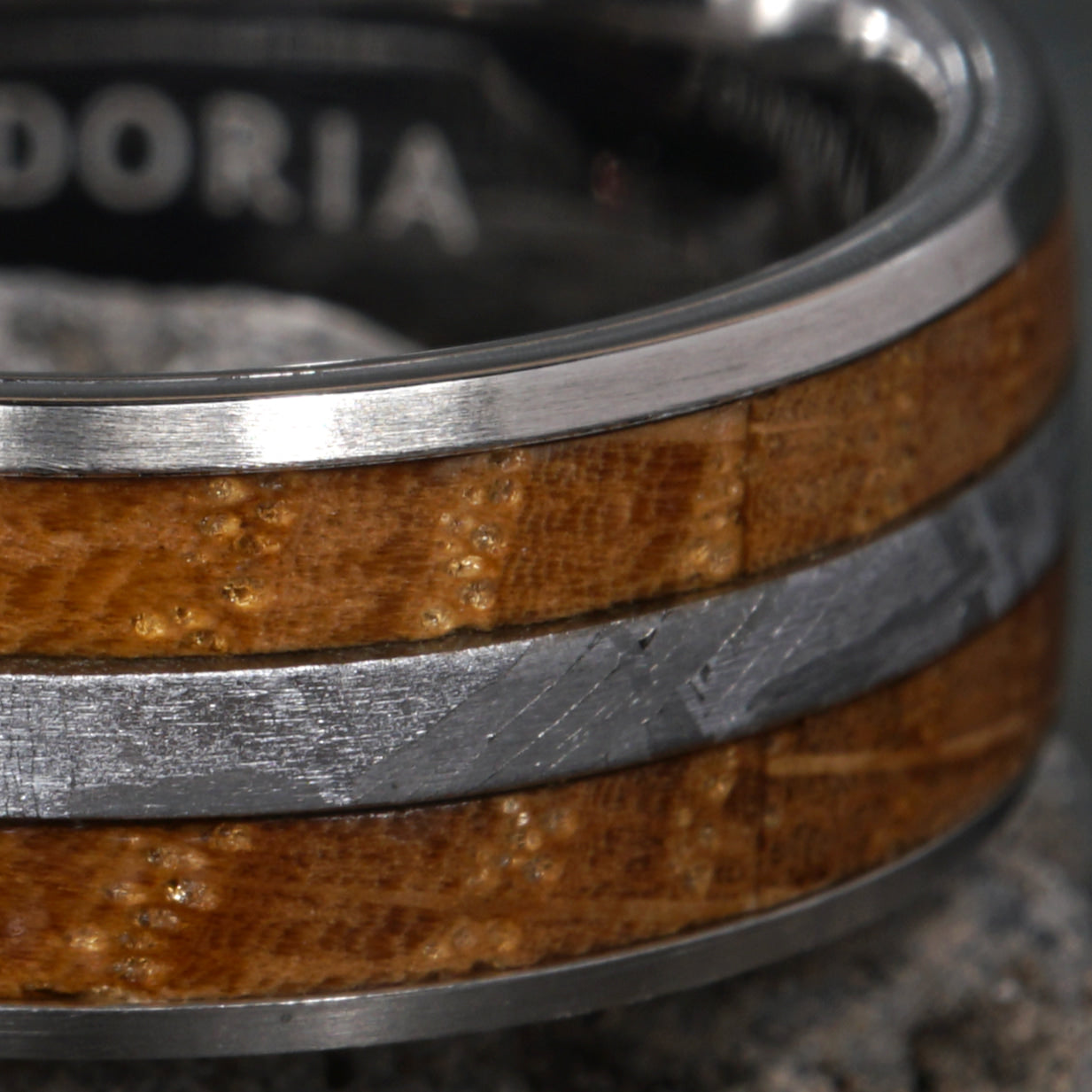
Equinox - Titanium Ring with Meteorite & Bourbon Barrel Wood Equinox - Titanium Ring with Meteorite & Bourbon Barrel Wood
Orion - Black Tungsten Ring with Meteorite Orion - Black Tungsten Ring with Meteorite
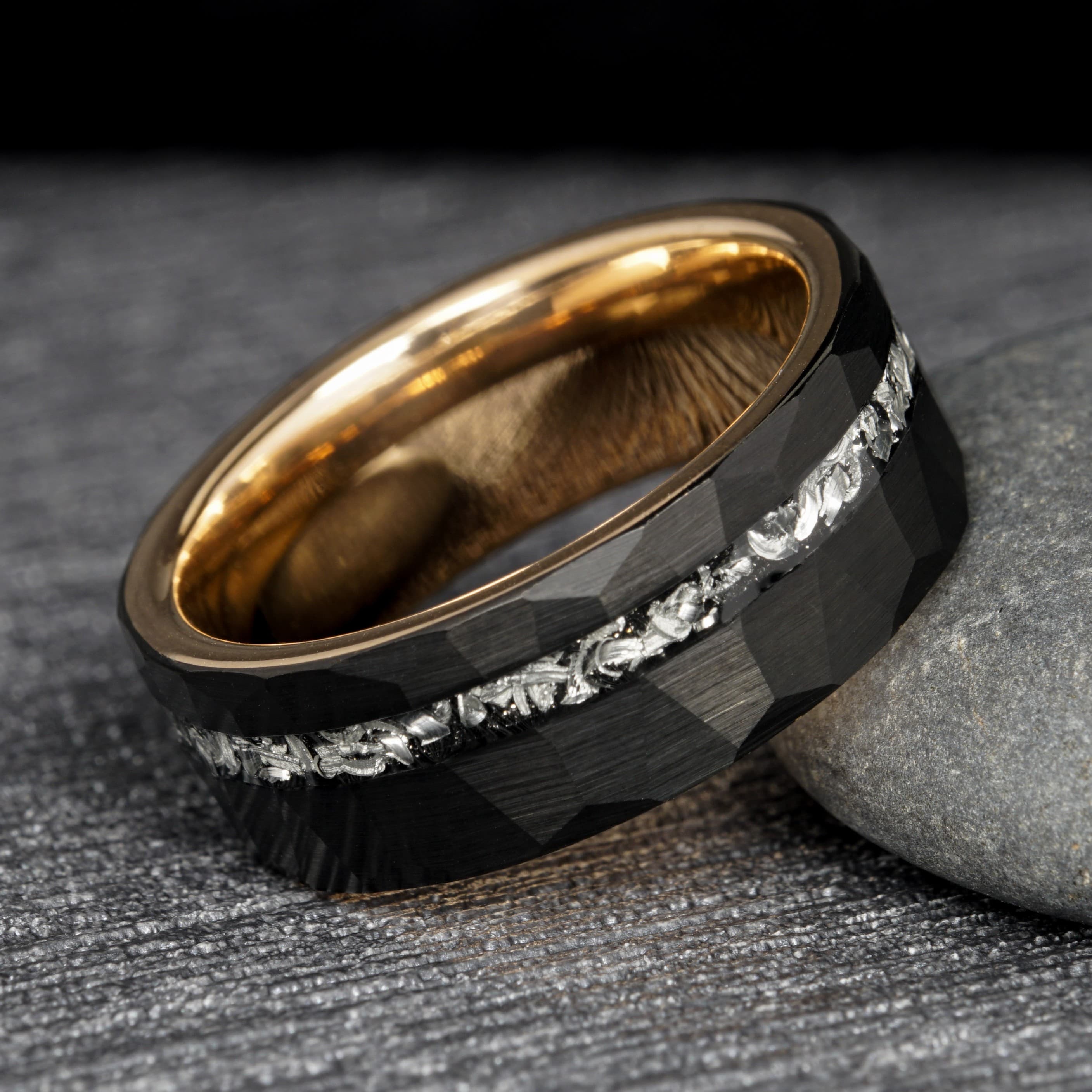
Umbra Black Polished Tungsten Meteorite Ring with Rose Gold Umbra - Black Tungsten Ring with Rose Gold
ANCIENT MATERIAL. MODERN DESIGN.

Authentic Meteorite Wedding Rings

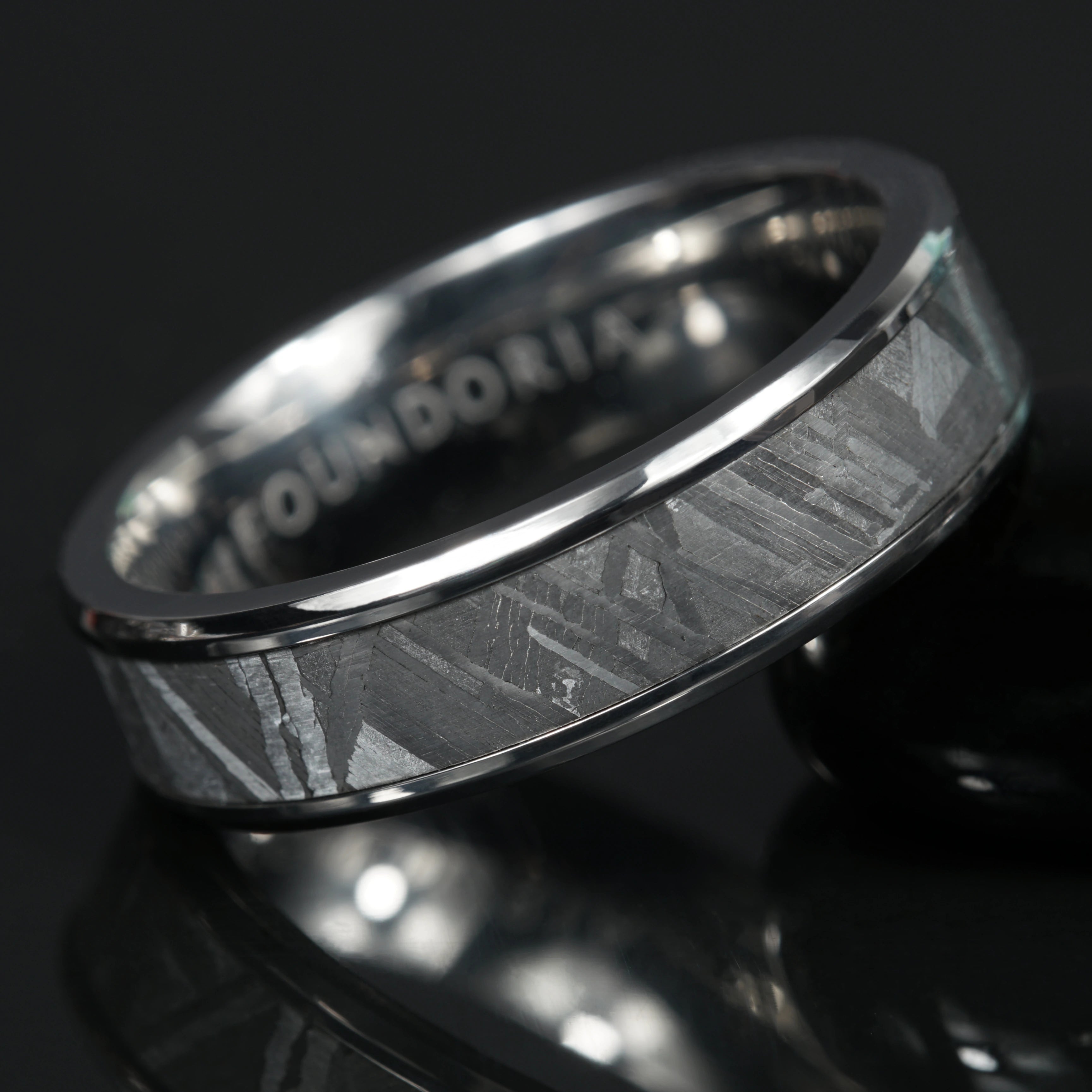
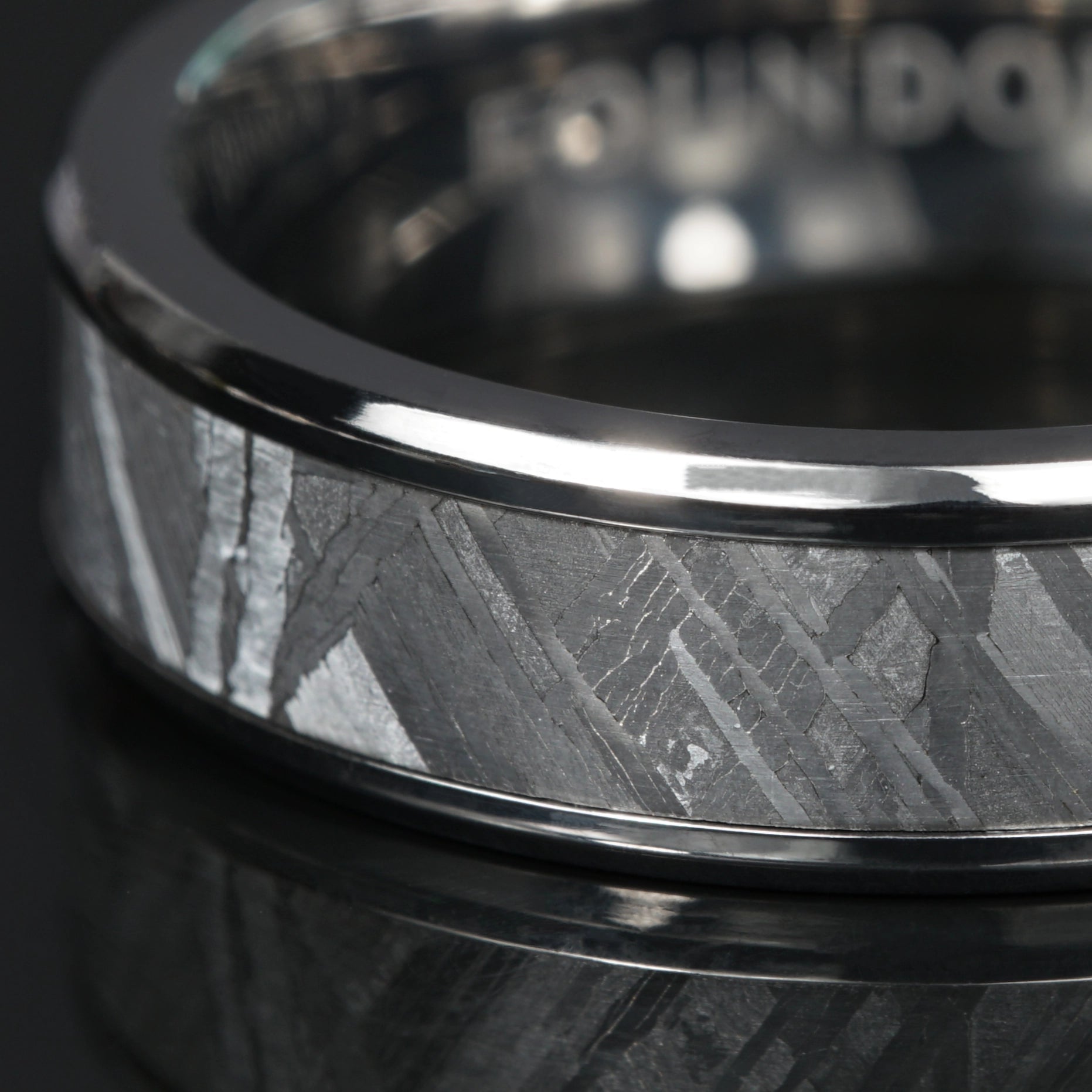
The CELESTIUM collection features two of the most remarkable meteorites used in jewellery: Gibeon and Muonionalusta. Both are genuine iron-nickel meteorites, around 4.5 billion years old, formed in the early solar system. Both display the Widmanstätten pattern, the crystalline structure that forms only through millions of years of slow cooling in space. The pattern cannot be replicated in a laboratory. Every CELESTIUM ring carries authentic space rock set into a tungsten or titanium base.

Gibeon meteorite fell to Earth in prehistoric times and was first documented in Namibia in the 1830s. Its Widmanstätten pattern shows broader, bolder crystalline bands with warm grey tones. Gibeon features in our tungsten carbide rings, including Stellar, Nova, Cosmos, Lunaris, and Orion.

Muonionalusta meteorite arrived on Earth approximately one million years ago and was discovered in northern Sweden in 1906. Although it landed more recently than Gibeon, the meteorite itself formed in the same era of the solar system. Its Widmanstätten pattern is finer and more intricate than Gibeon's, with a distinctive blue-silver sheen after acid etching. Muonionalusta features in our titanium rings, including our flagship Astraeus.

For buyers researching meteorite rings carefully, our guide on how to tell if a meteorite ring is genuine covers the visual and physical markers of authentic iron-nickel meteorite, including the Widmanstätten pattern, the magnet test, and what to expect from reputable sellers.

What makes meteorite rings unique?

The Widmanstätten pattern in each meteorite fragment formed as the rock cooled at approximately one degree per million years in the vacuum of space. This process cannot be replicated artificially, which means the pattern on your ring is genuinely one-of-a-kind. No other ring in existence shares the same crystalline fingerprint, and that's what makes meteorite jewellery genuinely different from any other material on the market.

Why choose a meteorite ring?

  • Truly unique: Every meteorite fragment displays a different Widmanstätten pattern. Your ring is unlike any other ring ever made.
  • Ancient material: Around 4.5 billion years old, formed before Earth itself existed. No gemstone or precious metal comes close to this history.
  • Symbolic meaning: For those drawn to astronomy, science, or the idea that their love is written in the stars, a meteorite ring carries genuine significance.
  • Natural variation: Each ring features real meteorite, not a print or reproduction. Subtle differences are evidence of authenticity, not imperfection.

Natural variation: what to expect

Because meteorite is a natural material, no two rings are identical. Variation between pieces is normal and expected. This includes differences in Widmanstätten pattern density and band width, subtle colour variation from warm grey to cooler silver tones, dark spots or flecks caused by troilite or other mineral inclusions, occasional micro-pitting from the meteorite's journey through the atmosphere, and faint rust tones where iron content is higher. None of these are defects. They are evidence of authenticity. A meteorite ring without natural variation would not be a real meteorite ring.

How we protect your meteorite ring

Raw meteorite contains iron, which can oxidise with sustained moisture exposure. All CELESTIUM rings set the meteorite as an inlay within tungsten carbide or titanium, with the meteorite sealed using an electrophoretic coating to prevent water contact while preserving its striking visual appearance. Combined with our comfort-fit interior, your skin primarily contacts the tungsten or titanium base rather than the meteorite itself. With reasonable care, your ring will maintain its character for decades. See our ring care guide for full instructions.

Hypoallergenic credentials

Every Foundoria ring is independently lab-tested to meet REACH and GPSR safety standards. Our tungsten carbide and titanium bases are tested against EN 1811:2023 with nickel release measured below the laboratory detection limit. For wearers with documented severe nickel allergies who are drawn to the cosmic aesthetic, our Astraeus ring uses biocompatible titanium (the same grade used in surgical implants) as the safest pairing. Read our hypoallergenic rings guide for the full testing detail.

What every CELESTIUM ring includes

Free worldwide delivery with all import duties covered for international orders. A complimentary ENDURA silicone companion band for the gym, manual work, or anywhere a metal ring isn't appropriate. Full lifetime warranty against manufacturing defects. A free posted ring sizer available on request before you order. UK NHS staff, armed forces personnel, and students save 20% via our exclusive discounts page.

Meteorite Ring FAQs

Yes. CELESTIUM rings feature genuine Gibeon and Muonionalusta meteorite, both authenticated iron-nickel meteorites. Gibeon is one of the most well-documented meteorites used in jewellery, prized for its bold Widmanstätten pattern and stability. Muonionalusta is sourced from northern Sweden and is notable for its finer crystalline structure and blue-silver sheen. Provenance documentation is available on request. For a complete guide to spotting genuine meteorite versus the imitations flooding the market, read how to tell if a meteorite ring is real.

Both meteorites are around 4.5 billion years old and display the Widmanstätten pattern, but they have visual differences. Gibeon shows broader, bolder crystalline bands with warm grey tones, and features in our tungsten carbide rings. Muonionalusta has a finer, more intricate pattern with a distinctive blue-silver sheen after acid etching, and features in our titanium rings including Astraeus. Both are genuine meteorite; the difference is aesthetic.

Around 4.5 billion years old. Both Gibeon and Muonionalusta formed during the early solar system, predating Earth itself. The meteorites travelled through space for billions of years before being captured by Earth's gravity. Gibeon fell to Earth in prehistoric times, while Muonionalusta arrived around one million years ago. When you wear a CELESTIUM ring, you're carrying a fragment of material older than every rock on Earth.

Yes, when manufactured correctly. Meteorite contains iron and nickel naturally, but the inlay sits on the outer face of the ring and is sealed with an electrophoretic coating to isolate it from skin contact. The ring's interior (where your skin actually contacts the ring) is tungsten or titanium, both independently tested to EN 1811:2023 with nickel release below the laboratory detection limit. For severe nickel allergies, our titanium-based Astraeus ring is the safest pairing. See our hypoallergenic rings guide for full testing detail.

The meteorite is cut into a thin band and set as an inlay into a precision-cut channel in the tungsten or titanium base. The meteorite is then sealed with an electrophoretic coating, an industrial process that bonds a protective layer at the molecular level. This prevents oxidation, moisture damage, and skin contact, while preserving the natural Widmanstätten pattern. The result is a durable, seamless integration that lasts the lifetime of the ring.

Because every piece of meteorite is unique. The Widmanstätten pattern, colour, and surface detail vary naturally between fragments. Dark spots (troilite inclusions), subtle rust tones, pattern density variation, and micro-pitting are all normal properties of real meteorite, not defects. Product photography shows one specific ring; your ring will have its own pattern. No two meteorite rings in existence share the same crystalline structure.

Meteorite contains iron, which can oxidise with prolonged moisture exposure. The meteorite inlay in CELESTIUM rings is set within tungsten carbide or titanium and sealed with an electrophoretic coating to prevent water contact. With normal care (removing your ring before swimming or prolonged water exposure, drying promptly after hand washing), your ring will maintain its appearance for decades.

Remove your ring before swimming, showering, or using cleaning chemicals. If your ring gets wet, dry it promptly with a soft cloth. For cleaning, use a slightly damp cloth and dry immediately. Avoid ultrasonic cleaners and harsh chemicals. Store in a dry place when not wearing. Full instructions in our ring care guide.

Tungsten carbide rings cannot be resized at all. Titanium rings can be adjusted within limits (typically half a size up or down) by a skilled jeweller. For both, accurate first-time sizing is essential. A free posted ring sizer is available on request before you order. If you're between sizes, go half a size down because our comfort-fit profile wears slightly larger than a flat-fit ring of the same nominal size. Free 30-day size exchanges are available if the first size isn't right.

Yes. Gibeon and Muonionalusta meteorite are iron-nickel materials commonly used in jewellery, posing no radiation risk and safe for everyday wear. All Foundoria rings are independently tested to REACH and GPSR safety standards. The meteorite is sealed and positioned on the outer face of the ring, with the interior surface being tungsten or titanium for skin-safe contact.