Astraeus - Titanium Ring with Wide Meteorite Inlay
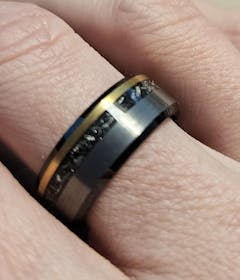
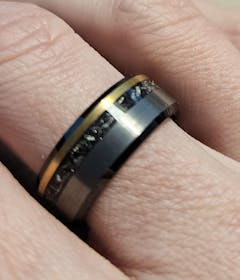
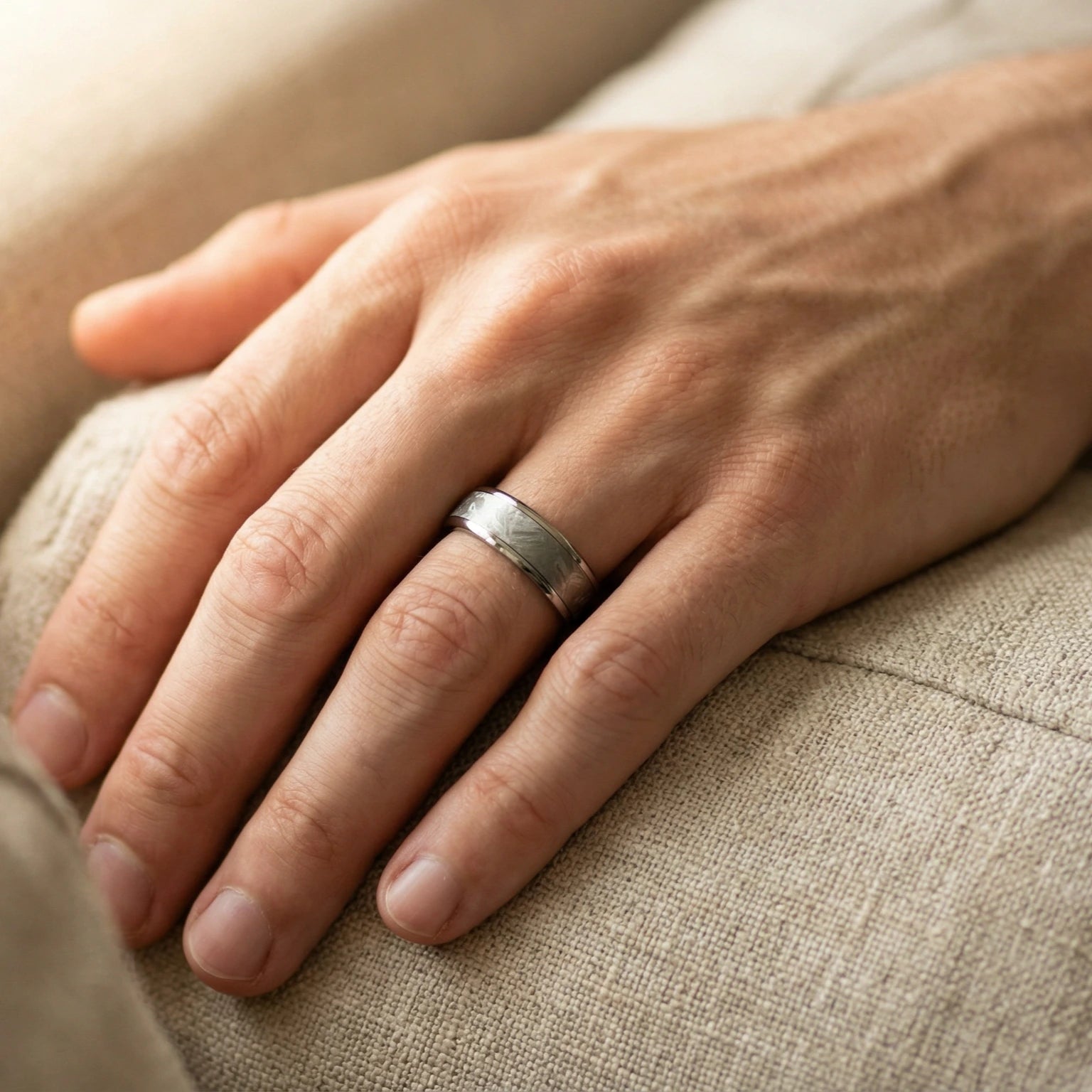
Astraeus 6mm Titanium Meteorite Ring - Hand Model
Astraeus - Titanium Ring with Wide Meteorite Inlay

Astraeus - Titanium Ring with Wide Meteorite Inlay

Sale price£699.00
Ring size:

Ring size

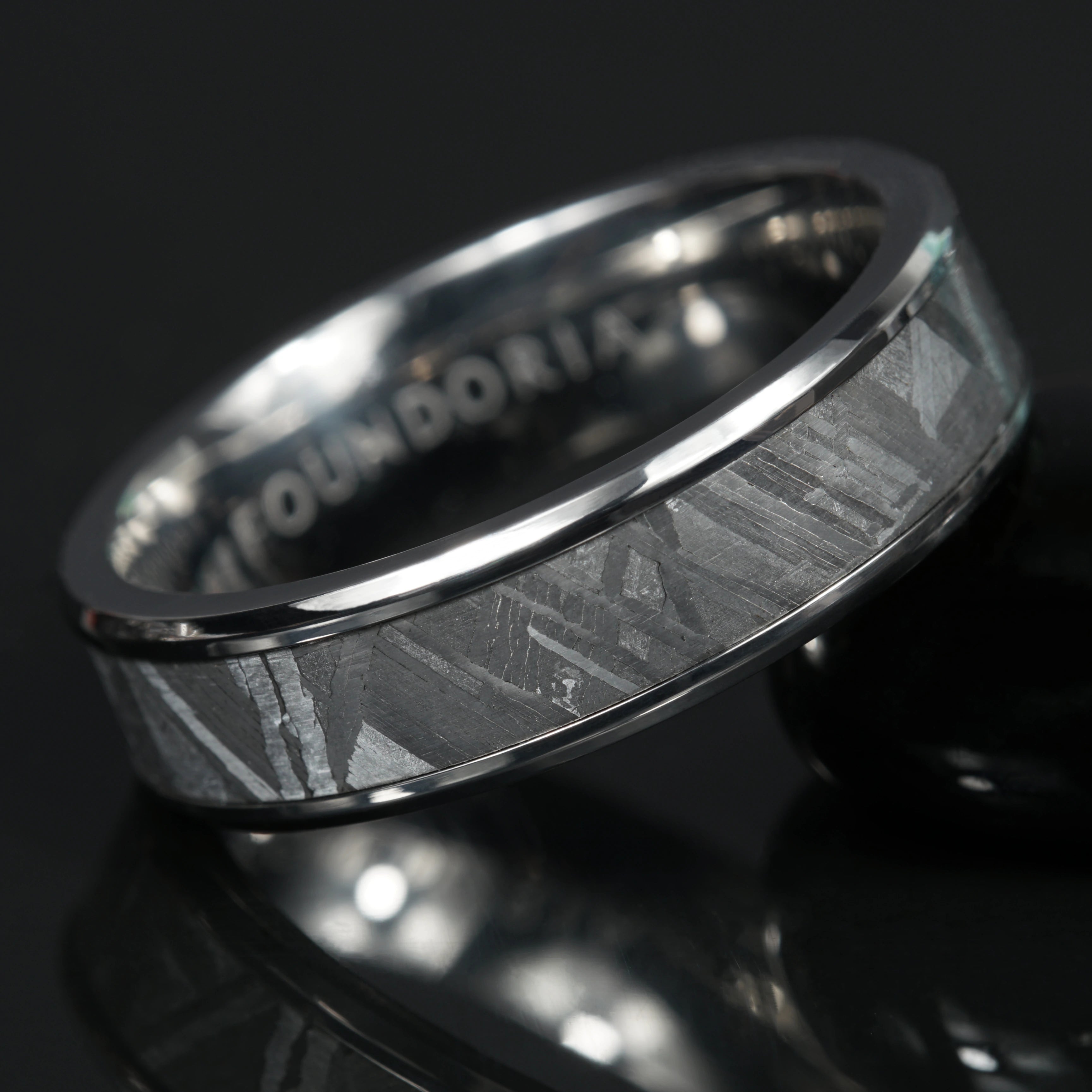
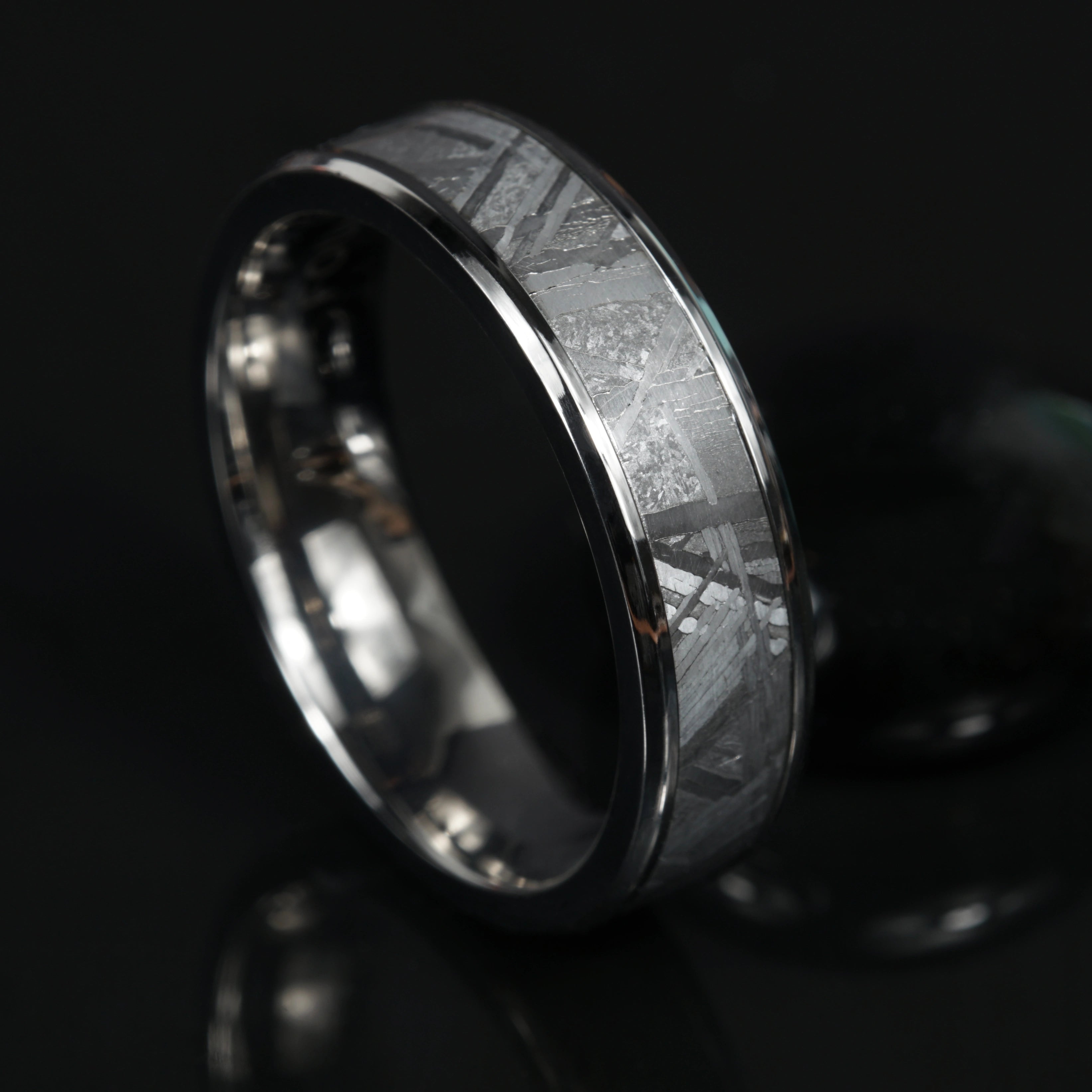
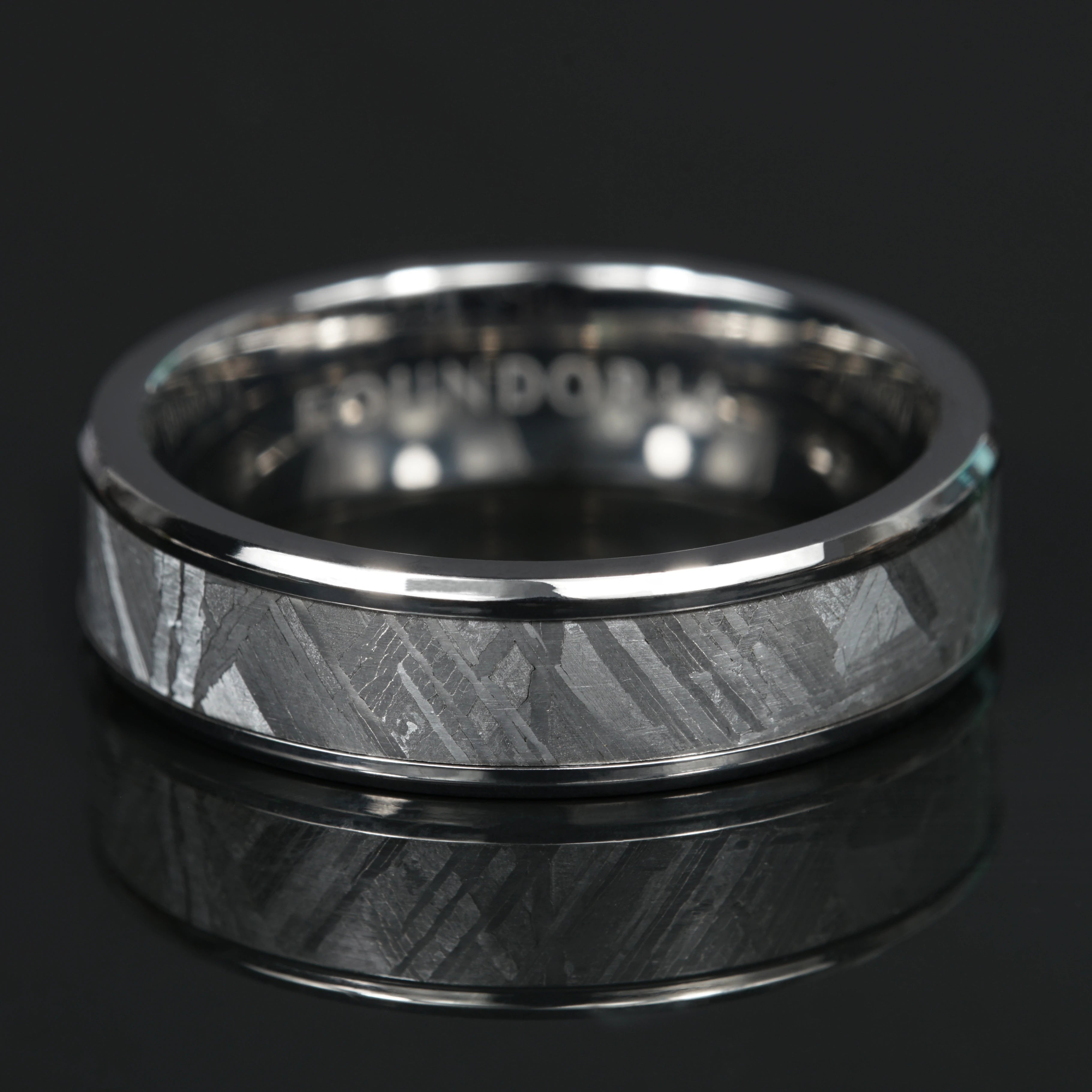
Astraeus carries the widest meteorite inlay in the CELESTIUM collection. A 4mm band of genuine Muonionalusta meteorite, set into a 6mm polished titanium ring. Real extra-terrestrial material. No two rings identical.

4mm Wide Meteorite Inlay Genuine Muonionalusta meteorite with fine, intricate Widmanstätten crystal pattern
E-Coated for Daily Wear Professional electrophoretic coating on the inlay — more durable than standard wax sealing, designed for long-term wear
Polished Titanium Aerospace-grade titanium, polished to a high lustre
Lightweight Strong as steel at less than half the weight
6mm Band Width The band that frames a wide 4mm meteorite inlay. Comfortable for daily wear.
Hypoallergenic Naturally biocompatible — suitable for sensitive skin and long-term wear
Quantity:
Secure Payment
Lifetime Warranty
UK-Based Expert Support

Free Worldwide Express Delivery

Order
Today
2
Dispatched
Loading...
3
Delivered
Loading...
All duties & taxes included. The price you see is the price you pay, with nothing to pay on arrival. Tracked and fully insured.
Ordered on its own, this ships by standard tracked post and local import duties or taxes may apply on arrival. Add it to an order of £100 or more and it ships with your main order, duties fully covered.

30-Day Returns & Free Size Exchange

Free return postage. Wrong size? We'll send a replacement at no cost.

A Love Light-Years in the Making Genuine Muonionalusta meteorite, formed long before the Earth. Set in polished titanium
Full Description

Astraeus carries the widest meteorite inlay in our CELESTIUM collection. Named after the Greek Titan of dusk and the stars, it's built around a single idea: let the meteorite speak. The band measures 6mm of polished titanium, and the genuine Muonionalusta meteorite running through it is 4mm wide. That leaves only a narrow border of titanium on each side, so most of the ring's face is meteorite. The Widmanstätten pattern becomes the whole point of the ring, not an accent to it.

What Makes Astraeus Different

Wide Genuine Meteorite Inlay

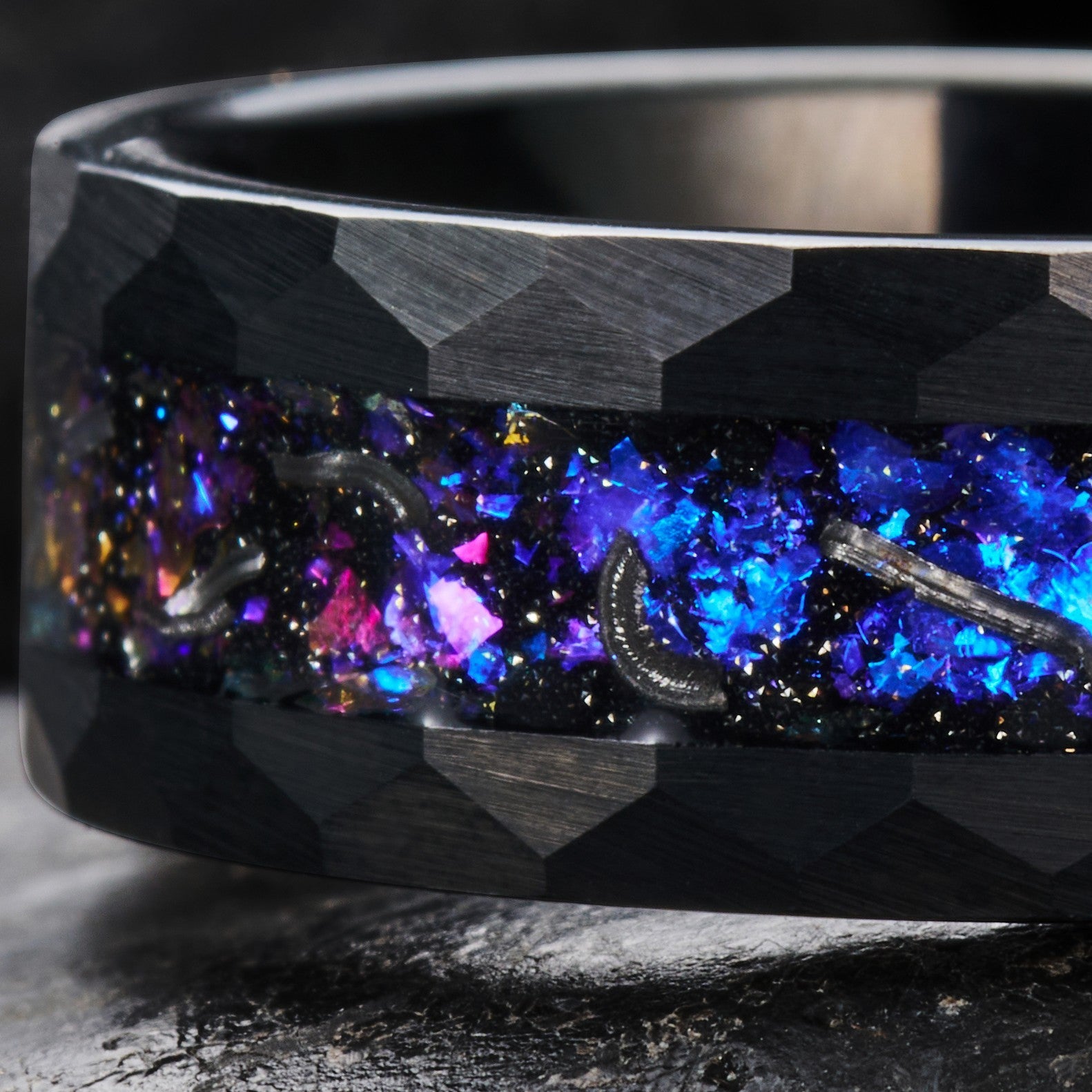
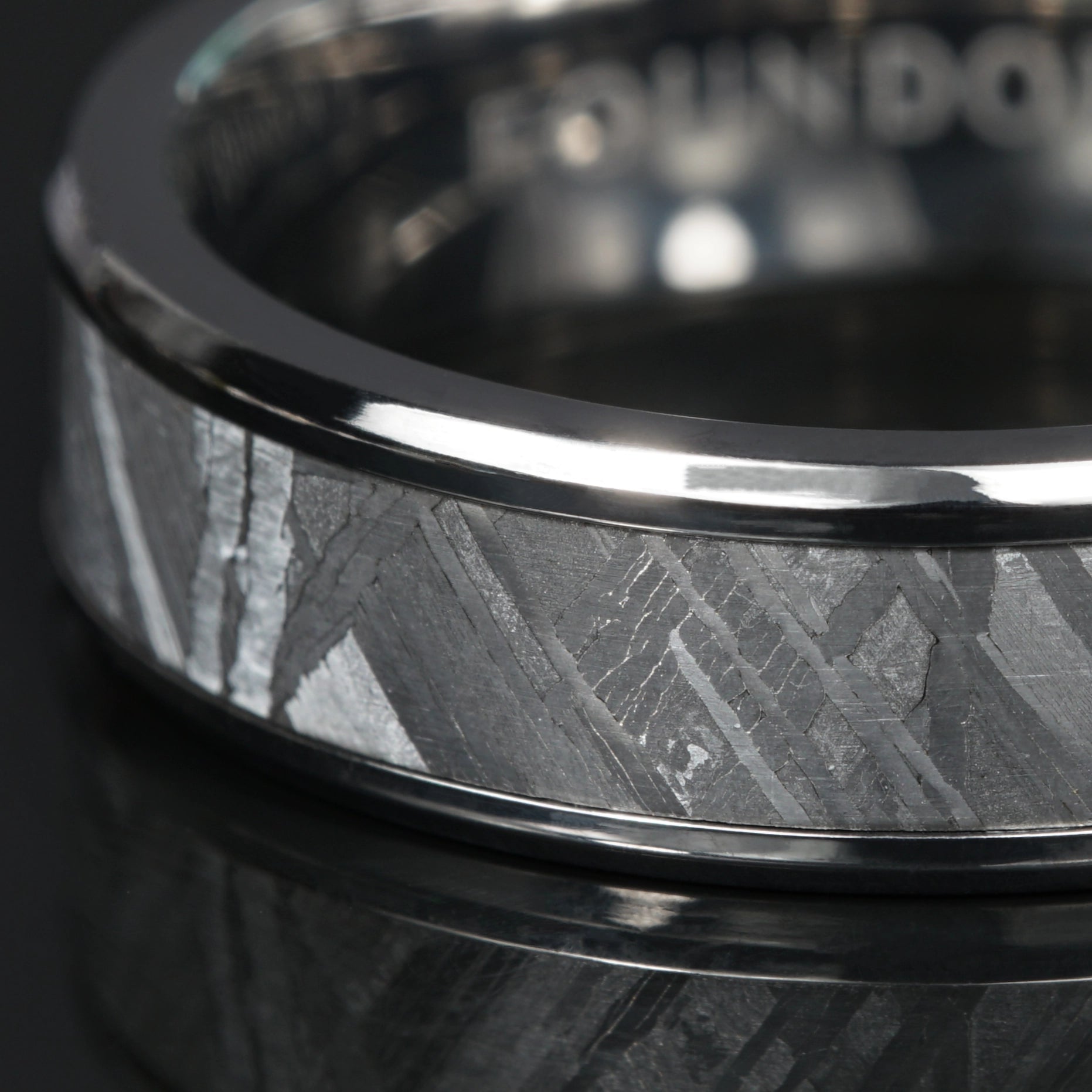
Most meteorite rings use a narrow inlay. Astraeus doesn't. At 4mm in a 6mm band, the inlay is wide, which means more of the Widmanstätten pattern is visible. This is the geometric lattice of interlocking crystals that forms as iron-nickel metal cools over millions of years in zero gravity, and it's the one thing that proves the material is real. It can't be faked, and no two pieces are identical. If you're researching meteorite rings carefully, our guide on how to tell if a meteorite ring is genuine walks through every visual and physical marker of authentic material.

The Widmanstätten Pattern: This crystalline structure forms only in space, as molten iron-nickel cools at roughly one degree per million years. The result is a geometric lattice of interlocking crystals that no earthly process can replicate. What you see on your ring formed before Earth existed.

Muonionalusta meteorite is distinguished by its finer, more intricate crystal structure and characteristic blue-silver sheen after acid etching. It's visually distinct from Gibeon, the other meteorite we use in the CELESTIUM collection. For a detailed comparison of both meteorites, see our meteorite science guide.

Polished Titanium Band

The meteorite sits in a polished aerospace-grade titanium band. Titanium is lighter than steel, stronger than most precious metals, and naturally hypoallergenic. It's the same material used in aircraft and surgical implants. The polished finish creates a clean contrast with the meteorite's textured surface without competing with it. Unlike tungsten, titanium has some flex under impact, which makes it a better choice if you're harder on your hands.

The 6mm Profile

At 6mm, the band sits in the middle ground. Substantial enough to carry the wide inlay and show the meteorite pattern clearly, narrow enough to wear comfortably every day. The comfort-fit interior means it slides on and off easily and doesn't dig in at the edges during extended wear.
Technical Specifications
Band Width 6mm (approximately 1/4 inch)
Inlay Width 4mm of genuine Muonionalusta meteorite, set within the 6mm band
Materials Aerospace-grade titanium, genuine Muonionalusta meteorite
Finish High-polish titanium
Profile Flat profile with comfort-fit interior
Weight Approximately 4 grams (size P / US 8)
Hypoallergenic Yes, independently lab tested
Resizable No (inlay construction prevents resizing)
Available Sizes UK N to Z+4 (US 7 to 15). Free UK ring sizer on request.
Meteorite Type Muonionalusta iron-nickel meteorite with Widmanstätten pattern
Protective Coating Electrophoretic (e-coat) on meteorite inlay, factory applied
Safety Compliance REACH & GPSR certified
Suitable For Wedding ring, engagement ring, everyday wear
Materials & Craftsmanship

Muonionalusta Meteorite

Muonionalusta meteorite landed in northern Sweden approximately one million years ago, making it one of the oldest confirmed meteorite finds on Earth. Its origins, however, go much further back. The material formed during the early solar system, over 4 billion years ago, in the core of a small planetary body that never fully developed.

What makes Muonionalusta distinctive among meteorites used in jewellery is its crystal structure. The Widmanstätten pattern (the geometric lattice that appears when the meteorite is cut and acid-etched) is finer and more intricate than that of Gibeon meteorite, with a characteristic blue-silver tone. This pattern formed as molten iron-nickel cooled at approximately one degree per million years in the vacuum of space. The result is something that cannot be manufactured or replicated on Earth. Every piece is unique.

The meteorite in Astraeus is finished with an electrophoretic coating applied during manufacture. Unlike brush-on wax or standard polymer sealants, e-coating is applied electrically. The protective layer is drawn uniformly across the surface for consistent coverage and stronger adhesion. It's the same principle used in automotive corrosion protection. The result is a more durable starting point than most meteorite rings on the market, designed to hold up through years of daily wear rather than occasional use.

Aerospace-Grade Titanium

Titanium was first isolated in 1825 and named after the Titans of Greek mythology. It's since become the material of choice for aerospace engineering, surgical implants, and high-performance applications where the combination of strength, low weight, and corrosion resistance matters.

For Astraeus, we use aerospace-grade titanium polished to a high lustre. It's roughly 45% lighter than steel at comparable strength, naturally hypoallergenic, and unlike tungsten it has some give under impact rather than cracking under extreme force. The polished finish ages well and holds up to daily wear without special treatment.

Titanium is biocompatible and won't react with skin. It's suitable for long-term wear even for people with metal sensitivities. Independently tested to EN 1811:2023 with nickel release below the laboratory detection limit. See our hypoallergenic rings guide for full testing detail.

Construction

The meteorite inlay is precision-cut and set flush with the titanium band. Once set, the inlay is finished with an electrophoretic coating that is applied at the manufacturing stage, not added afterwards. The result is a smooth, even surface with consistent protection across the meteorite. The meteorite sits level with the metal rather than proud of it, which protects the inlay edges and makes the ring more comfortable against adjacent fingers.

Care & Maintenance

Every Astraeus ring is finished with an electrophoretic coating (e-coat) applied at the manufacturing stage. This bonds a protective layer to the meteorite at the molecular level, the same principle used in automotive corrosion protection. It's a substantially more durable seal than the brush-on wax most meteorite ring makers use, designed for years of daily wear rather than occasional use.

In practical terms: Astraeus handles incidental water contact without issue. Handwashing, getting caught in light rain, or accidental splashes won't damage the meteorite. The care guidance below is about extending the ring's appearance over decades, not preventing immediate harm.

Normal Wear

  • Office work and desk-based activities
  • Handwashing and incidental water contact
  • Light exercise in dry conditions
  • Casual dining
  • Wearing through everyday weather

Best Removed Before

  • Showering, bathing, or long water immersion
  • Swimming, pool or open water
  • Heavy manual labour
  • Gym and weightlifting
  • Contact sports
  • Exposure to harsh cleaning chemicals

Routine Care

Wipe with a soft, dry microfibre cloth as part of normal grooming. If the ring gets wet, dry it with a soft cloth, paying particular attention to the edges where the meteorite meets the titanium.

Long-Term Maintenance

Twice a year, apply a thin layer of Renaissance Wax (a museum-grade archival wax) and buff gently with a soft cloth. This refreshes the protective layer and keeps the meteorite looking at its best over decades of wear.

The companion band for hard wear: For prolonged water exposure, heavy manual work, the gym, or active sports, switch to your complimentary ENDURA silicone band. It's designed to take the punishment so Astraeus doesn't have to. That's what it's included for.

About Titanium

The titanium base is highly corrosion-resistant and won't tarnish, rust, or react with skin. Unlike tungsten, titanium has some flex under impact and won't crack or shatter under extreme force. The polished finish will pick up fine scratches over time with daily wear, which is normal for titanium. These can be buffed out professionally or left as a natural patina of use.

If the Meteorite Develops a Patina Over Time

The e-coat is durable but not indestructible over decades of daily wear, particularly with regular exposure to water and chemicals. If you notice subtle darkening on the meteorite inlay over the years, this is a natural patina that adds character. Light patina is normal and doesn't affect the ring's integrity. If you want to reverse it, apply Renaissance Wax. In rare cases of significant oxidation, professional restoration is available through Foundoria as part of our lifetime warranty service.

Warranty note: The e-coat is covered against manufacturing defects under our lifetime warranty. Wear-related changes to the meteorite's appearance (natural patina, surface character developed over years of use) are not defects and are part of how iron-bearing material naturally ages.

Avoid: Ultrasonic cleaners, steam cleaners, abrasive polishes, and prolonged submersion in chlorinated water. These can compromise the e-coat over time.

Frequently Asked Questions

What makes Astraeus different from other meteorite rings?

Two things. First, the meteorite inlay is wider than most meteorite rings on the market, which means more of the Widmanstätten pattern is visible and the meteorite becomes the focal point rather than an accent. Second, the meteorite is sealed with an electrophoretic coating applied during manufacture rather than a brush-on wax, which gives it stronger and more uniform protection against oxidation.

How can I check my Astraeus meteorite ring is genuine?

Authentic iron-nickel meteorite shows several markers you can verify yourself. The Widmanstätten pattern is the most reliable: a geometric lattice of interlocking crystal bands visible across the inlay surface, with the crystals running in two intersecting directions. This pattern only forms through millions of years of slow cooling in space and cannot be replicated by any earthly manufacturing process. Fake "meteorite-style" inlays (typically printed metal, etched stainless steel, or resin composites) lack the irregular, three-dimensional crystal structure of real meteorite. Genuine meteorite is also magnetic due to its iron content, has measurable weight density different from steel, and shows natural variation between pieces (no two Astraeus rings are identical). Every Astraeus ring ships with provenance documentation specifying the meteorite type as Muonionalusta, and certification is available on request. For a complete authentication walkthrough with detailed visual guidance, read our meteorite ring authenticity guide. If you have any doubts after receiving your ring, you're protected by our 30-day full return policy.

Is Astraeus suitable as a wedding ring or engagement ring?

Yes. Astraeus is designed for long-term daily wear and is one of our most popular wedding ring options. The titanium base is durable enough for decades of use, hypoallergenic for any skin type, and the wide meteorite inlay carries genuine symbolic weight (a 4-billion-year-old fragment of space, older than Earth itself). It's also suitable as an alternative engagement ring for those drawn to the cosmic aesthetic over traditional gemstones.

Can the Astraeus ring be resized?

No. Titanium itself can be resized within limits, but Astraeus uses a meteorite inlay construction that prevents resizing without damaging the meteorite. This is why accurate first-time sizing matters. We offer a free posted ring sizer on request, full instructions in our ring sizing guide, and free 30-day size exchanges if the first size isn't right.

Is the meteorite in Astraeus genuine?

Yes. Every Astraeus ring contains authentic Muonionalusta meteorite, an iron-nickel meteorite recovered from northern Sweden with documented provenance dating to the meteorite's formal classification. The distinctive Widmanstätten pattern visible on the inlay can only form through millions of years of slow cooling in space and cannot be replicated artificially. Provenance documentation is available on request. For a complete guide to spotting genuine meteorite versus the imitations flooding the market, read how to tell if a meteorite ring is real.

Is Astraeus hypoallergenic?

Yes. The titanium base is biocompatible (the same surgical-grade material used in implants and bone screws) and independently tested to EN 1811:2023 with nickel release below the laboratory detection limit. The meteorite inlay sits on the outer face of the ring with the e-coat sealing layer isolating it from skin contact, and the comfort-fit interior means your skin primarily contacts the titanium. See our hypoallergenic rings guide for the full testing detail.

What's included with my Astraeus order?

A complimentary ENDURA silicone companion band (worth £25), our signature eco-luxury presentation box, free worldwide delivery with all import duties covered for international orders, full lifetime warranty against manufacturing defects, and free 30-day size exchange if needed.

Do you offer NHS, military, or student discounts?

Yes. UK NHS staff, armed forces personnel, and students save 20% on Astraeus and every Foundoria ring via our exclusive discounts page. Verification takes seconds and the code applies automatically at checkout.

What's Included

Complimentary ENDURA silicone band included with Astraeus titanium meteorite ring
Free ENDURA Silicone Band (£25 Value)

Medical-grade silicone ring in a choice of colours. Wear it for the gym, swimming, or manual work. Anything you'd take Astraeus off for. It's included because it should be.

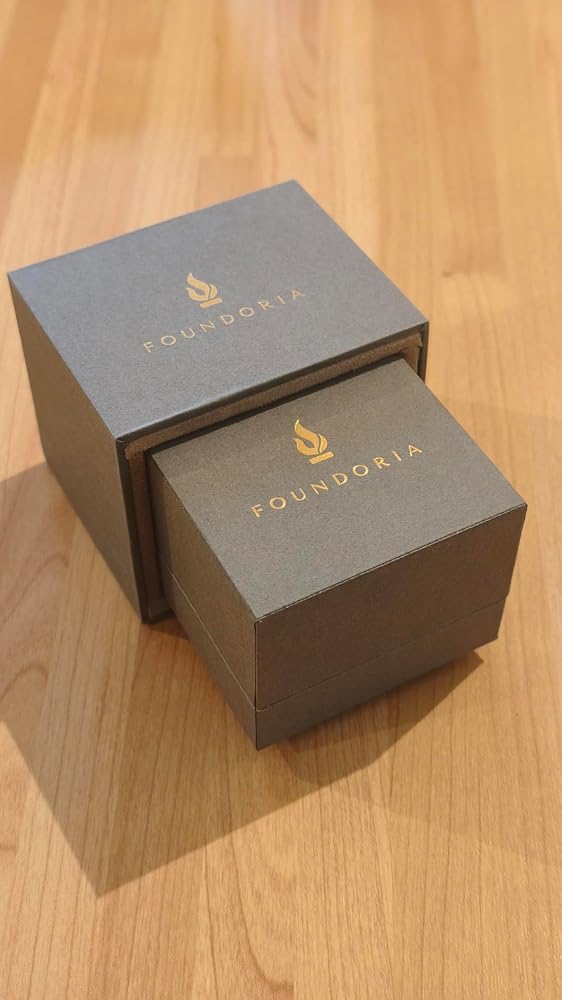
Foundoria signature eco-luxury presentation box for Astraeus meteorite ring
Signature Eco-Luxury Presentation Box

Premium grey clamshell box with gold-foil branding and plush interior. Suitable for gifting and for long-term storage when the ring isn't being worn.

UK NHS, Armed Forces & Student Discount

Save 20% on Astraeus as a verified NHS staff member, serving or veteran armed forces personnel, or student. Verify in seconds via our exclusive discounts page.

Ready to Order Astraeus?

Genuine Muonionalusta meteorite. No two rings are identical. Select your size above.

Lifetime Warranty
REACH & GPSR Certified
Free Worldwide Delivery
30-Day Returns