

Insights from our founder, Karl Hill
When I started Foundoria, I wasn't trying to compete with traditional jewellers. I was frustrated by them.
The men's wedding ring market felt stuck – rows of identical gold bands with price tags that reflected the metal's value rather than any real craftsmanship or thought. And when I looked at what men actually wanted, the gap was obvious. They wanted something that felt like them. Something with a bit of substance. Something they'd actually enjoy wearing.
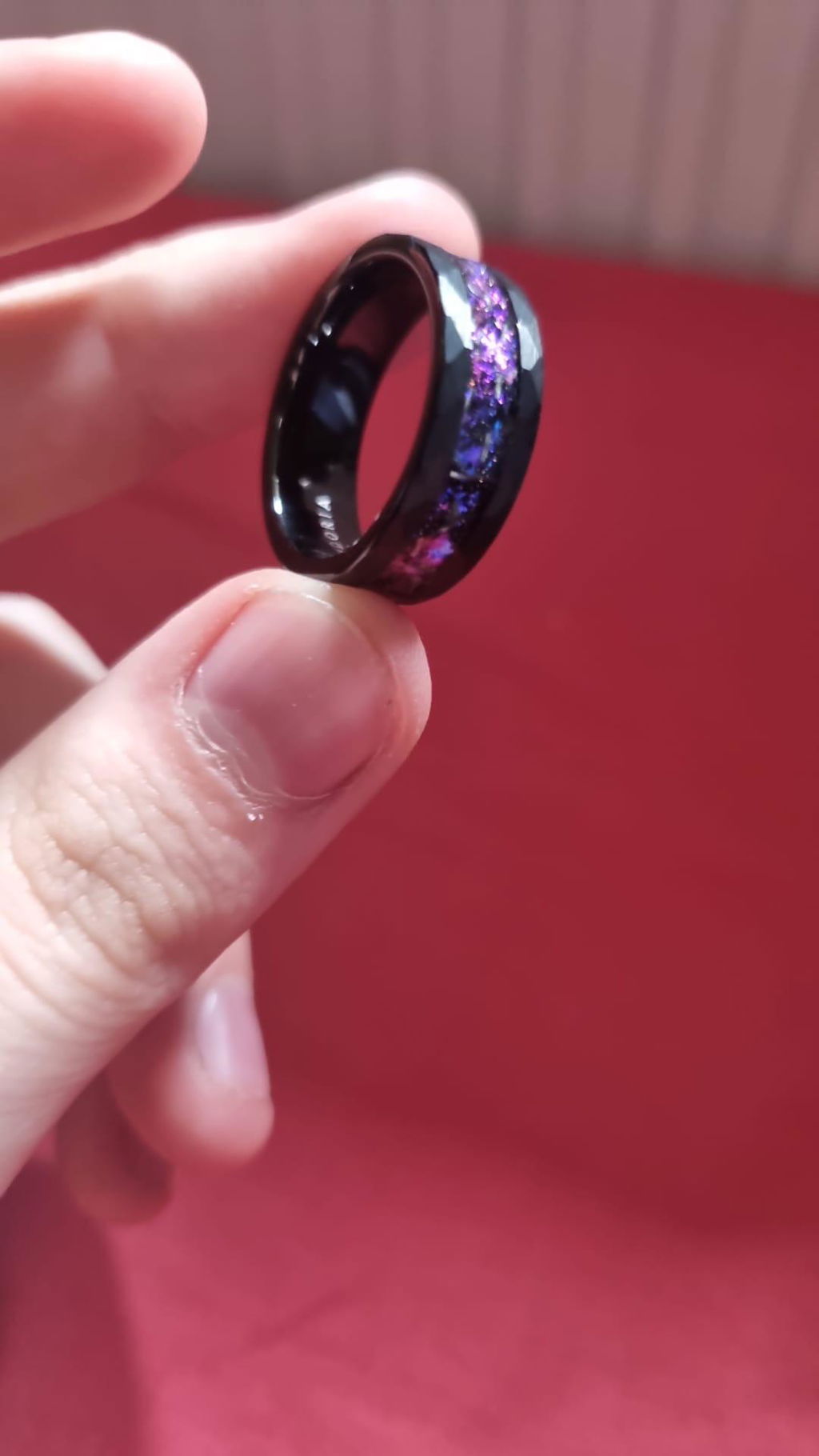
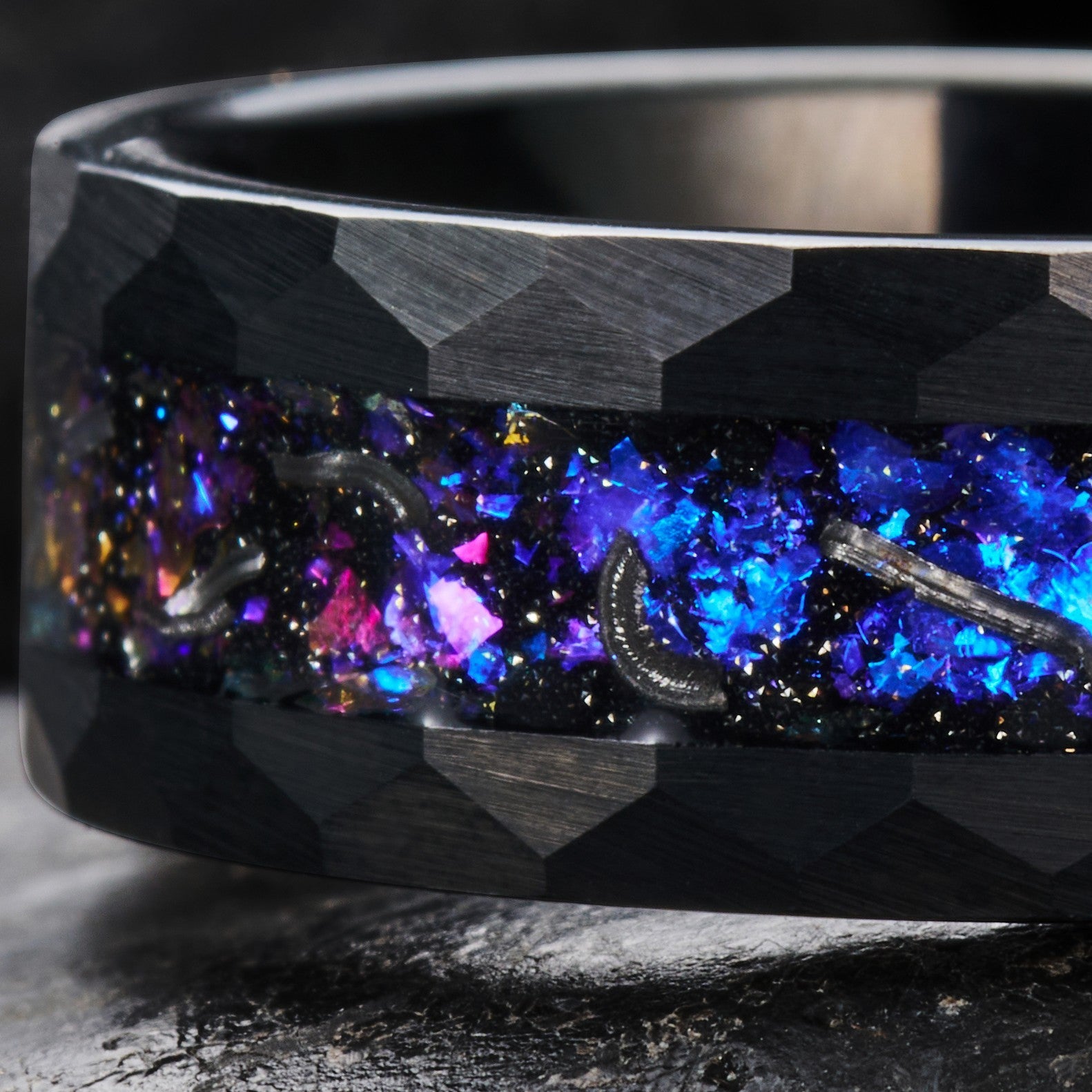
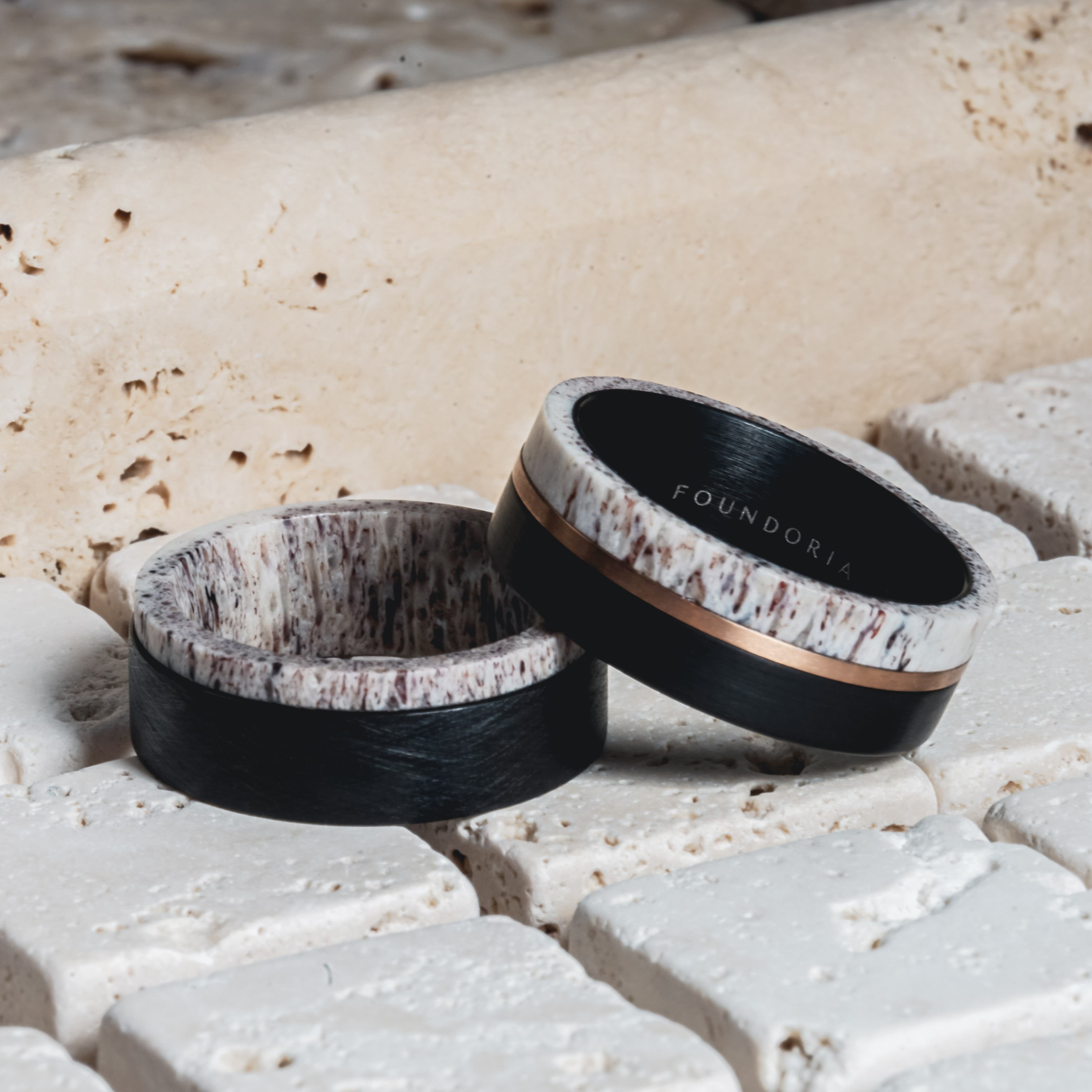
That's why I built a business around tungsten rings with genuine materials – Scottish deer antler, bourbon barrel oak, meteorite fragments. Rings that come with a story, not just a hallmark.
But I've learned that most men start their search with a more basic question: is tungsten actually any good? So before I talk about antler inlays and whisky barrels, let's deal with that first.
The "Tungsten is Brittle" MythThis one comes up constantly, so let's address it head-on.
Yes, tungsten carbide is technically more brittle than gold. But what does that actually mean in practice? It means that under extreme, sudden impact – we're talking hitting it hard with a hammer, or crushing it in industrial machinery – a tungsten ring could crack rather than bend.
In normal life? It's virtually indestructible.
Tungsten ranks around 8-9 on the Mohs hardness scale (diamond is 10). It's one of the hardest materials used in jewellery. That hardness means it won't scratch, won't scuff, and won't slowly lose its shape the way softer metals do. If you want the full picture, our guide to how long tungsten rings really last covers the durability question in detail.
Gold, by comparison, sits at just 2.5-3 on the same scale. That's why gold wedding bands develop that worn, scratched look over time – and why jewellers make good money from polishing and reshaping services.
A tungsten ring will look the same in ten years as it does today. For men who work with their hands, play sport, or simply don't want to baby their jewellery, that matters. It's exactly why we built our TUNGRA tungsten ring collection the way we did.
The "what if it gets stuck on my finger?" concern is easily handled. Any A&E department can remove a tungsten ring with standard vice-grip pliers. It cracks cleanly rather than requiring cutting, which is arguably safer than trying to saw through a gold band.
Here's something the traditional jewellery industry doesn't like to talk about: the price of a gold wedding band is mostly the metal.
There's nothing wrong with gold. It's beautiful, it's traditional, and it carries centuries of meaning. But when you buy a £400 gold band, you're paying for maybe £300 worth of gold and £100 worth of everything else – design, craftsmanship, the shop's overheads. We go deeper into this in our comparison of tungsten versus gold wedding rings.
Tungsten changes that equation entirely.
Because tungsten itself isn't a precious metal, the value shifts to where it arguably should have been all along: the design, the craftsmanship, and the materials that make the ring distinctive.
A Foundoria ring at £100-150 isn't "cheap gold" – it's a fundamentally different proposition. The tungsten base provides the durability. The inlay provides the character. And the price reflects fair craftsmanship rather than commodity metal trading. You can see the full range in our TUNGRA collection.
This isn't about being budget-conscious (though there's nothing wrong with that). It's about questioning whether "expensive metal = valuable ring" ever really made sense.
Rings That Actually Mean SomethingThe best conversations I have with customers aren't about metal hardness or sizing charts. They're about what the ring represents.
A man who spent years visiting the Scottish Highlands with his father chooses a ring with genuine deer antler from the Scottish Highlands – each piece naturally shed and utterly unique in its grain pattern.
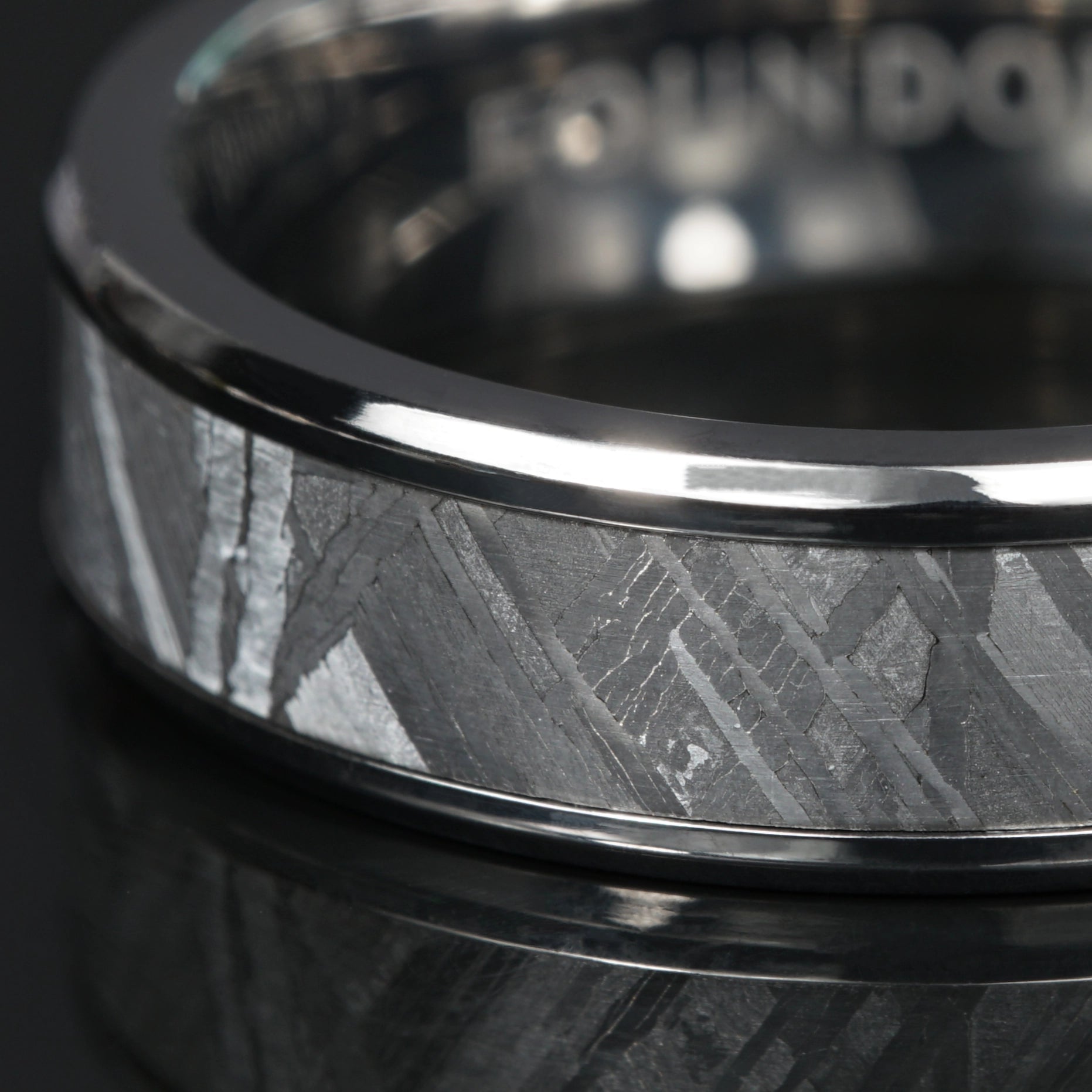
A couple who bonded over stargazing picks a meteorite ring – containing fragments of a 4-billion-year-old Gibeon meteorite that travelled through space before landing in Namibia.
Someone drawn to precision engineering and modern design opts for reclaimed bourbon barrel oak – wood that spent years ageing spirits before becoming part of their wedding band.
These aren't gimmicks. They're ways of making a ring personal without resorting to generic engraving or paying a fortune for "custom" design.
The materials we use have genuine provenance. The antler comes from the Scottish Highlands. The bourbon barrel wood is reclaimed from American distilleries. The meteorite is certified authentic, with the distinctive Widmanstätten crystalline pattern that can only form over millions of years of slow cooling in space.
When you wear one of these rings, you're wearing something with a story – and that story becomes part of yours.
Whether you buy from us or elsewhere, here's what actually matters:
Pure tungsten is too difficult to work with for jewellery. What you want is tungsten carbide – tungsten combined with carbon atoms, which can then be shaped and polished. Check that any ring you're considering is specifically tungsten carbide, not a tungsten "alloy" or "blend" which may contain cheaper metals. Our guide to premium versus low-quality tungsten carbide explains why this matters.
Tungsten carbide requires a binding agent to hold its shape. Some lower-quality rings use binders that can cause reactions in people with sensitive skin. All Foundoria rings are tested to meet REACH safety standards – the EU's rigorous regulations for chemical safety – so they're safe for the vast majority of wearers, including those with sensitive skin. You can read more on our hypoallergenic rings page.
This refers to the inside profile of the ring. A comfort fit band has a slightly domed interior, which makes it easier to slide on and off and more comfortable for all-day wear. Most quality tungsten rings are comfort fit as standard, but it's worth checking. Learn more in our comfort fit guide.
Tungsten can't be resized like gold – the material is simply too hard. This means getting your size right first time matters. We include a free ring sizer with every order, and our sizing guide walks you through measuring properly. If you're between sizes, we recommend sizing down – our comfort fit design means rings tend to feel slightly roomier than standard bands. And if it doesn't fit perfectly, no problem – we offer free returns and exchanges.
All Foundoria rings are 8mm wide – a substantial width that makes a statement and showcases the inlay materials beautifully. It's a popular choice for men who want their ring to have presence without being overwhelming. If you've never worn a ring before, don't worry – the comfort fit interior makes even an 8mm band easy to wear all day. Our TUNGRA tungsten bands come in five finishes at this width.
Here's a trend worth noting: men's engagement rings are becoming increasingly common.
We were recently featured in Rock My Wedding's guide to men's engagement rings, and it's clear this isn't a passing fad. More couples are recognising that engagement doesn't need to be one-sided – if one partner wears a ring to symbolise commitment, why shouldn't the other?
Our Orion and Umbra rings have become popular choices for exactly this purpose – understated enough for everyday wear, distinctive enough to feel special.
If you're considering a men's engagement ring, the same principles apply as wedding bands: choose something that reflects personality, get the sizing right, and don't feel bound by tradition.
- Every order includes a free silicone ring – a backup band for the gym, travel, or any situation where you'd rather not risk your main ring
- Free UK and worldwide shipping on every order
- Free returns and exchanges – if the size or style isn't right, we'll sort it
- A lifetime warranty on manufacturing defects
- Premium packaging designed for gifting
- We're a family-run UK business – you'll get genuine expertise and personal service, not a call centre

The best wedding band is one you'll actually want to wear – every day, for years.
For some men, that's a traditional gold band, and there's nothing wrong with that choice. But if you want something more durable, more distinctive, and more personal, tungsten with a genuine material inlay offers something the traditional jewellery market can't match. If you're weighing it against other metals, our comparisons of tungsten versus titanium and tungsten versus silver are a good place to start.