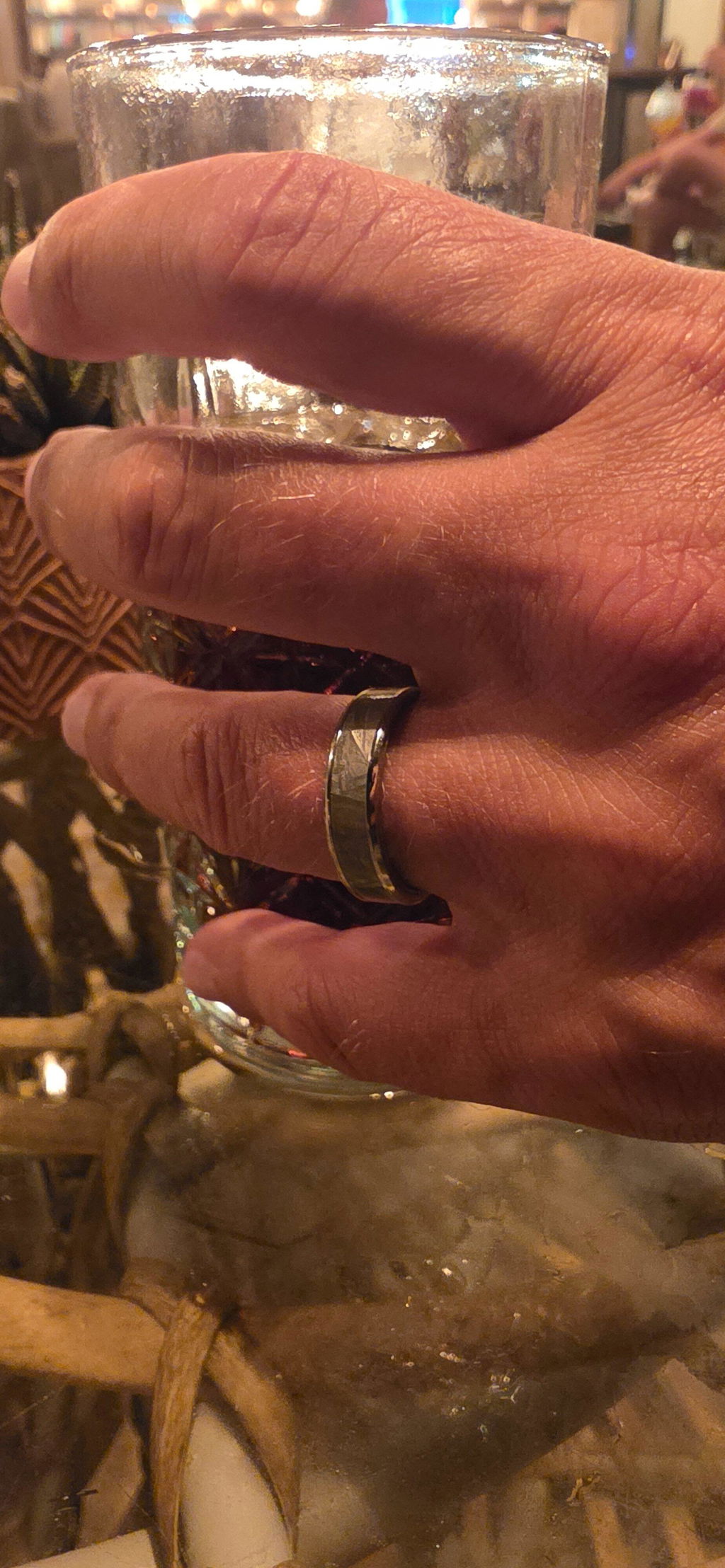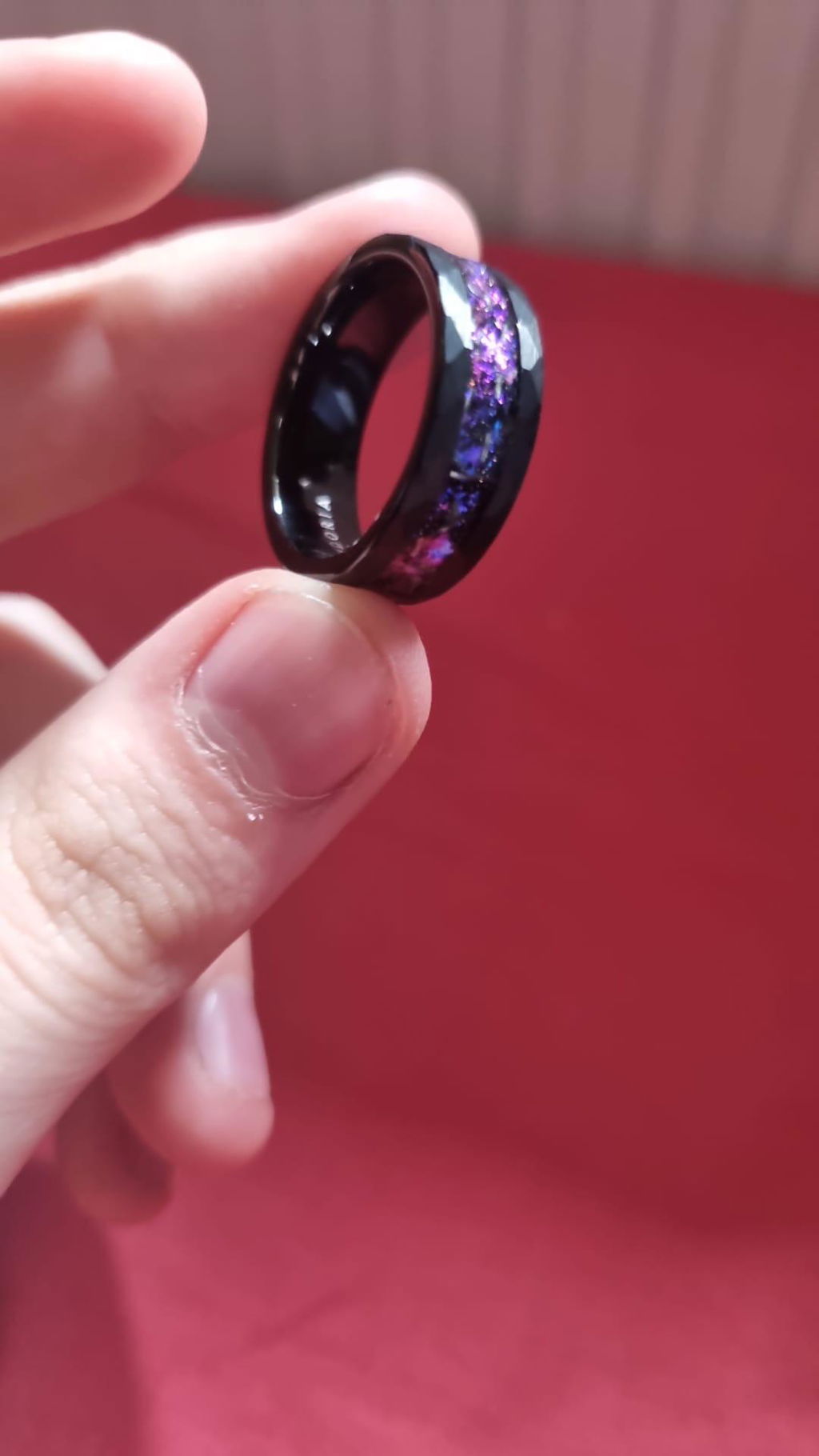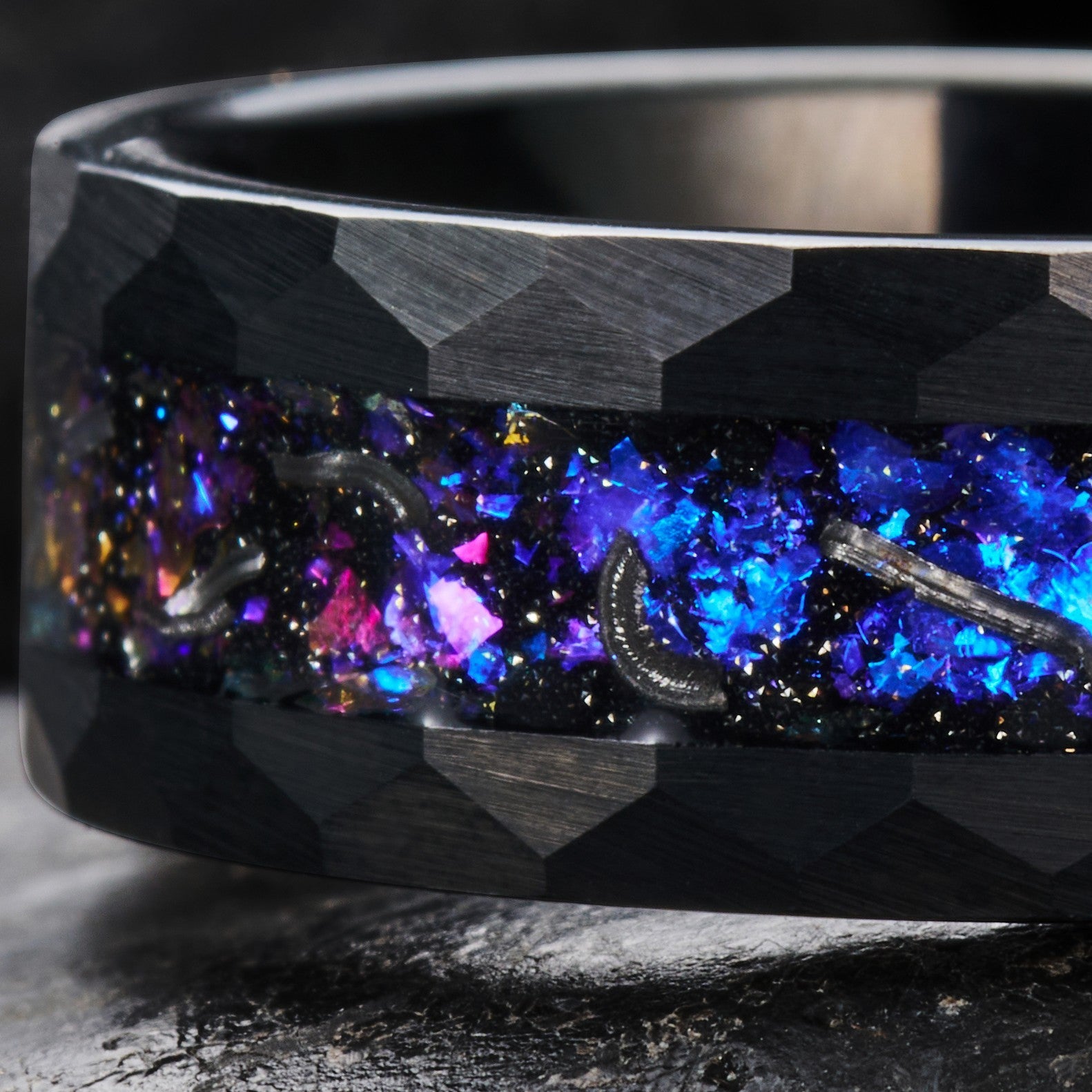
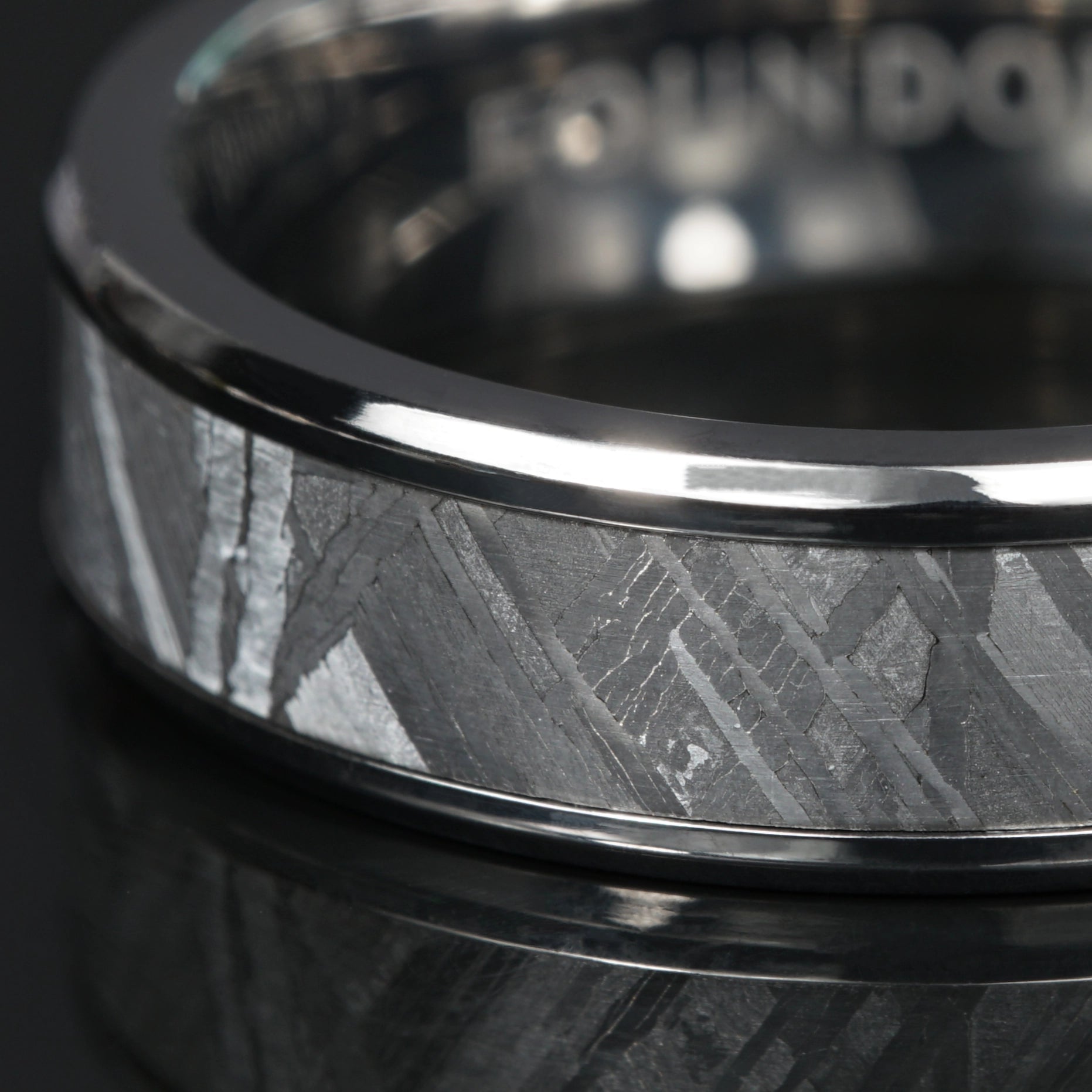
Some of our inlays were something else entirely before they were a ring, and some were made for the job. Here is where each one comes from.
Antler: Scottish estates, naturally shed
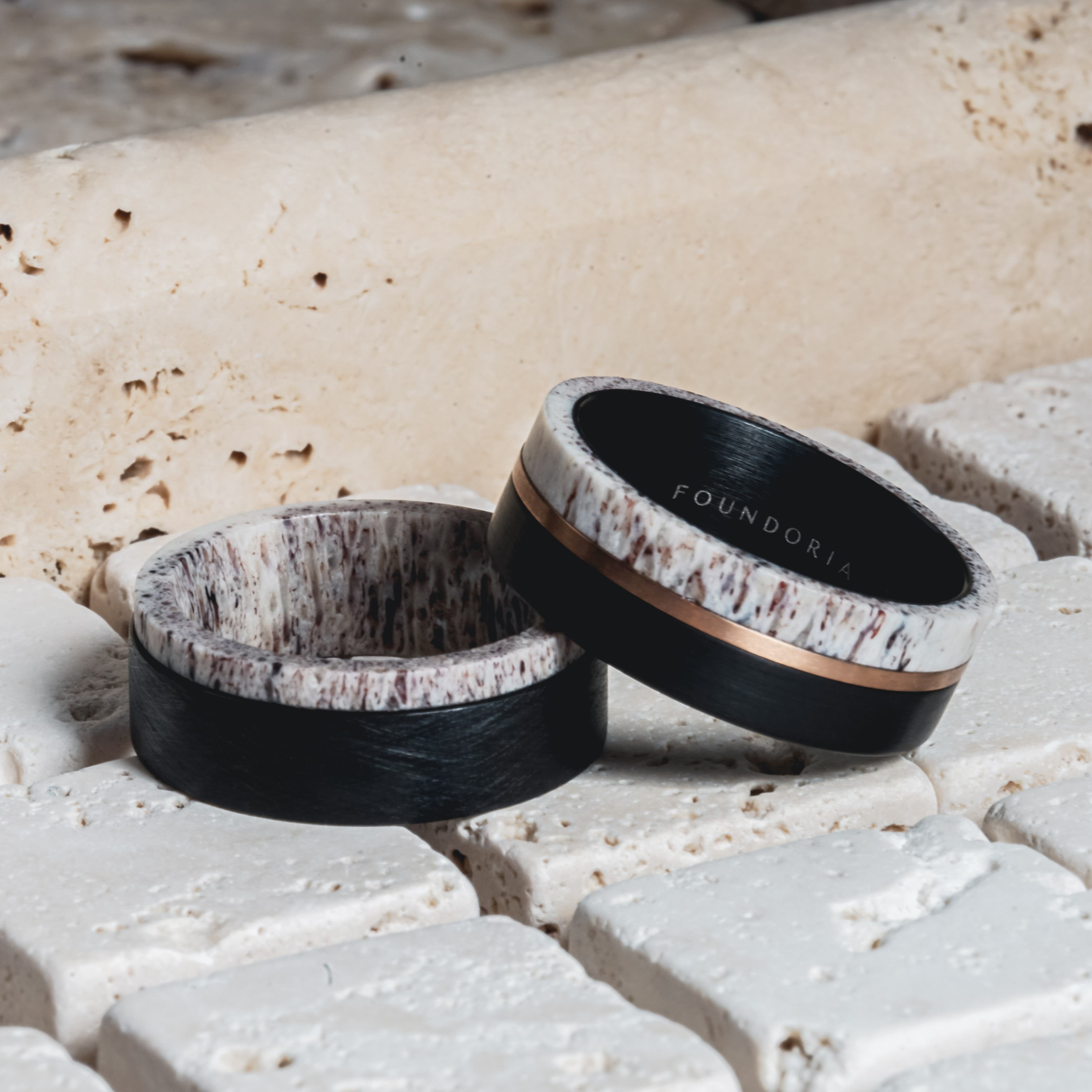
Red deer stags grow a new set of antlers every year and drop the old set each spring. Ours are collected from Scottish estates after they have fallen. No animal is harmed, and nothing is taken from a living deer.
It is the question we are asked most often about the CERVUS collection, and the answer is genuinely as simple as that: the antler was on the ground.
Wood: spent casks, and Hawaiian Koa
Our barrel oak is reclaimed from Scottish whisky casks and American bourbon barrels that have finished their working life. The spirit is long gone. What is left is oak that has been stained and charred by years of contact with it, which is why the colour is in the grain rather than on it.
Koa comes from Hawaii, where it has been valued for centuries for its figured grain. It is the one wood we use that was chosen for how it looks rather than where it has been.
Meteorite: Gibeon and Muonionalusta
Both are iron meteorites recovered from known falls. Gibeon was found in Namibia, Muonionalusta inside the Arctic Circle in northern Sweden. Both formed before the Earth did, in the earliest years of the solar system, and both are finite. No more is being made, and what is on the market is what has been found.
We name the meteorite on every ring that carries one. A named fall tells you what you are wearing and lets you check it against the pattern you should expect. “Genuine meteorite” on its own tells you nothing.
Carbon fibre: made, not found
The one inlay with no backstory. Carbon fibre is a woven cloth set in resin, engineered for aerospace and motorsport because it is strong and almost weightless, and we use it for the same reasons on a much smaller scale. Nothing was reclaimed and nothing was shed. It is here because of what it does on the hand.
Metals: tungsten, titanium, black zirconium
The bands are industrial materials rather than natural ones, and the relevant question for them is not provenance but safety. Samples are tested against European REACH standards by SGS. That is covered in full on How our rings are tested.