

- Men's engagement rings are growing rapidly — searches have more than doubled in the UK over the past five years.
- There is no rule that only women wear engagement rings — the tradition is a convention, not a requirement.
- Many couples now exchange rings at the proposal rather than waiting for the wedding.
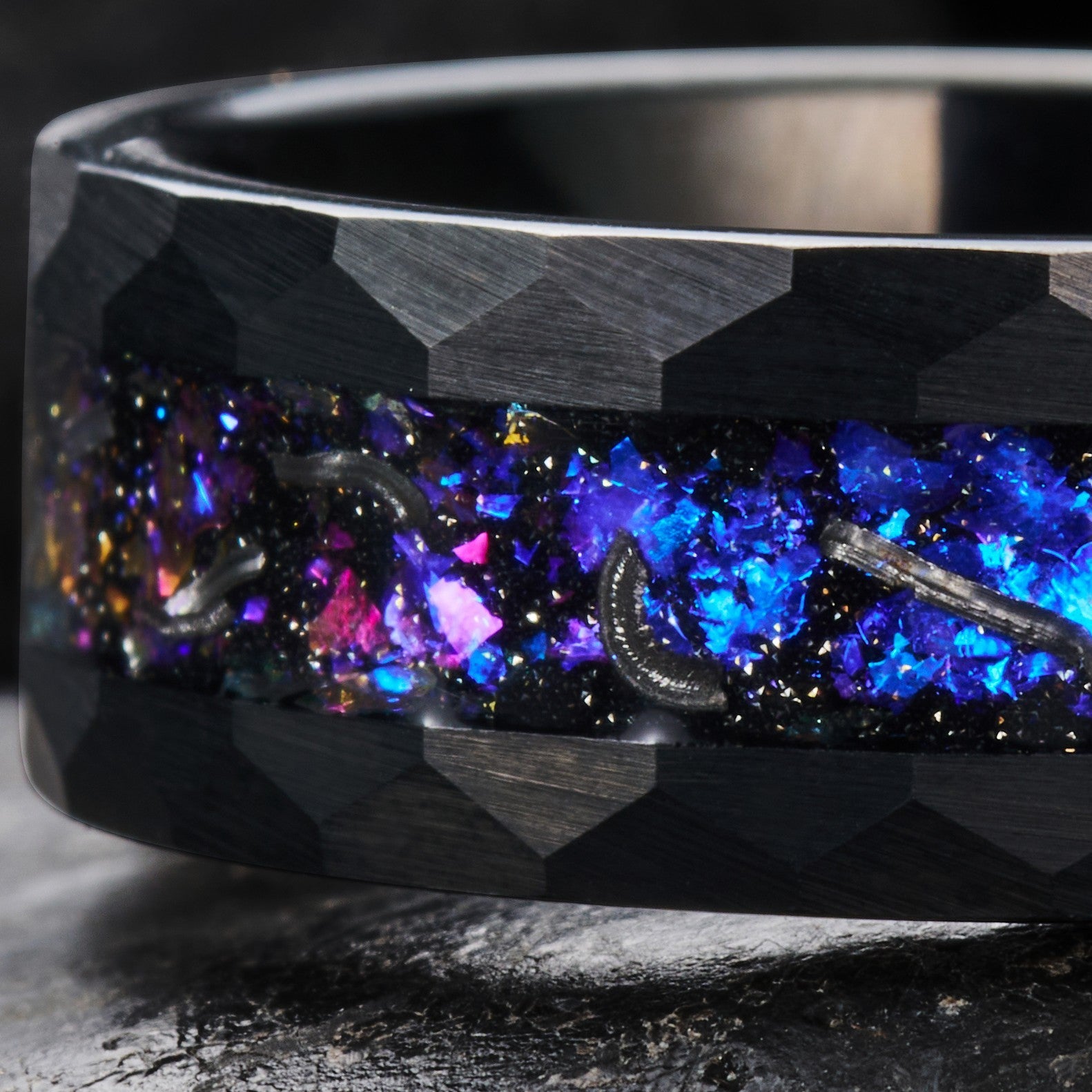
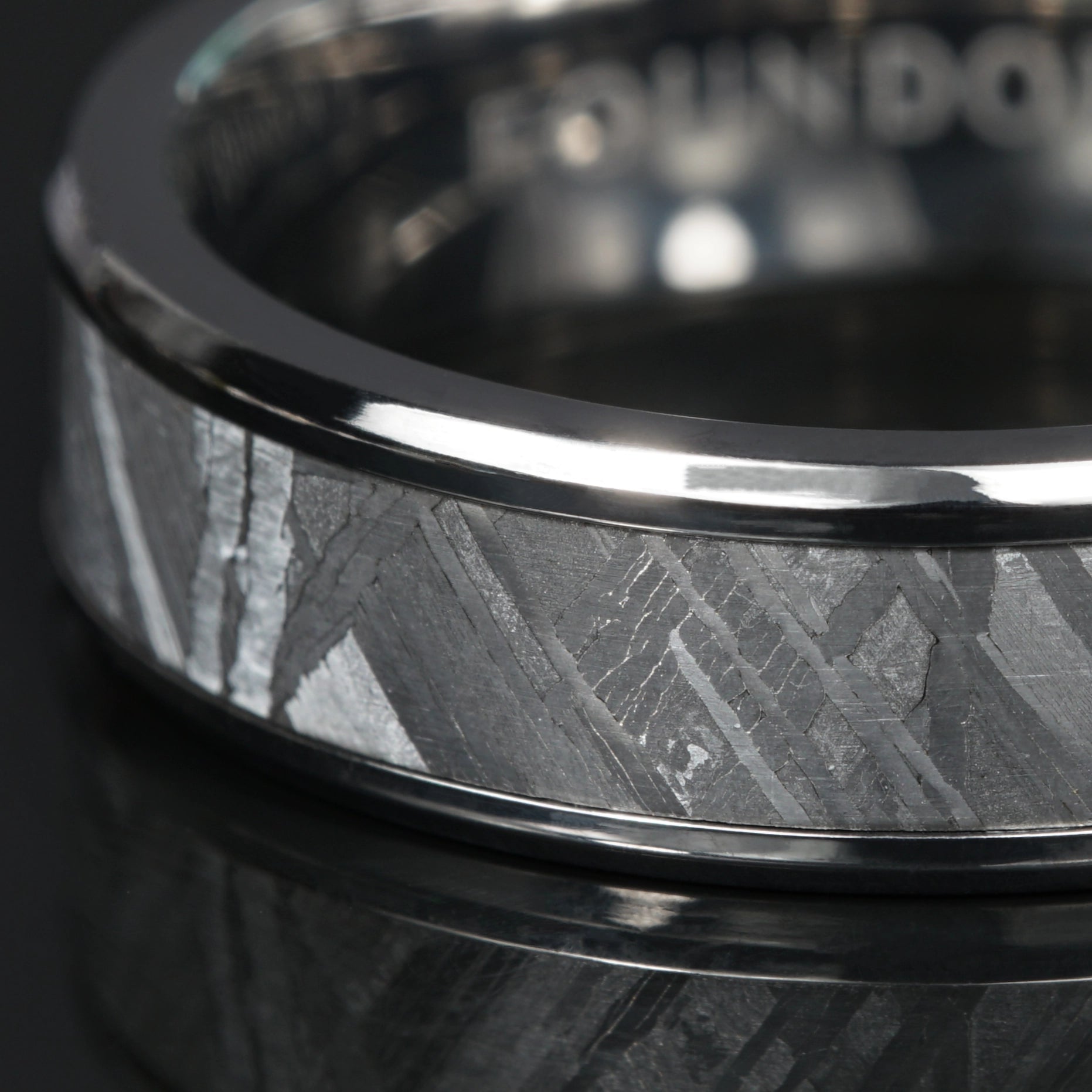
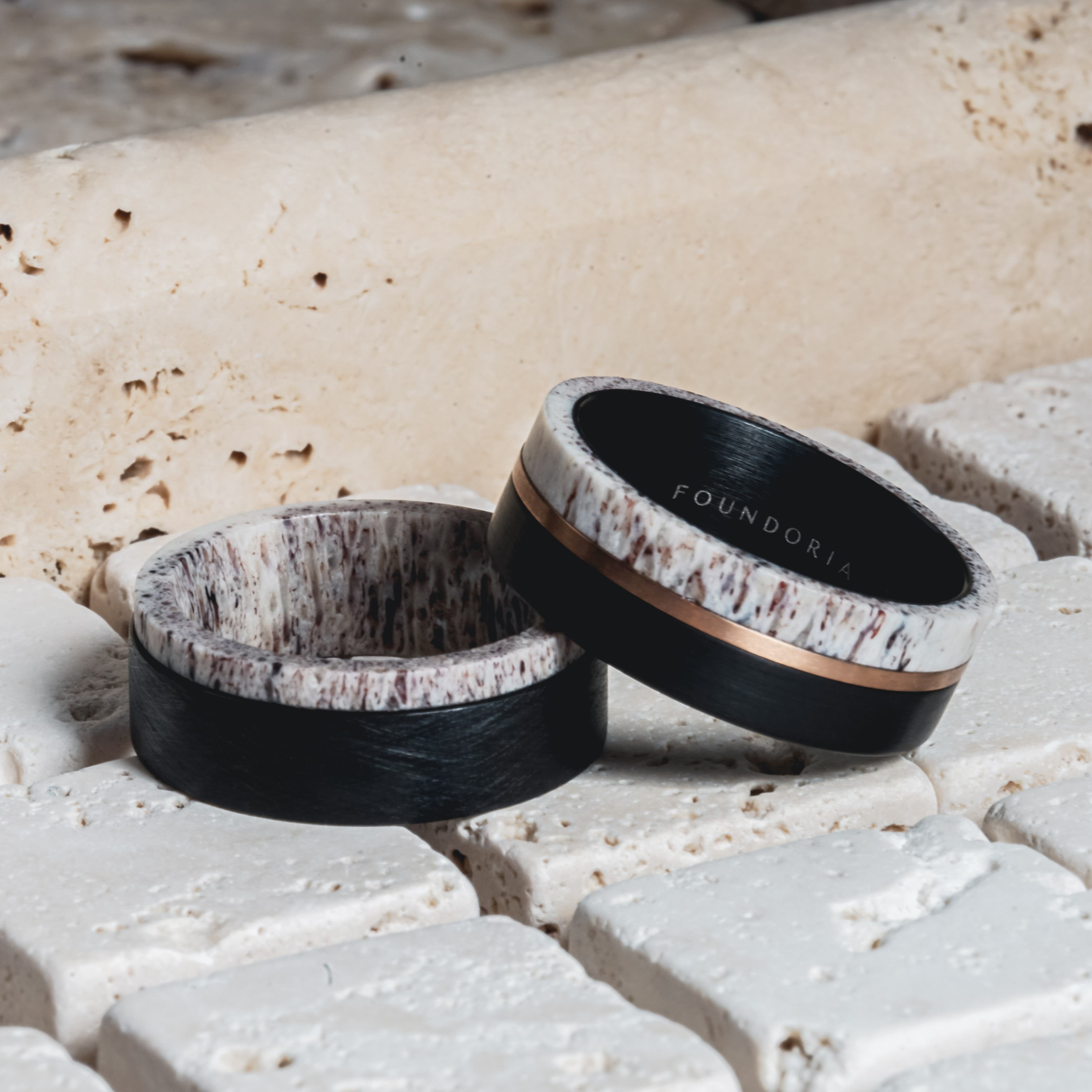
- Alternative materials like tungsten, meteorite, and deer antler are increasingly popular for engagement rings.
- An engagement ring and wedding ring don't need to match — and can be worn on different hands.
- Tungsten carbide is virtually scratch-proof — one of the most durable choices for everyday wear.
Updated for 2026.
The idea that engagement rings are exclusively for women is a convention, not a rule — and one that an increasing number of couples in the UK are choosing to set aside. Whether you're looking for a ring to wear yourself after a proposal, searching for something to give when you propose, or simply want to wear a ring that marks where you are in your life, this guide covers everything you need to know.
There's no orthodoxy here. No rules about which finger, which material, or what it has to look like. What follows is practical guidance to help you make a choice that suits you.

Featured the Foundoria CELESTIUM collection in their guide to the rise of men's engagement rings — highlighting meteorite as one of the most distinctive choices for couples who want something beyond the expected.
Several things are happening at once. Same-sex marriage in the UK — legal since 2014 — normalised the idea of both partners wearing engagement rings from the start. Alongside this, attitudes towards jewellery for men have shifted broadly: rings, chains, and bracelets have become increasingly common across all demographics, removing some of the awkwardness that might previously have attached to a man wearing a ring before the wedding.
There's also a straightforward equity argument. Proposals have historically required one partner to make a significant financial investment for a ring that only one partner wears. Many couples find symmetry in both partners marking the engagement — a shared commitment that looks the same from both sides.
The result is a growing market that didn't meaningfully exist a decade ago: men looking specifically for an engagement ring, often something that can be worn every day through work and an active lifestyle, that marks where they are without requiring explanation. It's a shift that major wedding publications are now covering directly — Rock My Wedding's guide to the rise of men's engagement rings is a good example of how mainstream the conversation has become.
"It's gone from 'men don't wear engagement rings' to 'why wouldn't they?' Both partners want to mark that commitment, and we're seeing real thought put into choosing something that resonates with personality and passions."
Karl Hill, Founder — Foundoria
There is no mandatory answer. In the UK, the left ring finger is the traditional placement for wedding rings, so some men wear an engagement ring on the right ring finger to keep the left clear for the wedding band. Others wear it on the left ring finger and move it after the wedding. Some choose the middle or index finger as a deliberate departure from tradition.
The meaningful thing is what the ring represents, not which hand it sits on. Choose what feels right — and if you're part of a couple, choose together.

For an engagement ring worn every day — often through physical work, sport, and an active lifestyle — the material needs to be chosen with that in mind.
Gold and platinum. Traditional, resizable, and culturally expected. Gold scratches relatively easily and requires occasional polishing; platinum is harder but still prone to surface marks over time. The expected choice, which for some is exactly the point, and for others is precisely why they're looking elsewhere.
Tungsten carbide. Rated 8.5 to 9 on the Mohs hardness scale — one of the hardest materials used in jewellery. Tungsten resists scratching almost completely, maintains its finish for decades, and requires minimal maintenance. It cannot be resized, so accurate sizing matters. Dense with a satisfying weight on the finger. For men who work with their hands or want a ring that handles daily life without thought, tungsten is hard to beat on practical grounds.
Titanium. Lighter than tungsten and hypoallergenic, but less scratch-resistant — it sits at around 6 on the Mohs scale versus tungsten's 8.5–9, so it will show surface marks more readily in daily wear. The trade-off is repairability: a jeweller can polish and refinish titanium to remove scratches, restoring it close to its original condition. Tungsten cannot be refinished in the same way — if it chips or the surface degrades, the ring typically needs replacing. A good choice for those who prioritise a lighter feel and the option to restore the finish over time.
Natural inlays. Tungsten and titanium rings with natural inlays — meteorite, deer antler, bourbon barrel wood — offer something precious metals simply cannot: a material story. A ring with Gibeon meteorite carries 4 billion years of history. A ring with Scottish deer antler carries a specific landscape. These are increasingly popular as engagement rings precisely because they feel personal — something genuinely chosen.
There's no obligation. Matching sets look coherent when both rings will sit on the same hand, but many men prefer rings that are distinct — an engagement ring that tells one story, a wedding band that tells another. When in doubt, contrast works better than two competing pieces of similar complexity: one plain, one with character.
All Foundoria rings are designed to be worn every day — tungsten carbide or titanium with natural material inlays, priced well below comparable precious metal alternatives. Every ring ships with free UK delivery and a lifetime warranty. A free ring sizer is available on request if you're unsure of your size before ordering. Below is a selection that works particularly well as engagement rings.


There's no single answer, but a few principles hold across most cases. It should be wearable every day — not something you take off before the gym or the workshop. It should feel like something chosen rather than something expected. And it should mean something, whether that meaning is in the material, the story behind it, or simply the decision to wear one at all.
For most men, the right engagement ring doesn't require constant explanation or careful handling. That points towards durable materials, practical designs, and something that ages well. The full men's tungsten ring collection is a good place to see everything side by side — or explore by material: CELESTIUM meteorite, CERVUS deer antler, and WELDWOOD bourbon barrel wood.
Increasingly, yes. While the UK convention has traditionally been for only the woman to wear an engagement ring, this has shifted significantly over the past decade. Same-sex couples, couples seeking symmetry in the engagement, and men who simply want to mark the occasion have all contributed to a growing market for men's engagement rings. There is no rule against it — only convention, which is changing.
There is no fixed answer. In the UK, the left ring finger is the traditional placement for wedding rings, so some men wear an engagement ring on the right ring finger to keep the left clear for the wedding band. Others wear it on the left ring finger and move it after the wedding. Some choose the middle or index finger entirely. The choice is personal — pick whichever placement feels right.
There is no rule. The convention around spending two or three months' salary applies to diamond solitaire rings and has no bearing on men's rings or alternative materials. Foundoria men's rings start from £70, with natural inlays including Gibeon meteorite, Scottish deer antler, and bourbon barrel wood. Spend what feels right for the ring you've chosen.
Yes. Tungsten carbide is one of the most durable materials available for everyday wear — virtually scratch-proof, low maintenance, and built to hold its finish for decades. The main practical consideration is that tungsten cannot be resized, so accurate sizing at purchase is important. A free ring sizer is available on request before you order, and Foundoria offers free size exchanges if the first size isn't right.
Not necessarily. Matching sets can look coherent, but many men prefer two distinct rings that tell different stories. If wearing both on the same hand, contrast tends to work better than two competing detailed pieces — one plain band alongside one with a natural inlay is usually a better combination than two heavily detailed rings side by side.