
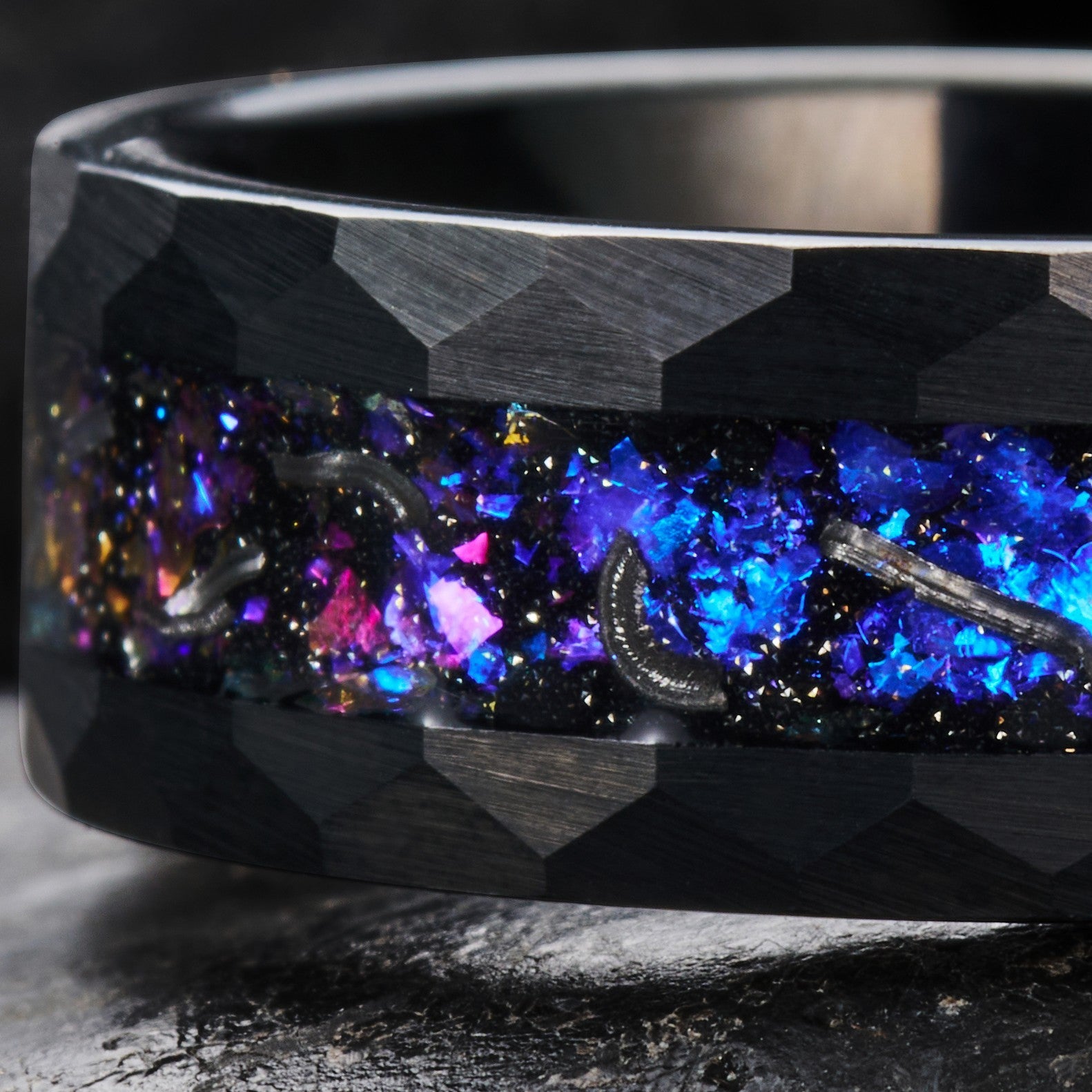
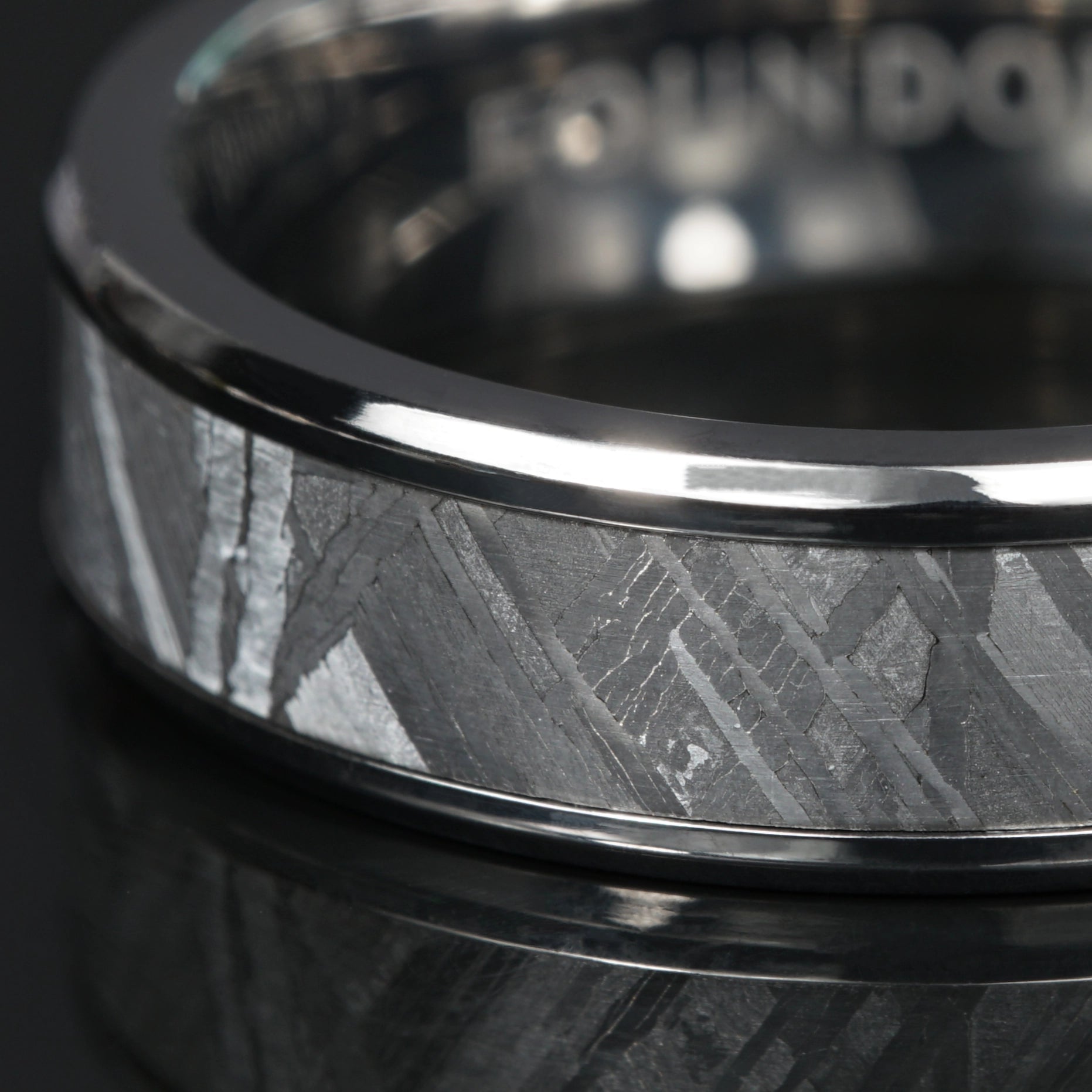
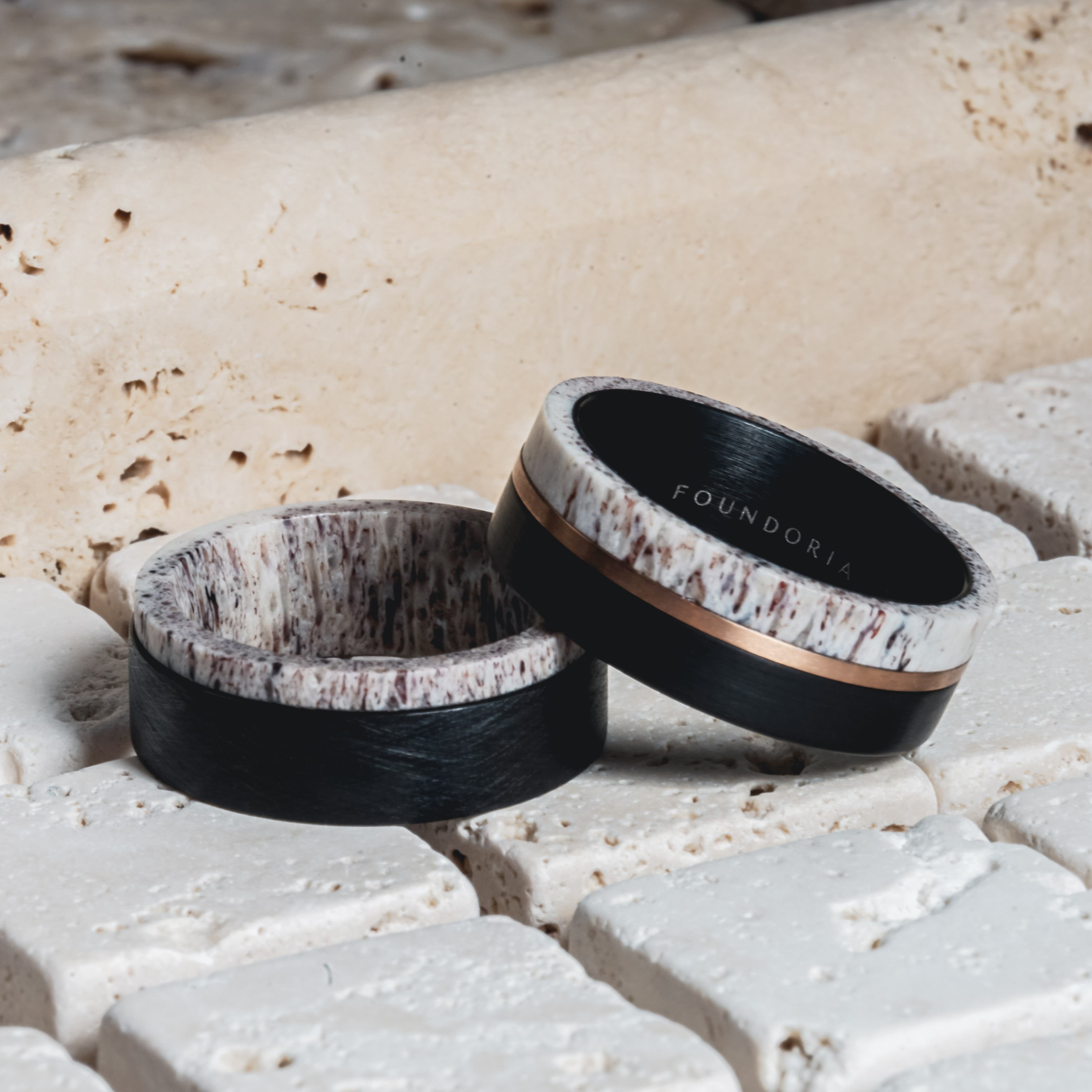

Black has become the most requested finish in men's rings, and the least well explained. Two rings can look identical in a photograph, sit hundreds of pounds apart, and behave completely differently after two years on a working hand.
Two things drive that gap. How the ring was made black, which is a real difference in material and process. And what has been set into the band, which is a separate question and often the bigger one. Most sellers explain neither.
This guide covers the three ways a ring becomes black, how each ages, and how to tell which part of a price is the finish and which part is the inlay. If you would rather just look at them, our black rings collection has every one we make in one place.
The Three Ways a Ring Becomes Black
Everything on the UK market falls into one of these. Once you can tell them apart, the price differences stop looking arbitrary.
1. Plating, or coating
A black finish applied to the outside of a grey metal, usually by ion plating, which is what IP stands for on a spec sheet. The coating is genuinely hard and looks excellent. It is also a layer, and layers are thinnest where your hand meets the world: the underside of the band, the knuckle edge, anywhere that takes constant friction. When it eventually thins, the paler metal underneath shows through.
This is the majority of black rings sold in the UK, ours included, and it is the most economical route to the colour. That is not a criticism. A good IP coating on tungsten carbide, worn normally, holds its finish for years.
2. Oxidised metal, where the black is grown in
Black zirconium is the one that matters here. The metal is heated in a controlled oxygen atmosphere until its outer surface converts chemically into a ceramic, and that reaction is what turns it black. There is no coating, because the colour is the surface of the metal itself. Nothing can flake, peel, or wear through to a different colour underneath.
It is the premium option and it is priced accordingly, above titanium and well above a plated finish. The heat treatment is a controlled manufacturing stage in its own right rather than a finish applied at the end of one, and that is what the premium buys: a black that behaves the same in year ten as in week one.
3. Black through and through
Silicone, and some ceramics. The colour runs through the whole material because the material is that colour. Nothing to wear off, and at £16 it is not the same purchase as the other two, but for gym, trades and travel it does a job neither of the others can.
| Plated black | Black zirconium | Silicone | |
|---|---|---|---|
| Where the black is | A coating on the surface | The metal's own oxidised surface | Throughout the material |
| Can the colour wear off | Yes, at contact points, over years | No | No |
| Scratch resistance | High, tungsten beneath | High, above 8 Mohs | Not applicable, it flexes |
| Weight | Heavy and substantial | Moderate | Almost none |
| Where it sits on price | The economical route | Premium, above titanium too | Entry level, a second band |
One caveat on our own numbers. Black zirconium genuinely does carry a premium over a plated finish, for the reasons above, but it does not account for the whole gap between our black tungsten rings and our black zirconium ones on its own. Both of our zirconium designs are also set with solid Muonionalusta meteorite. Read the price of any ring as two things stacked: the material, and what is set into it.
The honest way to choose
Ask what your hands do. If your ring spends most of its day at a desk and comes off for the heavy jobs, a plated black ring will look excellent for a very long time. If your ring is on your hand through metal, grit and tools every day, the coating is the thing that will give out first, and black zirconium is what solves that specific problem.
Then ask separately what you want set into it. Meteorite, antler, oak and gold all cost what they cost regardless of the metal around them, and that is usually where the rest of the money in a ring goes.
What Black Actually Looks Like on a Hand
Two things surprise people. The first is that black rings read as quieter than silver ones, not louder. A polished silver band catches light from across a room. Black absorbs it, so the ring registers as a shape rather than a flash, and most of the detail only appears when someone is close enough to look properly.
The second is contrast. Black is the best possible backdrop for an inlay. Meteorite, gold, rose gold, wood, antler, sandstone: every one of them reads sharper against black than against grey. It is why most of our most detailed designs are built on a black band, and why a black ring with something set into it rarely looks plain.
Finish matters as much as colour. Brushed or sandblasted black is matte, deep and forgiving of everyday marks. Polished black is closer to a mirror and reads more formal, but shows fingerprints and fine scratches sooner. If you are choosing between two versions of the same ring, that is usually the real decision.
Who Each One Suits
Desk work, occasional heavy use
Plated black tungsten. The coating will outlast the way you use it, and the money saved is better spent on a design you actually love than on durability you will not test.
Trades, engineering, hands-on every day
Black zirconium. This is the one scenario where a coating measurably loses, and the one where the finish itself genuinely earns its premium.
Gym, climbing, shift work
A silicone band alongside your main ring, not instead of it. Every Foundoria metal ring ships with an ENDURA companion band for exactly this reason.
Sensitive skin
Zirconium and titanium both. Samples across our range are tested by SGS against REACH standards, and the suitable designs are grouped in our rings for sensitive skin collection.
Black Rings from Foundoria
Six designs across the full range. The prices track the metal and what is set into it. Every one is comfort-fit and REACH and GPSR certified.


Those are six of more than twenty. The rest are in the black rings collection.
Others worth knowing about: Azure sets deep blue sandstone into black tungsten at £124, Cosmos pairs a colour-shifting galaxy inlay with meteorite at £139, and Crest edges deer antler in brushed black titanium at £139 for anyone who wants black at the lowest possible weight.
Living With a Black Ring
Care
Warm water, mild soap, a soft cloth, whichever type you own. The one thing to avoid on any black ring is abrasive polish or a scouring pad. On a plated ring it takes the coating off, and on zirconium it dulls the ceramic surface.
Sizing
None of these metals can be resized. That is a property of tungsten, titanium and zirconium rather than a limitation of the workshop, so getting the size right first time matters more than with a gold band. Our complete ring sizing guide covers six methods, and we will post you a free ring sizer.
If a plated ring does eventually wear
It is worth being straight about this. A worn coating cannot be topped up at home, and re-plating a ring is rarely economic against the price of the ring. That is the trade you are making at the lower end, and for most wearers it never becomes an issue. If the thought of it bothers you, that feeling is itself the argument for zirconium.
Frequently Asked Questions
Do black rings fade or wear off?
It depends entirely on how the ring was made black. A plated or coated ring can wear at the contact points over years of heavy use, showing paler metal underneath. Black zirconium cannot, because the colour is the metal's own oxidised surface rather than a layer on top of it. Silicone cannot either, because the colour runs all the way through.
Are black wedding rings a passing trend?
Black has been in steady demand in men's rings for well over a decade, and it has held while individual styles have come and gone. It also happens to be the most neutral finish there is: a black band sits with a watch of any colour and reads the same with a suit as with work clothes.
Why do black rings vary so much in price?
Two reasons stacked. The first is how the black was made: a plated finish is the economical route, while black zirconium is a premium alternative metal priced above titanium because of the heat treatment involved. The second, and often the larger, is what is set into the band. A solid meteorite inlay costs far more than wood or antler, which is why our black zirconium designs sit at the top of the range and our black tungsten ones at the bottom.
Can a black ring be resized?
No, not in any of these materials. Measure carefully before ordering, or request our free ring sizer.
Is a black ring suitable for a wedding?
Yes, and increasingly it is the default rather than the alternative. If you want it to read more formal, choose a polished finish and a narrower band. If you want it understated, choose brushed.
Which black ring is best for manual work?
Black zirconium, because the finish cannot wear through where the ring takes constant friction. A silicone band is the safer answer for anything involving machinery, and one comes free with every metal ring we sell.
Where can I see all your black rings together?
They are all in one place in the black rings collection, across tungsten, zirconium, titanium and silicone. The black zirconium rings are listed separately if you already know that is the material you want.