

Most black rings are not black. They are a grey metal wearing a black coat, and the coat comes off.
Black zirconium is the exception. The black is not a plating, a coating, or a layer of paint. It is the surface of the metal itself, chemically converted into a ceramic during manufacture. There is nothing on top of it to wear through, because there is nothing on top of it at all.
It is a premium material and it is priced like one, above titanium and well above a plated finish. This is a guide to what you get for that: what black zirconium actually is, how it behaves on a hand that works for a living, and where it sits against the rest of our black rings.
What Black Zirconium Actually Is
Zirconium is a silver-grey metal. On its own it looks much like titanium, and it is used in much the same demanding places: nuclear reactor cladding, chemical processing plant, and medical implants where the body's tolerance of the material matters more than the cost of it.
The black comes from heat. Raw zirconium is taken to a high temperature in a controlled oxygen atmosphere, and the outer surface of the metal reacts to form zirconium dioxide, a ceramic. The colour change is a consequence of the chemistry, not a decoration applied afterwards. The ceramic layer is diffused into the metal, so there is no join, no boundary, and nothing that can flake, peel, or lift.
That heat treatment is also why the material costs what it does. It is a controlled manufacturing stage in its own right, not a finish applied at the end of one, and it is the reason black zirconium is positioned as a premium alternative metal across the market rather than as a cheaper route to a black ring.
What it is not is indestructible. A deep enough gouge can still reach the grey zirconium beneath the ceramic. But the everyday erosion that thins a plated finish at the knuckle over a couple of years simply does not apply here.
Why This Matters for Daily Wear
A wedding ring is not a piece of occasion jewellery. It goes to work, into the gym bag, under the car, through the washing up, and into every ordinary day for decades. Most materials are chosen on how they look in a photograph. The better question is how they look in year five.
It resists the marks that daily life actually causes
The ceramic surface sits above 8 on the Mohs hardness scale, which puts it comfortably beyond titanium at 6.0, beyond steel, and far beyond gold at 3.0 to 3.5 and silver at 2.5 to 3.0. In practical terms, the things that scuff a ring day to day, keys, desk edges, tools, a bike handlebar, a gym bar, do not have the hardness to mark it easily.
Tungsten carbide is harder still, at 8.5 to 9.5, and remains the most scratch-resistant option we make. But tungsten's hardness comes with brittleness: it is ceramic all the way through, and under sharp enough impact it can crack rather than bend. Black zirconium has a hard surface over a metal core, so it takes a knock the way a metal does.
It is light enough to forget
Zirconium is denser than titanium but far lighter than tungsten. An 8mm black zirconium band sits in the middle of the range: present enough to feel like a real object, light enough that you are not aware of it by mid-afternoon. If you have worn tungsten and found it heavy, or titanium and found it barely there, this is the space between them.
It is genuinely skin-friendly
Zirconium's medical credentials are not marketing. Zirconia ceramics are used in dental crowns and joint replacements precisely because the body tolerates them well, and the oxidised surface of a black zirconium ring is chemically the same family of material. It does not corrode, does not react with sweat, chlorine or seawater, and does not discolour skin.
Every Foundoria ring, black zirconium included, is sampled and tested by SGS against REACH standards. We cover how we approach skin safety across the whole range in our guide to hypoallergenic rings for sensitive skin, and every suitable design is grouped in our rings for sensitive skin collection.
The plating question, answered plainly
Black plated rings are not a con. A good IP coating is hard, looks excellent, and on a ring that is worn occasionally it can last for years. Plenty of our own black tungsten designs use one, and we are happy to sell them.
The honest difference is what happens at the contact points. A plated finish is a layer, and a layer wears thinnest where your hand meets the world: the underside, the knuckle edge, the places that take constant friction. When it does thin, the metal below shows through as a paler patch. Black zirconium cannot do that, because there is no different metal below the colour.
Plating is the economical route to black and zirconium is the permanent one, and the prices reflect exactly that. Whether the difference is worth it to you depends on what your hands do all day. Our tungsten versus black zirconium comparison takes that decision apart properly.
Black Zirconium Against the Alternatives
| Black Zirconium | Black Plated Tungsten | Titanium | |
|---|---|---|---|
| Where the black comes from | The metal's own oxidised surface | A coating applied over the metal | Natural grey, or a coating if black |
| Surface hardness | Above 8 Mohs, comparable to sapphire | 8.5 to 9.5 beneath the coating | 6.0 Mohs |
| Weight on the hand | Moderate | Heavy and substantial | Very light |
| Behaviour under impact | Metal core, resists cracking | Can crack under sharp impact | Very tough, will not crack |
| How it ages | Colour is permanent | Coating can thin at contact points | Develops a fine patina |
| Resizeable | No | No | No |
| Where it sits on price | Premium, above both | The most economical route to black | Mid, below black zirconium |
One caveat on our own prices. Black zirconium carries a genuine premium over titanium and plated finishes, for the reasons above. But our two zirconium rings sit further above our black tungsten ones than the metal alone accounts for, because both Nyx and Erebus are set with solid Muonionalusta meteorite. Two things stacked: a premium metal, and a solid inlay. The same applies within the titanium column, which runs from a slim antler band to our widest meteorite setting.
If you want the full picture across every material we work with, our UK buyer's guide to alternative wedding rings lays them all out side by side, and the black wedding rings guide covers the three ways a ring becomes black.
Who Black Zirconium Suits
Men who want black to stay black
If you have owned a black ring before and watched the finish wear pale at the knuckle, this is the material that solves that specific problem. It is the single most common reason people move to zirconium.
Hands-on work
Trades, engineering, mechanics, anything where a ring meets metal and grit all day. The ceramic surface shrugs off the marks that would dull a softer metal, and the metal core takes knocks without cracking.
Sensitive skin
Zirconia's long record in dental and orthopaedic use is the reason it is trusted against skin. It does not corrode, react with sweat, or discolour the finger beneath it.
Understated, not invisible
Black reads as quiet from across a room and detailed up close. It is the choice for men who do not want a ring that announces itself, but do want one that rewards a second look.
Our Black Zirconium Rings
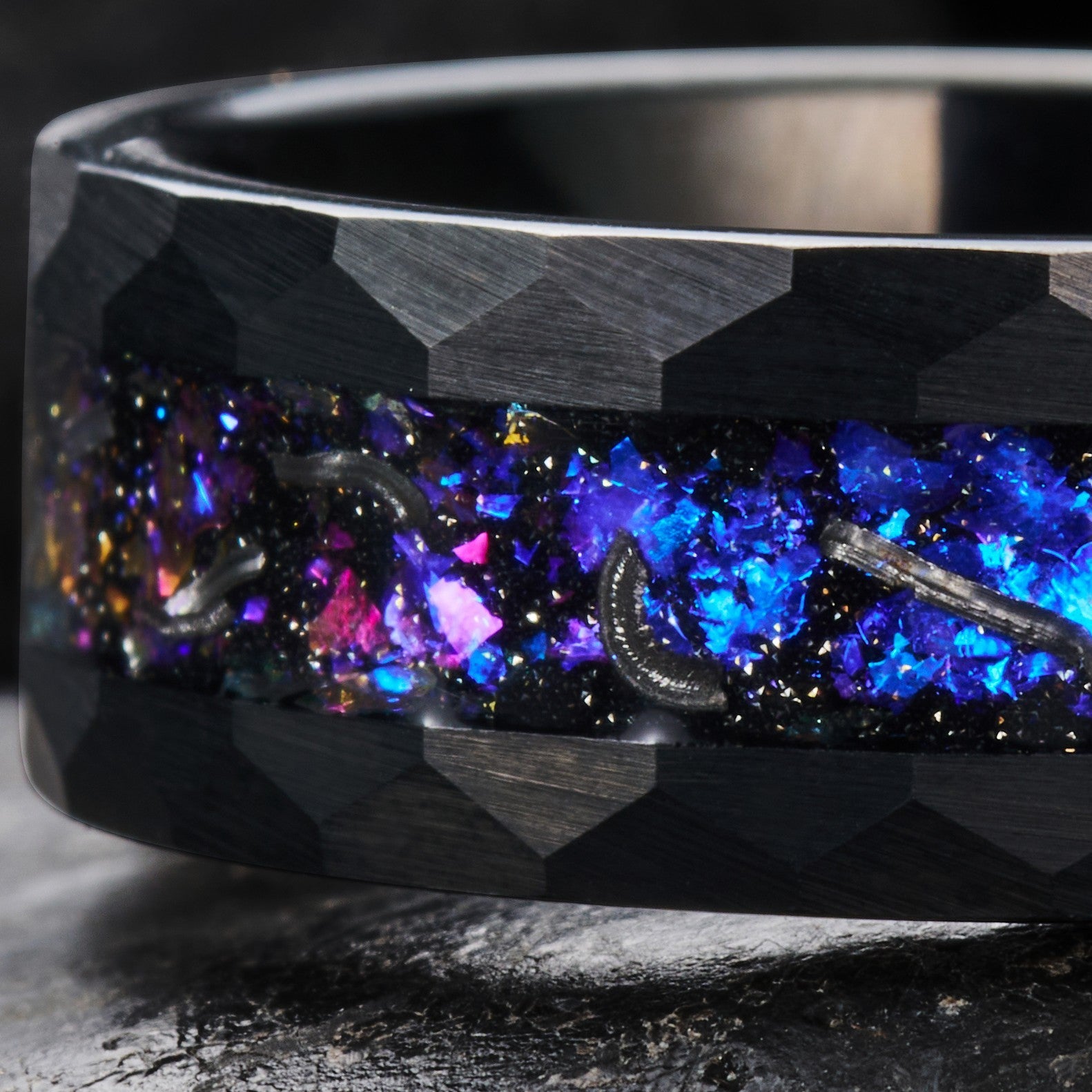
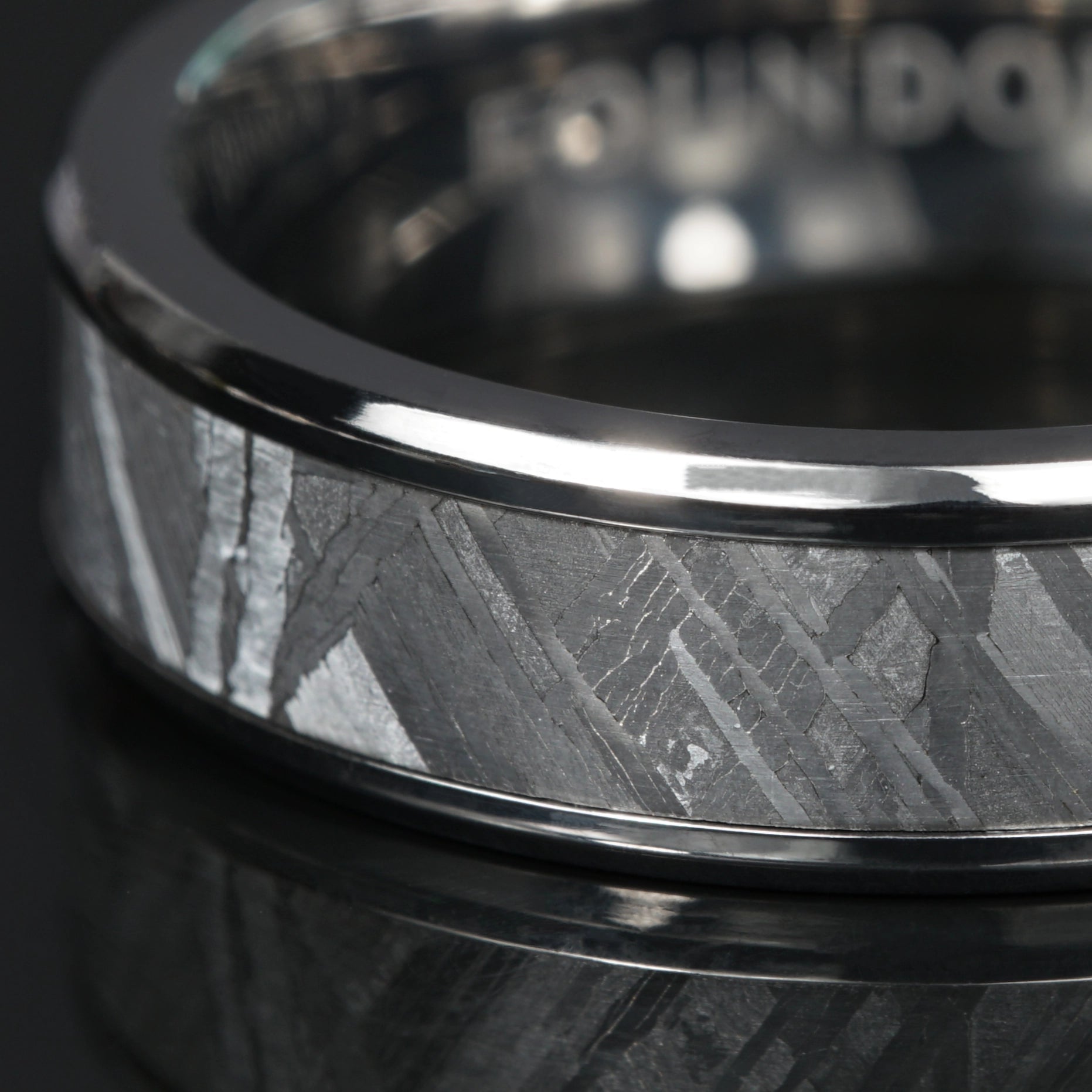
Both are from the CELESTIUM Collection, and both set solid Muonionalusta meteorite into the black. A premium metal and a solid inlay, which is what places them at the top of the range. The pairing is deliberate: a metal whose colour is grown in, against a metal that formed in space before the Earth existed.


Those are the two we make in this material. For black in every other material we work with, see the black rings collection.
If These Are More Than You Want to Spend
It would be a poor guide that pretended our zirconium rings are the only sensible way to wear black. Both pair a premium metal with a solid meteorite inlay, and if the inlay is not what you are after then you are paying for something you do not want.
Our black tungsten designs use a hard IP coating over tungsten carbide, and for a ring that will not spend every day against grit and metal, they hold their finish well. They also start at a fraction of the price.


Living With It
Care
Warm water, mild soap, a soft cloth. That is the whole routine. Do not use abrasive polishes or scouring pads, which are the one thing capable of dulling the ceramic surface. There is no plating to protect and no tarnish to remove, so the ring asks nothing else of you.
Sizing
Black zirconium cannot be resized. Neither can tungsten or titanium: it is a property of these metals rather than a limitation of the workshop. Getting the size right the first time is therefore the single most important thing you can do. Our complete ring sizing guide covers six methods, and we will send you a free ring sizer if you would rather measure properly than guess.
Emergency removal
Worth knowing, and worth not worrying about. Zirconium is a metal, so a standard A&E ring cutter with a diamond blade will go through it. Any emergency department is equipped for this. It is a solved problem, and it should not weigh on the decision.
Frequently Asked Questions
Is black zirconium the same as black plated tungsten?
No, and the difference is structural. Black plated tungsten is a grey metal with a black coating applied over it. Black zirconium's colour is the metal's own surface, chemically converted to a ceramic during manufacture. There is no separate layer, which is why the colour cannot wear away at the contact points.
Will a black zirconium ring scratch?
It resists everyday marking very well. The ceramic surface sits above 8 on the Mohs scale, often compared to sapphire, so keys, tools and desk edges do not mark it easily. Nothing is scratch-proof, and a deep gouge from something harder can reach the grey metal beneath. But the gradual dulling that affects softer metals does not happen here.
Does the black fade over time?
No. There is no coating to thin and no dye to fade. The colour is a property of the oxidised surface, so it is as permanent as the metal it is part of.
Is black zirconium heavy?
It sits between titanium and tungsten. Noticeably lighter than a tungsten band of the same width, but with more presence than titanium, which many men find disappears on the finger. If you want to feel your ring without being conscious of it, this is a good middle ground.
Is black zirconium good for sensitive skin?
It is one of the better choices available. Zirconia ceramics have a long record in dental and orthopaedic use, the surface does not corrode or react with sweat, and it will not discolour your skin. Samples across our range are tested by SGS against REACH standards.
Can a black zirconium ring be resized?
No. Like tungsten and titanium, it cannot be resized after manufacture, so accurate sizing before ordering matters. Request our free ring sizer before you buy.
Is black zirconium more expensive than titanium?
Yes. It is a premium alternative metal, and it sits above titanium and well above a plated black finish. The heat treatment that converts the surface to ceramic is an additional controlled manufacturing stage rather than a coating applied at the end, and that is what you are paying for. This is the norm across the market rather than a quirk of our pricing.
Why are your black zirconium rings the most expensive black rings you sell?
Two things stacked. The metal and its heat treatment carry a genuine premium, and on top of that both Nyx and Erebus are set with solid Muonionalusta meteorite, which is the larger part of the difference between them and our black tungsten designs. A black zirconium band without a solid inlay would sit a long way below either of them.
What other black rings do you make?
Black tungsten with wood, antler, meteorite and sandstone inlays, black titanium, and silicone. They are all together in the black rings collection.