

Design Your Own Ring: The Foundoria Ring Studio
Most people buying a ring are choosing between rings. You narrow a list of forty down to three, then settle on whichever one sits closest to the thing in your head.
Our Ring Studio is for everyone who never found it on the list. You pick the metal, the width, the profile, what runs across the face and how the surface is worked, and the ring renders in 3D while you build it. Turn it, look at it from the side, change your mind, change it back.
It's free, there's no account to make, and sending a design to us doesn't commit you to anything. Here's how it works, and where to start whether you know exactly what you want or you're just seeing what's possible.
What the Ring Studio Actually Is
It's a design tool that draws your ring while you build it, on our own site, in your browser. Not a gallery of presets with a photograph attached to each one, and not a form that emails us a paragraph of description. It's a real model of the specific band you've specified, turning on the screen.
Seven steps, a couple of minutes, and you can move back and forth between them as much as you like.
Ring size
UK and US sizes together, from J½ to Z+5. If you don't know it yet, pick anything and change it later, or request a free ring sizer and come back to it. Our ring size guide covers six ways of measuring if you'd rather not wait.
Base material
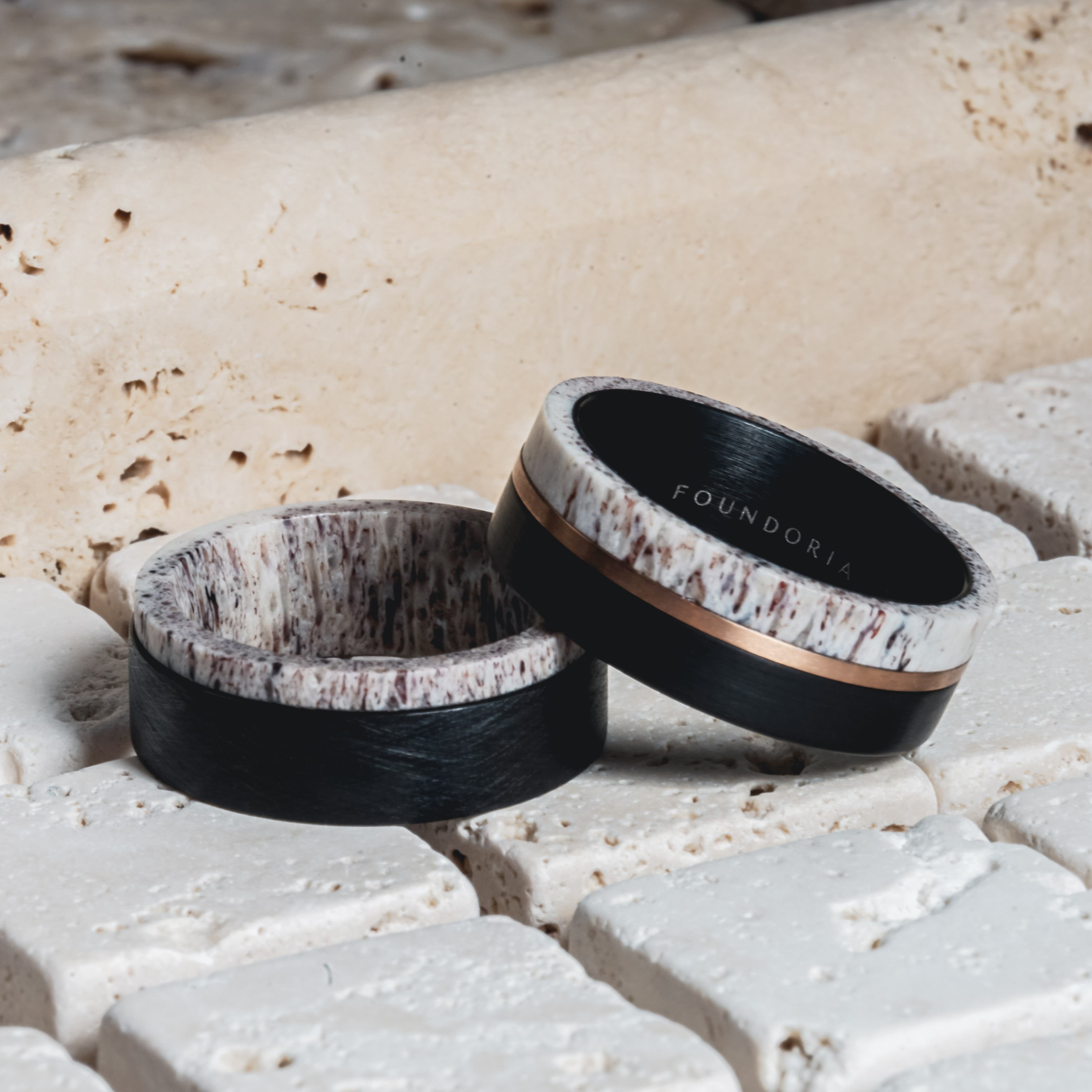
Tungsten carbide, titanium, black zirconium, tantalum, or a solid Scottish deer antler or whisky barrel oak core in a tungsten wrap. Then the colour: natural, gunmetal, silver, black, gold or rose gold, applied as ion plating.
Width and profile
2mm to 10mm, in a court (gently domed) or flat profile, with a plain, bevelled, stepped or polished-contrast edge. The width you pick governs what'll fit on the face afterwards, and the tool tells you so while you're moving the slider.
The face
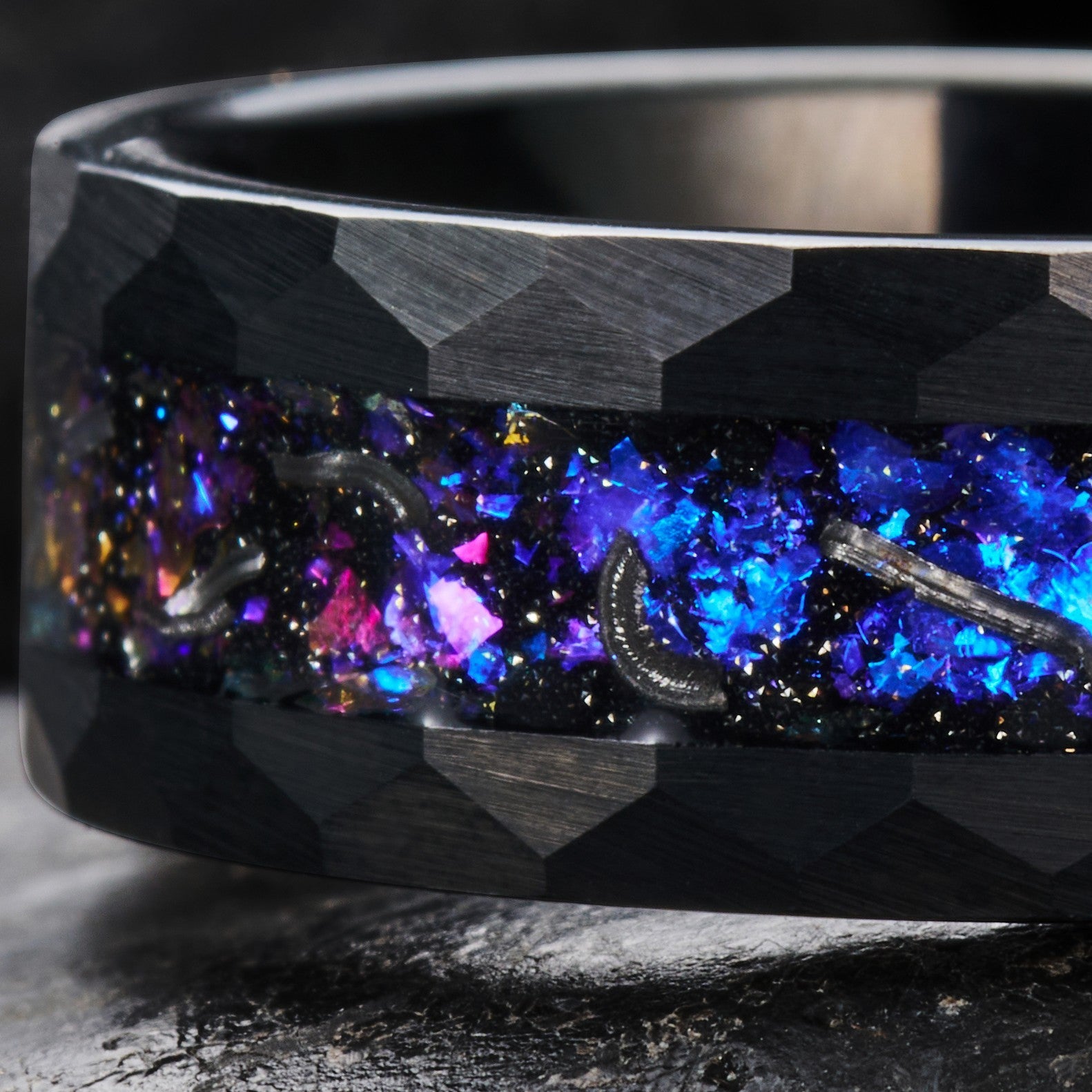
This is where a ring stops being a band and starts being yours. One, two or three inlay channels from ten materials and counting. A machined groove, which can be plated a contrasting colour inside the cut. A fine metal line running through the inlay or beside it. A flush-set stone. Every dimension in millimetres.
The inner sleeve
The part only the wearer sees. Leave it as the base metal, or line the inside in a contrasting polished colour, antler or oak.
Finish
Brushed, rough brushed, polished, sandblasted matte, hammered, coarse brushed hammer or faceted hammer. The finish changes the character of a ring more than most people expect, so it's worth trying a few.
Summary
A written specification of everything you've chosen, down to the millimetre. Save it to get a link back to your exact design, or send it to us and we'll take it from there.
A Ring for One Person, Not for a Category
Rings get sorted into boxes before anyone's looked at them. Engagement ring, wedding band, promise ring, anniversary ring, something to wear on the other hand. Each box comes with its own expectations about what the thing should be made of, how wide it ought to be and roughly what it should cost.
We've never found those boxes to be much use. The ring that suits someone has to do with their hands, their work, what they'd actually wear, and what the two of you want to look at every day. None of that is settled by the occasion.
That's the case for designing one. A ring you've drawn is personal twice over: to the person wearing it, because it was built around what they like rather than what was in stock, and to whoever's giving it, because every choice in it was theirs to make. You can put a material in it that means something. You can make it narrow because they've said they don't like anything heavy. You can line the inside in a colour nobody else will ever see.
Whether that ring turns out to be a promise ring, an engagement ring, a wedding band or a ring given for no occasion at all is up to you. It's the same ring either way.
It can hold something of the two of you
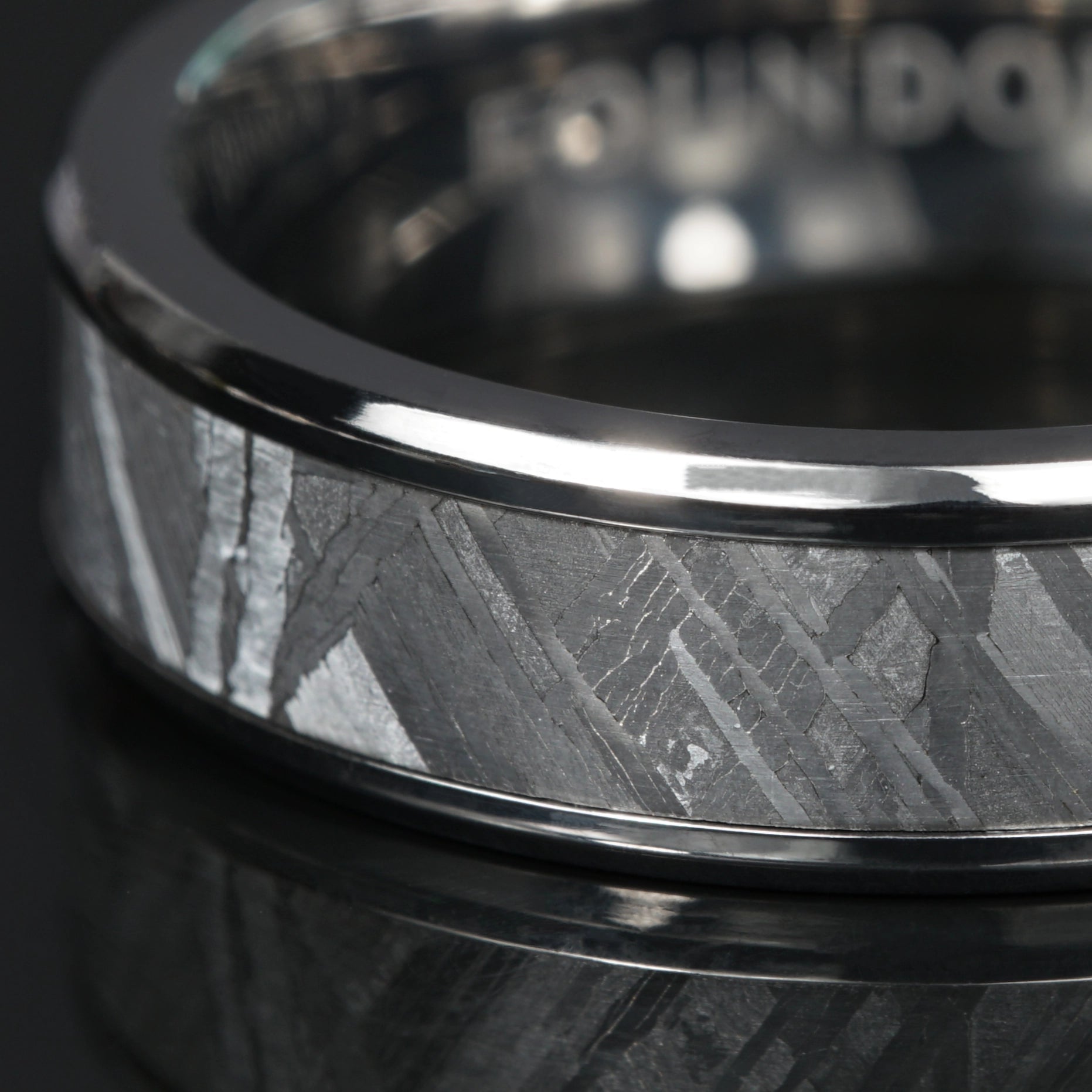
Oak from a whisky barrel, if that's your evening. Antler, if the Highlands are. Meteorite older than the Earth, if the scale of the thing is the point. The material is where the meaning goes.
It's built round the hand it's for
Width, weight and profile decide whether a ring gets worn or ends up in a drawer. In the studio they're yours to set, rather than whatever the design happened to come in.
You're not guessing at their taste from a grid
Build three versions, save each one and let them choose. Or build it together. Either beats an evening of scrolling.
It's made to be worn every day
Everything in the studio is a material we already make in. Tungsten carbide, titanium, tantalum and zirconium all hold up to daily wear far better than the soft precious metals, so nothing here is a token to be replaced later.
If you're still deciding on materials, our guide to alternative ring materials sets them all out side by side, tungsten against titanium covers the two most common finalists, and materials by profession is the one to read if your hands take a beating at work.
How It Compares to the Other Ways of Buying a Ring
| Ring Studio | Buying a stock design | A bespoke jeweller | |
|---|---|---|---|
| See it before you commit | Yes, rendered in 3D while you build | Yes, as photographs of that design | Usually a sketch or CAD render, after a consultation |
| Time to a finished design | A couple of minutes | Immediate | Days to weeks of back and forth |
| Cost to explore | Free, no account, no obligation | Free | Often a design fee |
| Materials available | Six base metals, ten plus inlays | Whatever's in the range | Usually precious metals only |
| Made in your size | Yes, made to order | Stock sizes, sometimes limited | Yes |
| Typical lead time | Around eight weeks | A few days | Eight to sixteen weeks |
None of these is the right answer for everyone, and we sell rings all three ways round. If you want something now, or you'd rather see the exact ring photographed on a hand before you buy, start with every Foundoria ring instead, and how made to order works explains the difference between the two routes.
What Happens After You Design It
Save it, and it keeps
Saving a design gives you a link that reopens it exactly as you left it, down to the millimetre. Send it to the person it's for, or sit on it for a month. Designs saved before we added new options still open, and still render the way you built them.
Then one of our experts looks at it properly
This is the part the tool can't do for you. When you send a design over, someone here goes through it and works up a full specification, which we send back to you before you've committed to anything.
It sets out every choice you've made in writing, with a render of your ring and a cross section drawn to scale, so you can see exactly how the widths divide across the face and satisfy yourself the proportions are what you pictured. We'll advise on cost at the same time, along with a realistic estimate of how long it'll take to make.

Then it's made
Payment is taken up front on a custom order, because the ring is only made once it's confirmed. Allow around eight weeks from that point. Delivery is free, in the UK and worldwide, and international prices include duty and local taxes, so there's nothing to pay when it arrives.
And if the size is wrong
Tungsten, titanium and zirconium can't be resized. That's a property of the metals rather than a shortcoming of the workshop, and it's why we exchange a ring that doesn't fit rather than alter it. Get the size right first: the complete ring sizing guide covers six methods, and we'll send you a free ring sizer.
Best of all is a jeweller. Take the width, the material and the fit with you, ours are all comfort fit, and ask for the inner diameter in millimetres rather than just a letter or a number. An inner diameter is the one measurement that converts cleanly between every sizing system, and it's the surest way to get the fit right first time.
Where to Start if the Blank Page Is Daunting
Seven steps of open choice is a lot when you don't yet know what you want. The easiest way in is to find something in our range that's close, then rebuild it in the studio with the parts changed.
Our collections are the quickest way to work out what you're drawn to. CELESTIUM is meteorite set into metal. WELDWOOD is reclaimed wood, mostly whisky and bourbon barrel oak. CERVUS is naturally shed Scottish deer antler. TUNGRA is precision tungsten with nothing set into it, STRATUM is layered and stepped metal, and ENDURA is the silicone range.


Or browse by what you already know you like: black rings, natural inlay rings, alternative metals, or rings for sensitive skin if that's the deciding factor. Any of them works as a starting point, and everything about it can then be changed.
Why Foundoria for a Ring You Design Yourself
We make in these materials, not in gold
Tungsten carbide, titanium, zirconium and tantalum are what we work in every day. That's why the studio can offer a faceted hammer across a 1mm run of metal, or a groove plated gold inside the cut. We know what these materials will do, because they're the ones we've built the business on. A jeweller who works mainly in precious metal would be learning on your ring.
The specification is honest to the millimetre
Every figure in your specification is the real geometry of the ring. If it says 1mm bevel, 1mm face, 4mm inlay, 1mm face, 1mm bevel, then that's eight millimetres and it adds up. We've rewritten that arithmetic more than once after a customer checked it with a ruler and found us half a millimetre out.
Skin comes first on a custom ring too
Samples across the range are tested by SGS against REACH standards, and the materials in the studio are the same ones we sell. Our guide to hypoallergenic rings for sensitive skin covers how we go about it.
Every ring comes with a spare
Custom or not, each ring includes a free ENDURA silicone band in your size, for the gym, the workshop or the garden. There's a reason for that, and we set it out in why every ring needs a second band.
And a lifetime guarantee behind it
A designed ring is covered exactly as a stock one is. Free delivery worldwide, duties included, and a lifetime guarantee on the ring itself.
Frequently Asked Questions
Is the Ring Studio free to use?
Yes. No account, no payment, no obligation. Design as many rings as you like and save each one.
How much does a custom ring cost?
It depends on the materials and the complexity of the design, so we price each one individually. A custom ring generally costs more than a comparable design from our range, because it's made for one person rather than as part of a run, and an involved face with several inlays, a groove and a metal line is more work than a plain band. The cost comes back with your specification, in writing, before anything's agreed.
How long does a custom ring take?
Around eight weeks from the point you confirm the order. Made to order means it doesn't exist until you say yes to it.
Can I design a ring for someone without knowing their ring size?
Yes. Design it, save it, and send it to us with the size left open. We'll send you a free ring sizer, and the size only needs settling before the order is confirmed.
Can I have matching rings in different widths?
Yes, and it's one of the most common things people build. Design one, save it, then reopen the link and change the width and size. Both rings can be made in the same production run.
Can a custom ring be resized later?
No. Tungsten, titanium and zirconium can't be resized, so we exchange rather than alter. Use the free ring sizer before you order.
Do you ship custom rings outside the UK?
Yes, worldwide, and delivery is free. International prices include duty and local taxes, so there's nothing to pay on arrival.